
Self-styled ‘prophet’ arrested in Ghana after failed Doomsday flood prophecy

- Update Time : Saturday, January 3, 2026
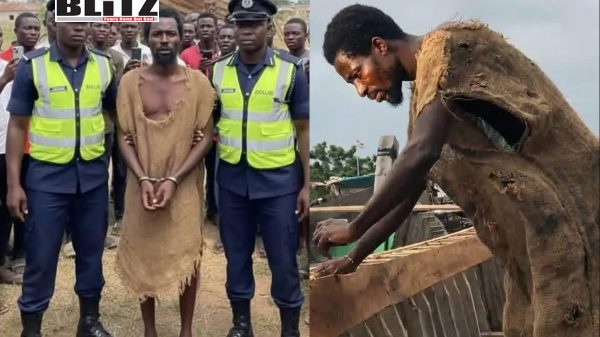
Ghanaian police have arrested a self-proclaimed prophet who spent months warning followers of an imminent global flood and soliciting donations to build what he described as modern-day arks for human survival. The arrest of Evans Eshun, popularly known as Ebo Noah, has reignited a national debate over religious exploitation, misinformation, and the unchecked influence of charismatic figures operating outside formal religious institutions.
Eshun, 30, was detained on December 31 following weeks of public outrage after his predicted Christmas Day apocalypse failed to materialize. For much of 2025, he had claimed that God revealed to him a vision of a catastrophic flood that would engulf the world for three years, beginning on December 25. According to Eshun, only those who supported his divinely ordained ark-building project would survive the coming disaster.
Last August, he announced that God had commanded him to construct ten large wooden vessels, invoking biblical imagery reminiscent of the story of Noah’s Ark. He urged followers to donate money to fund the project, framing contributions as both an act of faith and a practical step toward salvation. Over subsequent months, Eshun posted frequent videos on social media showing what appeared to be ongoing construction work, reinforcing the sense of urgency surrounding his warnings.
However, the campaign soon became mired in controversy. Investigative reports and online commentators alleged that a significant portion of the donated funds had been misused, most notably to purchase a luxury Mercedes-Benz. Images of the vehicle circulated widely on social media, triggering public anger and accusations of fraud. Critics questioned how a man claiming divine poverty and urgency could justify such an extravagant purchase while asking ordinary Ghanaians-many of whom are struggling amid rising living costs-to finance an apocalyptic project.
Despite mounting skepticism, Eshun doubled down on his prophecies as Christmas approached. He insisted that the flood was inevitable and that delays or doubts were tests of faith. Yet when December 25 passed without incident, his narrative shifted. On December 26, Eshun claimed that his prayers, fasting, and personal sacrifices had convinced God to postpone the catastrophe.
“God reveals to redeem,” he said in a message that quickly went viral. “I have prayed. I have fasted. I have donated. And I have built. Through my prayers, I received another vision.” According to Eshun, humanity had now been granted additional time to prepare, and even more arks would need to be constructed beyond the original ten.
The explanation did little to quell criticism. Many observers accused him of moving the goalposts to preserve his influence and avoid accountability. Religious leaders from established Christian denominations publicly distanced themselves from Eshun, warning worshippers against what they described as fear-based manipulation masquerading as prophecy.
The episode took an even stranger turn days later when Eshun appeared unannounced on stage during a concert by Ghanaian rapper Sarkodie. Addressing the crowd, he urged people to celebrate, declaring that the end of the world had been postponed thanks to divine intervention. Videos of the incident spread rapidly online, prompting both ridicule and concern over how easily such figures can gain access to large public platforms.
Eshun’s arrest came shortly afterward, although Ghanaian police have not disclosed the specific charges he may face or whether he has been formally charged. Legal analysts suggest that potential accusations could include fraud, false pretenses, or public disorder, depending on the findings of ongoing investigations. Authorities have so far remained tight-lipped, fueling speculation while emphasizing the need for due process.
The case has sparked renewed debate in Ghana about the regulation of religious activity in a country where faith plays a central role in daily life. Ghana’s constitution guarantees freedom of religion, and the nation is home to thousands of churches, mosques, and independent spiritual movements. While this diversity is often celebrated as a strength, critics argue that weak oversight has allowed opportunists to exploit belief systems for personal gain.
Civil society groups have called on the government to strengthen consumer protection laws and financial transparency requirements for religious organizations, particularly those that solicit donations from the public. Others caution against overregulation, warning that state interference in religious affairs could undermine fundamental freedoms.
For many Ghanaians, the Ebo Noah saga is less about theology than trust. In a time of economic uncertainty and social pressure, prophetic figures offering certainty-however fantastical-can find receptive audiences. The danger, analysts warn, lies not only in financial exploitation but also in the erosion of public confidence when promised miracles fail to appear.
As investigations continue, the episode stands as a stark reminder of the power of belief-and the responsibility that comes with it. Whether Eshun’s arrest will lead to meaningful reforms or simply fade into another viral controversy remains to be seen. What is clear, however, is that the line between faith and deception has once again been thrust into Ghana’s national spotlight.
Tajul Islam is a Special Correspondent of Blitz.