US freezes child care funding nationwide amid expanding fraud investigation

- Update Time : Friday, January 2, 2026
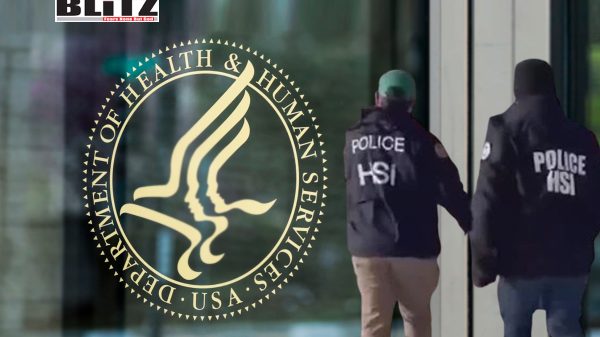
The US Department of Health and Human Services (HHS) has moved to freeze federal child care funding to all 50 states, escalating a growing national scandal that began with allegations of widespread fraud in Minnesota’s daycare system. The decision, confirmed by an agency official to ABC News, marks one of the most sweeping federal interventions into child care funding in recent years and signals heightened scrutiny of how billions of taxpayer dollars are distributed and monitored.
According to the unnamed HHS official, federal child care funds will only be released once states demonstrate that the money is being spent legitimately and in compliance with federal guidelines. While the department has not publicly detailed the full scope of documentation required, the move effectively places every state under review, regardless of whether it has been directly linked to fraudulent activity.
HHS spokesman Andrew Nixon clarified that even states and childcare providers “not suspected of fraudulent activity” have been instructed to submit extensive administrative data for evaluation. States where fraud is suspected face more stringent demands, including the submission of attendance records, licensing documentation, inspection and monitoring reports, as well as records of complaints and investigations.
“The onus is on the state to make sure that these funds, these federal dollars, taxpayer dollars, are being used for legitimate purposes,” Nixon said, underscoring the federal government’s position that responsibility ultimately lies with state-level administrators.
The nationwide freeze follows an earlier decision by HHS to halt all child care payments to Minnesota, where the controversy first emerged. Federal authorities demanded a comprehensive audit from Democratic Governor Tim Walz after reports alleged that millions of dollars in public funds had been funneled to fraudulent daycare centers over the past decade.
Minnesota’s child care assistance programs, which are designed to help low-income families access affordable care while parents work or attend school, have long been vulnerable to abuse due to their scale and complexity. Critics argue that lax oversight and an overreliance on self-reporting created fertile ground for fraud, allowing unscrupulous operators to submit inflated or entirely fabricated claims.
Governor Walz has forcefully rejected claims that his administration ignored or enabled wrongdoing. While acknowledging that fraud is a serious issue, he accused President Donald Trump and his allies of exploiting the scandal for political gain.
“This is Trump’s long game,” Walz said in a statement. “We’ve spent years cracking down on fraudsters. It’s a serious issue – but this has been his plan all along. He’s politicizing the issue to defund programs that help Minnesotans.”
Walz also emphasized Minnesota’s diversity and its large Somali-American community, suggesting that the narrative surrounding the scandal risks stigmatizing an entire population rather than focusing on individual wrongdoing.
The controversy gained national attention after conservative influencer Nick Shirley released a lengthy YouTube investigation alleging a massive fraud scheme involving Somali-run childcare centers in Minneapolis. Shirley estimated that more than $110 million in fraudulent claims had been filed through Minnesota’s child care assistance programs.
While Shirley is not a journalist in the traditional sense, his video drew millions of views and prompted renewed scrutiny from federal agencies. Supporters argue that his investigation highlighted issues long ignored by authorities, while critics accuse him of sensationalism and of unfairly targeting a specific ethnic community.
Nevertheless, the allegations proved significant enough to trigger formal federal action. US Secretary of Homeland Security Kristi Noem announced what she described as a “massive investigation on childcare and other rampant fraud,” indicating that the inquiry would extend beyond Minnesota and potentially beyond child care programs alone.
FBI Director Kash Patel echoed those concerns, stating that resources had been “surged” to Minnesota. Patel warned that the cases uncovered so far were only “the tip of a very large iceberg,” suggesting that similar schemes could exist elsewhere in the country. He also raised the possibility of severe consequences for those found guilty, including denaturalization and deportation for individuals who obtained US citizenship fraudulently or committed serious crimes after naturalization.
The decision to freeze child care funding nationwide has sparked alarm among state officials, childcare providers, and advocacy groups. Many warn that the move could disrupt services for millions of families who rely on subsidized care, particularly low-income households where parents depend on childcare assistance to remain employed.
Critics argue that a blanket freeze punishes compliant states and providers for the alleged failures of others. They contend that while fraud must be addressed, halting funding risks harming children and families who have done nothing wrong.
Supporters of the freeze counter that the scale of the alleged fraud justifies decisive action. They argue that federal oversight has been too weak for too long and that extraordinary measures are necessary to restore public trust in social assistance programs.
Politically, the scandal has become another flashpoint in an already polarized national landscape. Republicans have seized on the allegations as evidence of systemic mismanagement and insufficient accountability under Democratic leadership, while Democrats warn against politicizing the issue and inflaming ethnic or racial tensions.
The involvement of high-profile figures such as Trump, Noem, and Patel has further intensified the debate, transforming what began as a state-level controversy into a national political battle over immigration, public spending, and the role of federal oversight.
For now, states are scrambling to compile and submit the required documentation to HHS in hopes of restoring funding. The timeline for the review process remains unclear, raising concerns about prolonged disruptions to child care services.
As investigations continue, the case is likely to have lasting consequences for how child care programs are structured and monitored in the United States. Whether the outcome leads to tighter oversight, structural reform, or deeper political divisions remains to be seen.
What is certain is that a scandal sparked by a YouTube video has evolved into a nationwide reckoning over accountability, public trust, and the stewardship of taxpayer dollars-one that could reshape federal child care policy for years to come.
Jennifer Hicks is a columnist and political commentator writing on a large range of topics.