


India clears $8.8 billion defense buys as regional security pressures mount

- Update Time : Wednesday, December 31, 2025
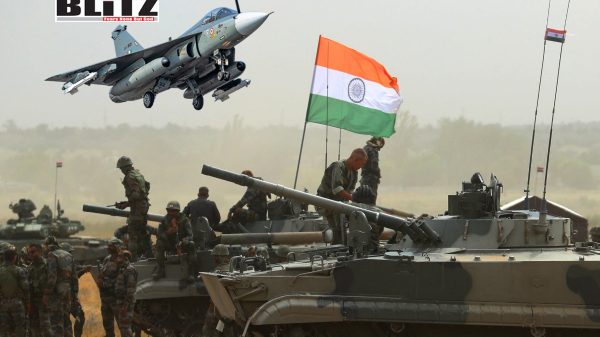
India has approved a fresh round of defense acquisitions worth approximately $8.8 billion, underlining New Delhi’s determination to rapidly modernize its armed forces amid rising regional tensions and fast-changing modes of warfare. The decision, cleared by the Defense Acquisition Council (DAC) on December 29 under the chairmanship of Defense Minister Rajnath Singh, spans a wide array of systems for the army, navy, and air force, ranging from rockets and radars to drones, missiles, and advanced aviation safety equipment.
Officials say the latest approvals are designed to significantly enhance India’s combat readiness, surveillance capability, and force protection, particularly in light of recent confrontations and the growing prominence of drones and precision-guided weapons on the modern battlefield.
A substantial portion of the approved purchases is aimed at strengthening the Indian Army’s ability to operate in contested environments. Among the most notable items are loitering munitions, long-range guided rockets, lightweight low-level radars, and an upgraded integrated drone detection and interdiction system.
The Defense Ministry said loitering munitions—often described as “kamikaze drones”—will be used for precision strikes against tactical targets. These systems have become a defining feature of recent conflicts, offering relatively low-cost yet highly accurate strike options against enemy positions, vehicles, and infrastructure.
Long-range guided rockets will enhance the reach and accuracy of India’s Pinaka Multiple Launch Rocket System (MRLS), allowing forces to engage high-value targets from greater distances. This reflects a broader shift toward stand-off capabilities, reducing the exposure of troops while increasing battlefield effectiveness.
Equally significant is the emphasis on counter-drone capabilities. Lightweight, low-level radars approved under the deal are designed to detect and track small, low-flying unmanned aerial systems, which are increasingly used for surveillance, targeting, and attacks. The integrated drone detection and interdiction system, with an enhanced operational range, is intended to protect vital military assets both in frontline tactical areas and deeper in the hinterland.
The focus on drones is not accidental. During a four-day military confrontation between India and Pakistan in May, Islamabad reportedly launched several drones across the border. That episode highlighted how unmanned systems can be used to probe defenses, gather intelligence, or deliver payloads without crossing traditional escalation thresholds.
For the Indian Navy, the DAC approved the acquisition of bollard pull (BP) tugs and high-frequency software-defined radios. While less headline-grabbing than missiles or drones, these systems play a crucial role in daily naval operations and overall readiness.
BP tugs are essential for assisting naval ships and submarines during berthing, unberthing, and maneuvering in confined waters or harbors. As India expands its naval footprint and commissions larger and more sophisticated vessels, such support infrastructure becomes increasingly important to ensure safe and efficient operations at home ports and forward bases.
High-frequency software-defined radios, meanwhile, will enhance secure and flexible communications across naval platforms. In an era where electronic warfare and cyber threats are growing concerns, resilient communication systems are a critical component of maritime security and command-and-control effectiveness.
The Indian Air Force (IAF) stands to gain a mix of combat and training-related systems under the new approvals. These include the Astra Mk-II air-to-air missiles, SPICE-1000 long-range guidance kits, full mission simulators, and an automatic take-off and landing recording system.
According to the Defense Ministry, the automatic take-off and landing recording system will help close gaps in the aerospace safety environment by providing high-definition, all-weather automatic recording of critical flight phases. Such systems are increasingly seen as essential tools for improving pilot safety, accident investigation, and training effectiveness.
The Astra Mk-II missile, with its enhanced range, is expected to significantly boost the IAF’s beyond-visual-range (BVR) combat capability. Officials say the missile will allow Indian fighter aircraft to neutralize adversary aircraft from a large stand-off distance, a key requirement in any high-intensity air conflict.
SPICE-1000 guidance kits will add precision-strike capability to existing air-delivered munitions, enabling accurate engagement of targets with reduced collateral damage. Full mission simulators will support pilot training, allowing aircrews to rehearse complex scenarios without the cost and risk associated with live flying.
The $8.8 billion approval is part of a broader pattern of accelerated defense spending by New Delhi in 2025. In August, India signed off on defense purchases worth around $7.6 billion, including additional BrahMos missiles, armed drones, and upgrades to existing platforms.
Taken together, these decisions reflect India’s effort to address perceived capability gaps while keeping pace with rapid military modernization by neighboring countries. China’s expanding military presence along the disputed Himalayan border and Pakistan’s evolving drone and missile capabilities both weigh heavily on Indian strategic calculations.
Despite its push for domestic defense manufacturing, India remains one of the world’s largest importers of military equipment. Historically, Russia has been New Delhi’s most important defense partner, supplying everything from fighter aircraft and tanks to submarines and air defense systems.
Moscow continues to play a role in India’s weapons indigenization plans, with several Russian-origin platforms being manufactured or assembled in India under licensing agreements. At the same time, India has diversified its defense partnerships in recent years, engaging suppliers from the United States, Europe, and Israel.
Officials routinely stress that new acquisitions are aligned with the government’s “Make in India” and “Atmanirbhar Bharat” (self-reliant India) initiatives, aiming to increase domestic production and reduce long-term dependence on imports. However, the scale and complexity of India’s requirements mean that foreign technology and collaboration are likely to remain part of the equation for years to come.
Beyond the technical details, the latest defense approvals send a clear strategic signal. They underscore India’s intent to deter adversaries, protect critical assets, and adapt to emerging forms of warfare dominated by drones, precision weapons, and information dominance.
At a time when regional security dynamics are increasingly volatile, New Delhi appears determined to ensure that its armed forces are not only larger, but smarter, safer, and better equipped to fight-and deter-modern conflicts. Whether these investments translate into decisive advantages on the battlefield will depend not only on hardware, but also on training, integration, and strategic clarity in the years ahead.
Damsana Ranadhiran, Special Contributor to Blitz is a security analyst specializing on South Asian affairs.