Israel’s recognition of Somaliland: A diplomatic earthquake in the Horn of Africa

- Update Time : Monday, December 29, 2025
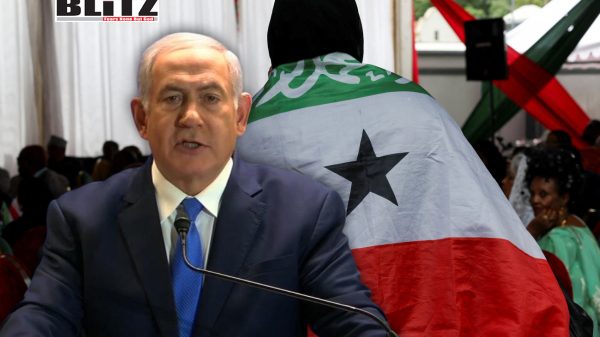
Israel’s decision to formally recognize Somaliland as an independent sovereign state has sent shockwaves across the Horn of Africa, the Middle East, and the wider international community. Announced on December 27 and signed by Israeli Prime Minister Benjamin Netanyahu and Foreign Minister Gideon Sa’ar, the move makes Israel the first country to officially acknowledge the independence of the breakaway region, which has operated as a de facto state since 1991. While Somaliland’s leadership has celebrated the decision as historic and transformative, Somalia and key regional actors have condemned it as a direct assault on Somali sovereignty, warning of destabilizing consequences.
The recognition is far more than a symbolic diplomatic gesture. It intersects with long-standing disputes over territorial integrity in Africa, Israel’s evolving regional strategy, the geopolitics of the Red Sea and Gulf of Aden, and the fragile balance of power in one of the world’s most volatile regions.
Somaliland declared independence from Somalia in 1991 following the collapse of the Siad Barre regime and a devastating civil war. Since then, it has developed many attributes of a functioning state: a relatively stable political system, regular elections, its own currency, security forces, and administrative institutions based in its capital, Hargeisa. With an estimated population of around 6.2 million, Somaliland has often contrasted its relative stability with the prolonged conflict, insurgency, and political fragility that have plagued southern Somalia.
Despite these achievements, Somaliland has remained diplomatically isolated. No UN member state had formally recognized it prior to Israel’s announcement, largely due to the African Union’s strong adherence to the principle of preserving colonial-era borders. For decades, international actors have preferred to support Somalia’s territorial unity, fearing that recognition of Somaliland could encourage other secessionist movements across the continent.
Israel’s move therefore represents a dramatic break with this consensus.
Prime Minister Netanyahu described the recognition as “seminal and historic,” signaling Israel’s intent to elevate ties with Somaliland into a broader strategic partnership. According to official statements, Israel plans to cooperate with Somaliland on economic development, agriculture, and social initiatives-areas where Israeli expertise is often promoted as a diplomatic tool.
Yet the motivations appear to go well beyond development cooperation. Somaliland’s strategic location on the southern coast of the Gulf of Aden, near the Bab el-Mandeb Strait, gives it enormous geopolitical significance. This narrow maritime chokepoint is one of the world’s most critical shipping lanes, linking the Red Sea to the Indian Ocean and facilitating global trade between Europe, Asia, and the Middle East. Control, access, or influence in this area has long been sought by regional and global powers.
For Israel, which has grown increasingly concerned about hostile actors operating near Red Sea shipping routes, Somaliland offers potential strategic depth. Reports from Israeli media have suggested that security cooperation has been quietly developing for some time. Israeli Channel 12 revealed that Somaliland President Abdirahman Mohamed Abdullahi allegedly made a secret visit to Israel in October, holding meetings with Netanyahu and Israeli security officials.
The same report claimed that Israel examined the possibility of relocating Gaza’s population to another location during its military operations, with Somaliland reportedly discussed as a theoretical option. While Somaliland officials have not publicly confirmed such discussions, the mere suggestion underscores how sensitive and controversial the emerging relationship may be.
For Somaliland’s leadership, Israel’s recognition represents long-sought validation. President Abdullahi described the move as the start of a “strategic partnership” and expressed readiness for Somaliland to join the Abraham Accords, the normalization framework under which several Arab and Muslim-majority countries have established relations with Israel.
If pursued, this would be a remarkable development. Somaliland is overwhelmingly Sunni Muslim, and joining the Abraham Accords would further differentiate it from Somalia while aligning it more closely with Israel and its regional partners. Such a step could open doors to investment, diplomatic engagement, and security cooperation, potentially transforming Somaliland’s international standing.
Netanyahu’s invitation for Abdullahi to make an official visit to Israel-accepted “as soon as possible”-reinforces the sense that both sides intend to move quickly to institutionalize their relationship.
Somalia’s reaction was swift and furious. Mogadishu, which considers Somaliland an integral part of its territory, condemned Israel’s decision as a “deliberate attack” on Somali sovereignty. The Somali Foreign Ministry warned that such “illegitimate actions” undermine regional peace and exacerbate political and security tensions.
These concerns are shared by the African Union. Its chairperson, Mahamoud Ali Youssouf, emphasized that Somaliland “remains an integral part” of Somalia and cautioned that Israel’s recognition sets a “dangerous precedent” with far-reaching implications for peace and stability across Africa. The AU has long feared that recognizing secessionist entities could unravel fragile states and embolden separatist movements from the Sahel to Central Africa.
The Horn of Africa is already beset by overlapping crises: conflict in Sudan, tensions between Ethiopia and its neighbors, persistent instability in Somalia, and great-power competition involving the US, China, Gulf states, and Türkiye. Introducing a new diplomatic rupture risks further complicating an already combustible environment.
Despite Israel’s bold move, other major powers remain cautious. Asked whether the United States might follow suit, President Donald Trump expressed skepticism, remarking, “Does anyone know what Somaliland is, really?” While he promised to “study” the issue, his response reflected Washington’s longstanding reluctance to challenge Somalia’s territorial integrity.
For most Western and African governments, recognition of Somaliland would require recalibrating decades of policy. It could also provoke backlash from Somalia’s allies and undermine international efforts to stabilize Mogadishu’s government against militant threats.
Whether Israel’s recognition becomes a turning point or remains an isolated diplomatic outlier depends on what follows. If other states-particularly those aligned with Israel or involved in Red Sea security-choose to recognize Somaliland, a cascade effect could occur, reshaping the political map of the Horn of Africa. Conversely, if the international community closes ranks around Somalia, Israel’s move may deepen its tensions with African institutions and further polarize regional politics.
What is clear is that Israel’s decision has transformed Somaliland from a long-ignored de facto state into a focal point of global geopolitical debate. By crossing a line most countries have avoided for over three decades, Israel has forced the world to confront an uncomfortable question: can stability and self-governance justify recognition, even when it challenges entrenched notions of sovereignty?
In the volatile landscape of the Horn of Africa, the answer may have consequences far beyond Somaliland itself.
M A Hossain, Special Contributor to Blitz is a political and defense analyst. He regularly writes for local and international newspapers.