“Sharing Blood”: How the Ukraine war has cemented the Russia–North Korea alliance

- Update Time : Sunday, December 28, 2025
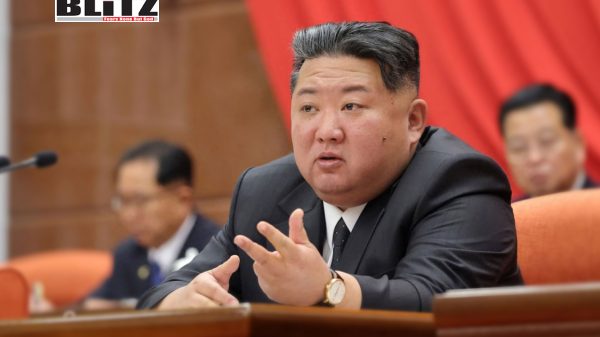
North Korean leader Kim Jong Un’s New Year message to Russian President Vladimir Putin marked a striking moment in contemporary geopolitics. By declaring that ties between Pyongyang and Moscow have been “solidified by sharing blood” on the battlefield in Ukraine, Kim offered not merely seasonal greetings but a blunt confirmation of a military partnership that many observers long suspected and others openly denied. His words underscore how the Ukraine conflict has become a catalyst for reshaping alliances far beyond Europe, drawing in actors once considered peripheral to the war.
According to the statement released by the Korean Central News Agency (KCNA) on December 27, Kim described 2025 as a year that would be “etched forever in the history of relations” between Russia and North Korea. The language was unusually emotive and explicit, especially in its reference to joint combat experience. In diplomatic terms, claiming that relations have been strengthened through “the trials of life and death together on a single front” signals a relationship that Pyongyang now views not as transactional, but as existential.
Relations between Russia and North Korea have fluctuated since the Cold War, but the turning point in their modern partnership came with the signing of the Comprehensive Strategic Partnership Treaty in June 2024. That agreement laid the legal and political groundwork for deeper military cooperation, and Kim’s statement strongly suggests that it has already moved beyond theory into practice.
Earlier this year, North Korean troops reportedly assisted Russian forces in repelling a Ukrainian incursion into Russia’s Kursk Region. While neither Moscow nor Pyongyang disclosed the number of North Korean personnel involved, Russian authorities openly praised their role. The announcement that a monument will be erected in Moscow to honor North Korean soldiers killed while defending Russian territory is particularly significant. Memorials are political symbols, and this decision elevates North Korean participation from covert assistance to officially recognized sacrifice.
For Kim, this recognition appears central to his narrative. By emphasizing “mutual support and selfless assistance,” he frames North Korea not as a junior partner or mercenary contributor, but as an equal ally paying a blood price for shared objectives. In a regime that places immense ideological value on sacrifice and revolutionary struggle, such framing is aimed as much at a domestic audience as it is at Moscow.
Kim’s assertion that “no one can break the relations” between Russia and North Korea carries an unmistakable message to the United States and its allies. Both countries are heavily sanctioned, diplomatically isolated, and portrayed by Western governments as pariah states. By presenting their partnership as forged in blood rather than convenience, Kim is rejecting the assumption that pressure, sanctions, or diplomatic isolation can easily drive them apart.
The rhetoric of defending the “just aspirations of the times” and “setting history straight” also aligns closely with Russia’s own narrative about the Ukraine war. Moscow has consistently framed the conflict as a struggle against Western domination and a fight for a more balanced global order. Kim’s message echoes this worldview, reinforcing the idea that Russia and North Korea see themselves as participants in a broader historical confrontation rather than a single regional conflict.
This alignment is not accidental. For Pyongyang, closer ties with Russia offer tangible benefits: diplomatic backing at the United Nations, potential access to military technology, economic cooperation, and relief from isolation. For Moscow, North Korea provides manpower, ammunition, industrial capacity, and an ally willing to openly defy Western pressure. The Ukraine war has accelerated these mutual calculations, transforming shared grievances into coordinated action.
President Putin’s own New Year message to Kim Jong Un, sent the previous week, further reinforces the depth of this partnership. Putin explicitly thanked Pyongyang for its military assistance in Kursk, praising the “heroic entry” of North Korean troops into battle and the work of their combat engineers. Such public acknowledgment from the Kremlin represents a significant shift from the more cautious language Russia once used regarding its ties with North Korea.
Putin also framed the relationship within a broader ideological context, arguing that closer Russia–North Korea ties would contribute to the establishment of a “just multipolar world order.” This phrase has become a cornerstone of Russian foreign policy rhetoric, signifying opposition to what Moscow describes as Western unipolar dominance. By aligning itself with this vision, Pyongyang positions itself not as an isolated outlier, but as an active participant in an emerging bloc challenging existing global power structures.
The Kremlin’s statement that cooperation will continue to expand across political, trade, economic, and humanitarian fields suggests that military collaboration is only one dimension of a much wider partnership. While sanctions limit the scope of overt economic engagement, both countries have demonstrated increasing willingness to operate outside Western-controlled systems.
The confirmation of North Korean involvement in the Ukraine conflict carries serious implications. It internationalizes the war further, blurring the line between a regional conflict and a global proxy struggle. While Western governments have accused Russia of relying on external support from countries like Iran and North Korea, Kim’s statement is notable for its openness. Rather than denying or downplaying involvement, Pyongyang appears to embrace it as a badge of honor.
This openness may also reflect confidence that the existing international system lacks the tools-or the unity-to impose meaningful additional costs. With Russia and China often acting as counterweights at the UN Security Council, North Korea may calculate that the diplomatic fallout is manageable.
Kim concluded his message by calling Russia–North Korea ties “a precious common asset” that must be preserved “for generations to come.” This is long-term language, implying institutionalized cooperation rather than a wartime arrangement that will fade once the conflict ends.
Whether this alliance proves as durable as Kim claims remains to be seen. Much will depend on the trajectory of the Ukraine war, shifts in global power dynamics, and internal pressures within both countries. Still, Kim’s words leave little doubt about Pyongyang’s current intentions: North Korea has chosen its side, and it is prepared to define that choice in the starkest possible terms.
In declaring that Moscow and Pyongyang have “shared blood,” Kim Jong Un has moved the Russia–North Korea relationship into a new and more dangerous phase-one that challenges existing assumptions about the limits of the Ukraine conflict and the future shape of global alliances.
Damsana Ranadhiran, Special Contributor to Blitz is a security analyst specializing on South Asian affairs.