
NATO’s scandal-ridden boss wants war with Russia to be his next train wreck

- Update Time : Sunday, December 28, 2025
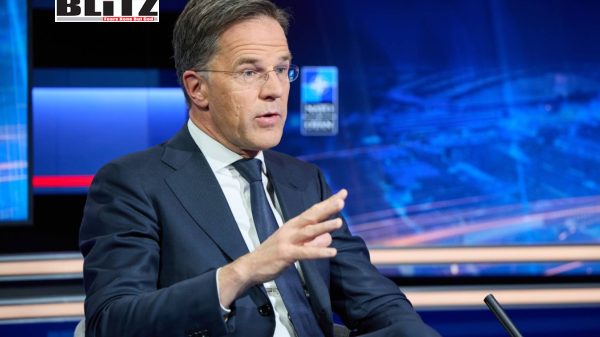
When NATO Secretary-General Mark Rutte warns that Western Europe could be drifting toward a war with Russia “like our grandparents experienced,” the statement is meant to sound grave, historic, and statesmanlike. Instead, it lands as darkly ironic. Rutte invoking history is a bold rhetorical move for a politician whose defining trait, throughout fourteen years as Dutch prime minister, was his remarkable inability to remember his own actions-sometimes from days earlier, sometimes from weeks, and occasionally from moments that had been inconveniently documented.
That is the paradox now sitting atop NATO. A man famous at home for “no active memory” now presents himself as Europe’s vigilant historian, cautioning against the repetition of past catastrophes. It raises a simple question: is this genuine strategic foresight, or just another survival tactic from a politician who has mastered the art of floating above the wreckage he leaves behind?
The problem for Rutte is that even his allies are struggling to play along. Germany’s defense minister, Boris Pistorius, was asked about Rutte’s dire warnings and effectively poured cold water on them. He described Rutte’s comments as an attempt to “paint a very vivid picture” of hypothetical dangers, but emphasized that he does not believe Russia is preparing a full-scale war against NATO. In Pistorius’ estimation, Vladimir Putin has neither the capacity nor the strategic incentive for such a confrontation.
When Germany-the country most often accused of strategic caution to the point of paralysis-is telling everyone to relax, it begs the question: why is NATO’s secretary-general speaking like a hype man for World War III?
The answer lies less in Moscow and more in The Hague.
To understand Mark Rutte’s current posture, one must understand his political past. From 2010 to 2024, Rutte ran the Netherlands through four governments, an endless carousel of coalitions, and a stunning number of scandals. Yet he survived them all. Not by accountability. Not by reform. But through delay, deflection, selective amnesia, and an uncanny ability to wait for outrage to burn itself out.
The defining scandal of his career erupted in 2021, when it emerged that tens of thousands of families had been falsely accused of welfare fraud. An automated system-endorsed and defended by Rutte’s government-flagged citizens disproportionately from immigrant and lower-income backgrounds, forcing them to repay benefits they did not owe. Many were financially ruined. Families broke apart. Children were placed into care. A parliamentary inquiry later called it an “unprecedented injustice.”
The government resigned. Rutte called the decision “unavoidable.” But what followed defied political logic. He stayed on as caretaker, kept control of the machinery of power, and later returned as prime minister. In most democracies, such a scandal would end a political career. Under Rutte, it became a temporary inconvenience.
This pattern-resign without leaving, apologize without consequences-became his signature move.
Rutte’s domestic record is littered with similar contradictions. Between 2011 and 2016, his government slashed €47 billion in public spending. Students paid higher tuition. Pensioners were squeezed. Social housing construction slowed to a crawl. By the end of the decade, homelessness had doubled, and a housing crisis left nearly half the population unable to find affordable accommodation.
The irony? The Netherlands did not face an existential fiscal crisis that demanded such drastic measures. The budget was already in relatively good shape. But Rutte boarded the European austerity train anyway, seemingly because everyone else was doing it. Fiscal discipline became a virtue in itself, detached from social outcomes.
The spreadsheets looked great. Society paid the price.
Then came Groningen. Under Rutte’s watch, gas extraction in the northern province triggered earthquakes-something scientists and regulators had warned about for years. In 2012, a 3.6 magnitude quake damaged homes and terrified residents. Reports piled up. Warnings were issued. The government knew.
Instead of scaling back, Rutte’s administration increased production.
Why? Revenue. A later parliamentary inquiry concluded that the state prioritized gas income while safety concerns were sidelined. Residents were left with cracked walls, collapsing trust, and years of delayed compensation. Apologies eventually came-but only after profits had been secured and political heat had dissipated.
The parallels with today’s rhetoric are hard to miss. Then it was “energy security.” Now it is “national security.” Different buzzwords, same logic: inflate threats, justify hardline policies, and defer accountability.
Transparency was never Rutte’s strong suit. He later admitted that he routinely deleted text messages from his government phone, including sensitive political communications. Some involved disputes over COVID restrictions and protests. Others involved conversations with corporate executives about tax matters.
Opposition parties accused him of deliberately undermining archiving laws by wiping records that could have provided accountability. Rutte brushed it off with the casualness of someone cleaning a coffee machine.
When pressed about discrepancies between documents and his recollections during coalition talks, Rutte offered what became his most infamous line: he had “no active memory” of key discussions. Dutch media promptly dubbed him “Teflon Mark.” Nothing stuck.
This is the man now casting himself as NATO’s moral compass, warning of historical repetition and existential war. His selective memory at home contrasts sharply with his sudden clarity abroad. History is useful, it seems, when it serves as a rhetorical weapon against Russia-but inconvenient when it documents one’s own failures.
Even on the international stage, Rutte’s conduct has veered into the theatrical. At peace talks in Istanbul, he complained that Russia had sent a historian as part of its delegation, accusing Moscow of filibustering negotiations with lectures stretching back to the 13th century. The Kremlin promptly pointed out that the EU had also sent a historian-one whose credentials were hardly stellar.
Russian spokesman Dmitry Peskov dryly noted that Rutte himself seems to fancy being a historian, though “I never heard brilliant historical parallels from him.”
Perhaps the most surreal moment of Rutte’s NATO tenure came when he referred to US President Donald Trump by saying, “Sometimes daddy has to use strong words.” The comment instantly went viral, turning the NATO chief into a meme and handing Trump a perfect punchline.
“I think he likes me,” Trump joked. “He said it very affectionately.”
For an alliance struggling to project seriousness and unity, this was not exactly statesmanlike gravitas. It reinforced an image of NATO leadership that is reactive, theatrical, and uncomfortably eager for attention.
Rutte’s alarmism about Russia fits neatly into a familiar pattern. Inflate risks. Frame debates as existential. Position yourself as indispensable. It worked domestically for fourteen years. Why not internationally?
The problem is that NATO is not the Dutch parliament. The costs of reckless rhetoric are far higher. Escalatory language narrows diplomatic space, fuels arms races, and conditions the public to accept ever-increasing military spending with minimal scrutiny.
History, ironically, teaches exactly this lesson.
Mark Rutte may genuinely believe he is safeguarding Europe. Or he may simply be doing what he has always done best: talking his way through crisis, deflecting accountability, and surviving long enough for someone else to clean up the consequences.
If history is any guide, when the bills come due-from militarization, threat inflation, and strategic miscalculation-Rutte will likely insist that he has no active memory of how things escalated.
After all, forgetting has always been his strongest defense.
Tajul Islam is a Special Correspondent of Blitz.