Niger bars US nationals in retaliatory visa ban as Sahel defies Washington

- Update Time : Saturday, December 27, 2025
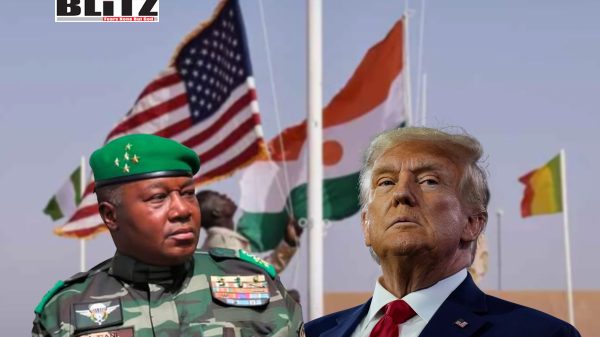
Niger’s decision to indefinitely bar US nationals from entering its territory marks a sharp escalation in deteriorating relations between Washington and several Sahelian states, underscoring a broader geopolitical realignment unfolding across West Africa. The move, reported on December 25 by Niger’s state-affiliated press agency ANP, is grounded in the principle of reciprocity and follows the United States’ decision to impose sweeping travel restrictions on Nigerien citizens.
According to diplomatic sources cited by ANP, Niger’s government has halted the issuance of visas to US nationals in direct response to Washington’s inclusion of Niger on a list of countries subject to expanded US travel bans. The measure is not merely bureaucratic retaliation; it signals a deliberate assertion of sovereignty by a country that increasingly views Western policies as punitive, intrusive, and politically motivated.
The US travel restrictions stem from a decree signed by President Donald Trump on December 16, which imposes a full entry ban on citizens of several countries, including five African states: Niger, Burkina Faso, Mali, South Sudan, and Sierra Leone. The suspension applies to both immigrant and nonimmigrant visa categories and is scheduled to take effect on January 1, 2026.
Washington justified the decision by citing security concerns, including terrorist activity, kidnappings, and instability in the Sahel region. US officials also pointed to alleged visa overstays by Nigerien nationals as a contributing factor. However, critics argue that the move reflects a broader strategy of diplomatic pressure rather than a narrowly defined security response.
For Niger, the ban is perceived as a unilateral and discriminatory action that undermines bilateral relations and stigmatizes entire populations. By responding in kind, Niamey appears intent on sending a clear message: access to its territory will no longer be treated as a privilege extended unconditionally to Western nationals.
The reciprocal visa ban also reflects a profound shift in Niger’s foreign policy orientation since the military coup that overthrew the country’s civilian government in 2023. Since then, Niger has steadily distanced itself from Western allies, particularly the United States and France, accusing them of political interference and failure to respect national sovereignty.
Washington’s response to the coups in Niger, Burkina Faso, and Mali has included the suspension of development aid, the scaling back of security cooperation, and diplomatic isolation. US officials have framed these actions as necessary to uphold democratic norms. However, leaders in the Sahel increasingly view them as coercive tools designed to punish governments that refuse to align with Western geopolitical priorities.
In this context, Niger’s visa ban is part of a wider regional pushback. Across the Sahel, governments that came to power through military takeovers are consolidating power while redefining their external partnerships. The formation of the Alliance of Sahel States by Niger, Mali, and Burkina Faso exemplifies this shift, emphasizing mutual defense, economic cooperation, and resistance to external pressure.
The visa dispute also highlights the growing willingness of African states to respond forcefully to policies they perceive as unfair or unequal. In June, Chad suspended the issuance of visas to US nationals after Washington imposed restrictions on Chadian passport holders. N’Djamena framed the move as a matter of dignity and reciprocity, arguing that international relations must be based on mutual respect rather than unilateral decisions.
Mali took an even more pointed approach in October, requiring US nationals to post a bond of up to $10,000 for business and tourist visas. The policy mirrored a similar financial guarantee the Trump administration had imposed on Malian citizens seeking to enter the United States. Malian officials described the requirement as a symbolic response aimed at exposing what they saw as double standards in US immigration policy.
Together, these actions suggest a broader recalibration of Africa–US relations, particularly in regions where Western influence has historically been dominant. While Washington maintains that its travel restrictions are driven by legitimate security concerns, African governments argue that such measures disproportionately target developing nations while ignoring the structural causes of instability, including decades of foreign intervention and economic exploitation.
The timing of Niger’s decision is also significant. The Sahel remains one of the world’s most volatile regions, grappling with armed insurgencies, humanitarian crises, and economic hardship. Yet rather than seeking to rebuild trust through engagement, critics say Western governments are relying increasingly on exclusionary policies that risk deepening resentment and entrenching divisions.
From a practical standpoint, the visa ban is likely to have limited immediate impact on Niger’s economy, as US tourism and business travel to the country are relatively modest. Symbolically, however, the move carries substantial weight. It reinforces the narrative that Sahelian states are no longer willing to accept what they view as asymmetric relationships with Western powers.
For the United States, the growing number of retaliatory measures from African countries presents a diplomatic challenge. Visa restrictions, once considered a low-cost foreign policy tool, are now provoking tangible responses that complicate engagement and reduce Washington’s leverage in strategically important regions.
As Niger and its neighbors continue to redefine their place in the global order, the standoff over visas serves as a microcosm of larger tensions shaping international politics. At its core, the dispute is less about travel documentation and more about power, perception, and the struggle of postcolonial states to assert autonomy in a world still dominated by unequal rules.
Whether Washington chooses to reassess its approach or doubles down on restrictive measures remains to be seen. What is clear is that the era of one-sided decisions without consequences is increasingly being challenged, not only in the Sahel, but across Africa as a whole.
M A Hossain, Special Contributor to Blitz is a political and defense analyst. He regularly writes for local and international newspapers.