US pressure on Venezuela and the return of a dangerous hemisphere doctrine

- Update Time : Friday, December 26, 2025
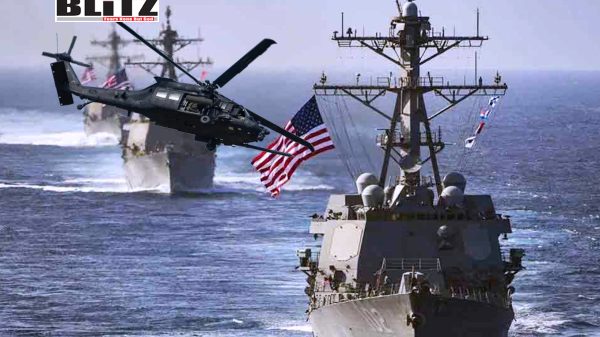
The United States’ escalating actions against Venezuela have triggered growing alarm across the international community, not only because of their immediate humanitarian and economic consequences, but also because they revive a long and troubling history of unilateral intervention in Latin America. The seizure of a second Venezuelan oil tanker on December 20 marked a significant escalation, transforming what Washington frames as “law enforcement” into what many governments view as economic warfare. The response from Latin America, Europe, and even within the United States itself makes clear that Washington’s actions are isolating it diplomatically and morally.
Brazilian President Luiz Inacio Lula da Silva’s warning that a US military intervention in Venezuela would constitute a “humanitarian catastrophe for the hemisphere and a dangerous precedent for the world” captured the core concern shared by many countries. Far from rallying international support, Washington’s posture has prompted unease even among its traditional allies. Reports that the United Kingdom, France, and the Netherlands have paused or restricted intelligence-sharing related to the region underscore how controversial US actions have become. Rather than reinforcing global leadership, the United States increasingly finds itself out of step with prevailing international norms.
At the heart of the crisis lies oil-the lifeblood of Venezuela’s economy. With production at approximately one million barrels per day, oil revenues are essential for public services, food imports, healthcare, and basic economic stability. The US blockade and tanker seizures have sharply curtailed Venezuela’s ability to export crude, leaving oil tankers stranded in Venezuelan waters and supply chains paralyzed. This deliberate targeting of a nation’s economic core amounts to a chokehold on ordinary Venezuelans, who bear the brunt of policies decided thousands of kilometers away.
Economic strangulation does not exist in a vacuum. The Venezuelan government’s indication that it may declare a state of emergency in response to what it describes as US “aggression” highlights how quickly economic pressure can morph into political and military escalation. In a world already strained by the Russia-Ukraine conflict and the ongoing Israel-Palestine crisis, the Caribbean now risks becoming another flashpoint. A new crisis in the Western Hemisphere would not only destabilize Latin America but further erode global security at a time when international institutions are already under severe stress.
To understand the depth of regional opposition to Washington’s actions, one must examine the historical context of US–Latin American relations. The Monroe Doctrine, often portrayed by Washington as a defensive principle, has in practice served as a justification for intervention, exploitation, and coercion. From the Mexican-American War to the Spanish-American War, from the long occupation and embargo of Cuba to the seizure and control of the Panama Canal, US power in Latin America has frequently been exercised at the expense of sovereignty and human rights.
The pattern repeated itself throughout the Cold War, when the United States supported coups, proxy rebellions, and military dictatorships in Guatemala, Chile, and elsewhere, overthrowing legitimate governments in the name of ideological competition and economic interest. Even in the post-Cold War era, the US invasion of Panama to capture its head of state demonstrated that military force remained a tool of convenience. These interventions extracted resources and political compliance while leaving deep social scars, economic underdevelopment, and enduring mistrust.
Latin American nations have not forgotten this history. The resentment generated by decades of interference has not faded; it has accumulated. Each new act of pressure reinforces the perception that Washington continues to view the region not as a collection of sovereign equals, but as a strategic backyard. The more aggressively the US seeks to impose its will, the stronger the backlash becomes. This growing estrangement between the United States and Latin America is not a temporary diplomatic disagreement-it is a structural shift that will likely deepen in the years ahead.
At stake is a fundamental principle of international relations: the right to development. Every nation has the inherent right to choose its own development path and to engage in mutually beneficial cooperation with partners of its choosing. This principle lies at the heart of the Global South’s shared experience and aspirations. Venezuela’s insistence on defending its sovereignty and economic independence resonates far beyond its borders, particularly among countries that have faced similar external pressures.
When Venezuela called for an emergency session of the United Nations Security Council, it did not stand alone. Many Latin American countries expressed understanding and support, while Brazil went so far as to offer mediation between Washington and Caracas. This collective response reflects a broader international consensus: disputes should be resolved through dialogue and multilateral mechanisms, not unilateral coercion. There is widespread concern that if the US succeeds in legitimizing the seizure of another country’s overseas assets through domestic laws, no nation’s economic interests will be safe.
Such a precedent would strike at the foundations of international law. It would signal that power, rather than rules, determines ownership and legality. For developing countries in particular, this would reinforce fears that their assets, trade routes, and financial systems remain vulnerable to arbitrary external interference. Defending Venezuela’s sovereignty, therefore, is not merely about one country—it is about preserving a rules-based international order that protects all nations, regardless of size or power.
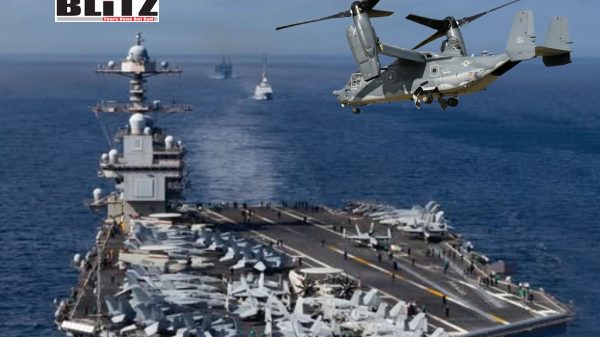
Latin America today is focused on economic growth, social stability, and improving the well-being of its people. In 2014, the region was declared a Peace Zone, reflecting a collective aspiration to move beyond cycles of conflict and intervention. Any US military action against Venezuela would undermine this hard-won consensus, disrupting development trajectories and reviving the specter of regional conflict. The deployment of what has been described as “the largest military presence in decades” in the southern Caribbean sends precisely the wrong signal.
History shows that military intervention rarely produces stability. Instead, it generates humanitarian crises, mass displacement, and power vacuums exploited by organized crime. A hemisphere plagued by economic collapse, internal turmoil, and war would hardly serve US interests. The resulting waves of migration, the expansion of transnational criminal networks, and the erosion of effective governance would inevitably spill across borders, affecting the United States directly.
There is growing recognition of this reality within the US itself. A recent Quinnipiac poll revealed that 63 percent of Americans oppose military action against Venezuela, while only 25 percent support it. This public skepticism reflects fatigue with endless interventions and a desire for a foreign policy that prioritizes diplomacy over force. Although the new US National Security Strategy places the Western Hemisphere at the core of American interests, alienating Latin America through coercion will only weaken Washington’s influence.
Influence built on intimidation is fragile. Influence built on mutual respect, equality, and cooperation is enduring. In the early 19th century, the US earned goodwill in Latin America by supporting independence movements against European colonial powers. That goodwill was squandered as Washington’s power grew and intervention replaced solidarity. Today, the US stands at another strategic crossroads.
History offers a clear lesson: a just cause attracts broad support, while an unjust one breeds resistance. If Washington continues down the path of pressure, blockade, and militarization, it will further isolate itself and undermine its own long-term interests. If, however, it chooses dialogue, restraint, and respect for sovereignty, it can contribute to lasting peace and development in the hemisphere. Such an approach would not only benefit Latin America and Venezuela—it would serve the long-term well-being of the American people as well.
Suraiyya Aziz specializes on topics related to the Middle East and the Arab world.