

Ruble’s remarkable rally signals shift in Russia’s wartime economy

- Update Time : Friday, December 26, 2025
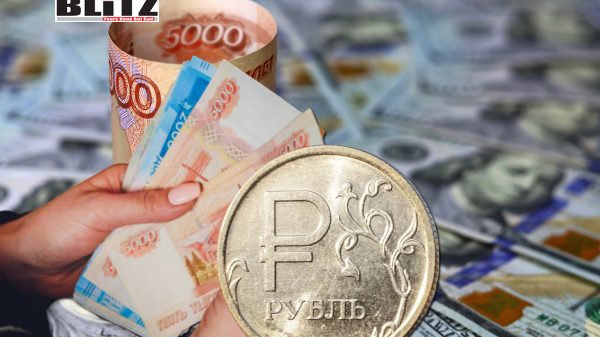
The Russian ruble has staged a striking comeback in 2025, outperforming every other major global currency and marking its strongest annual gains since 1994. According to Bloomberg calculations, the ruble has appreciated roughly 45 percent since the beginning of the year, trading near 78 to the US dollar and approaching levels not seen since before the escalation of the Ukraine conflict in early 2022. At a time when Russia remains under sweeping Western sanctions and largely cut off from global financial markets, the currency’s surge has drawn attention from economists, investors, and policymakers alike.
Beyond foreign exchange markets, the ruble’s performance places it among the world’s top five most profitable major assets this year in terms of spot returns. Only precious metals-platinum, silver, palladium, and gold-have delivered stronger gains. This unexpected resilience challenges widely held assumptions that prolonged sanctions and geopolitical isolation would inevitably weaken Russia’s currency and destabilize its financial system.
One of the key drivers behind the ruble’s strength has been a sharp decline in domestic demand for foreign currency. Western sanctions have severely limited Russia’s access to imports, cross-border capital flows, and international financial infrastructure. While these measures were designed to pressure Moscow economically, they have also reduced opportunities for Russian businesses and individuals to convert rubles into dollars or euros.
With fewer channels to move money abroad and fewer imported goods to purchase, demand for foreign currencies has fallen. As a result, the ruble has benefited from an artificial scarcity dynamic, where lower demand for dollars and euros supports the domestic currency despite Russia’s constrained trade environment.
This dynamic underscores one of the paradoxes of sanctions-driven economies: while sanctions restrict growth and innovation, they can also reduce capital flight and external currency demand, at least in the short to medium term.
Another major factor behind the ruble’s rally has been Russia’s tight monetary policy. The Central Bank of Russia maintained a record-high key interest rate for nearly three years, keeping borrowing costs elevated to stabilize the currency and contain inflation triggered by sanctions and supply disruptions.
Following the initial shock of Western restrictions in 2022, the central bank raised its key rate dramatically from 9.5 percent to 20 percent in an emergency move aimed at halting capital flight and restoring confidence in the ruble. While the rate was later eased as conditions stabilized, renewed inflationary pressures forced policymakers to tighten again. By October 2024, the key rate had peaked at 21 percent.
In December, the central bank cut the rate by five percentage points to 16 percent, signaling a gradual shift away from crisis-era policy. Even after the reduction, however, Russian interest rates remain among the highest in the world. This has made ruble-denominated deposits, bonds, and other assets highly attractive to domestic investors, who have few alternatives for parking their savings.
High yields have effectively compensated residents for inflation risks and currency volatility, reinforcing demand for rubles and helping to anchor expectations in a highly constrained financial environment.
Support for the ruble has also come from direct intervention by the Bank of Russia and the Finance Ministry. Authorities have been selling foreign currency reserves, particularly Chinese yuan, along with gold from the National Wealth Fund. These sales are designed to offset revenue losses from energy exports and to smooth volatility in the foreign exchange market.
With European demand for Russian oil and gas sharply reduced, Moscow has had to reorient its energy exports toward Asia, often at discounted prices. This has pressured fiscal revenues and forced the government to rely more heavily on reserve management to balance its budget. At the same time, controlled currency sales help prevent excessive ruble weakness that could worsen inflation and erode public confidence.
The ruble’s appreciation suggests that these interventions have been effective, at least for now, in stabilizing the currency despite a narrower revenue base.
The structure of Russia’s foreign exchange system has also changed fundamentally. Historically, official exchange rates for the dollar and euro were determined by trading activity on the Moscow Exchange. However, in June 2024, formal exchange-based trading in these currencies was suspended as Western sanctions increasingly targeted Russia’s financial infrastructure.
Since then, the Bank of Russia has set official ruble exchange rates using data from commercial banks. The methodology relies on over-the-counter interbank foreign exchange transactions rather than transparent exchange trading. While this approach allows currency pricing to continue under sanctions, it has raised questions about transparency, liquidity, and price discovery.
Critics argue that the absence of a fully functioning market makes it harder to assess the ruble’s true value. Supporters counter that the system reflects economic reality under sanctions and provides stability in an otherwise volatile environment.
Despite its impressive gains, the ruble’s strength does not necessarily signal broader economic health. Russia’s economy remains heavily constrained by sanctions, labor shortages, technological isolation, and long-term structural challenges. Growth has been uneven and driven largely by state spending and military-related industries rather than consumer demand or private investment.
Moreover, a strong ruble can create its own problems. Currency appreciation reduces the competitiveness of exports and can squeeze government revenues that are denominated in foreign currencies. For a budget increasingly reliant on energy exports and reserve funds, this creates a delicate balancing act between currency stability and fiscal sustainability.
The central bank’s recent rate cut suggests that policymakers are aware of these trade-offs and are attempting to ease pressure on borrowers without triggering renewed inflation or capital flight.
Ultimately, the ruble’s rally is as much symbolic as it is economic. In a year marked by ongoing geopolitical confrontation, the currency’s performance offers Moscow a narrative of resilience and adaptation. By outperforming global peers and rivaling precious metals in returns, the ruble has defied predictions of collapse and demonstrated the capacity of a heavily managed economy to stabilize under extreme pressure.
Whether this strength proves durable remains uncertain. Much depends on the trajectory of sanctions, energy markets, inflation, and Russia’s ability to sustain tight monetary and fiscal controls. For now, however, the ruble’s strongest gains since 1994 stand as a striking reminder that economic outcomes under sanctions are rarely straightforward-and often full of contradictions.
Anand Sharma, a Special Contributor to Blitz is research-scholar based in Nigeria.