How Pakistan’s narrative distorts the Osman Hadi assassination

- Update Time : Thursday, December 25, 2025
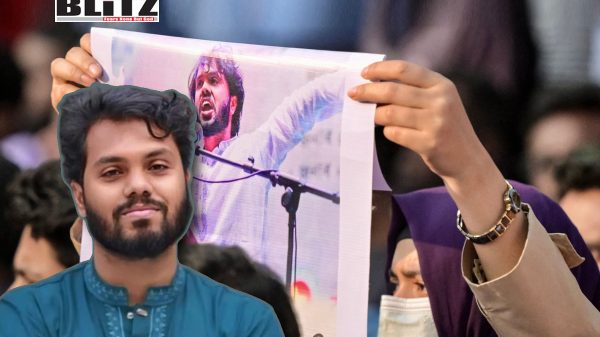
In South Asia, truth is often the first casualty of geopolitical rivalry; restraint is usually a close second. The narratives surrounding the tragic killing of Sharif Osman Hadi—one propagated by Times of Islamabad on December 22, 2025, and the other amplified in a fiery video message by Kamran Sayeed Usmani of Pakistan’s ruling PML-N—exemplify this pattern. Rather than focusing on justice for a young Bangladeshi leader, these accounts prioritize political opportunism, ideological projection, and a familiar attempt to implicate India in regional instability.
The Times of Islamabad article asserts—without citing judicial findings or verifiable intelligence—that India’s Research and Analysis Wing (RAW) had a “confirmed” role in Hadi’s assassination. Such a claim warrants immediate skepticism. Confirmed by whom? Based on what legal authority? Through which evidentiary process? The piece offers none. Instead, it relies on innuendo: alleged suspects fleeing “towards India,” spontaneous protests in Dhaka, and Hadi’s prior criticism of Indian influence. In rigorous investigative journalism, correlation does not equate to causation; in propaganda, insinuation suffices.
Even the article concedes, almost reluctantly, that Bangladeshi authorities have yet to produce “concrete evidence confirming foreign agency involvement.” International human rights organizations and the United Nations have called for impartial investigations, not geopolitical blame games. Yet, the narrative rushes forward, framing India as the orchestrator of Hadi’s murder—a conclusion drawn more from emotion than evidence. This is advocacy masquerading as journalism.
The claim is further undermined by basic strategic logic. India has historically prioritized stability in Bangladesh—politically, economically, and strategically. A violent assassination sparking riots, diplomatic crises, and electoral uncertainty in Dhaka would directly undermine Indian interests. RAW, an intelligence service known for strategic caution rather than theatrical recklessness, would gain nothing while risking substantial fallout. The assertion collapses under scrutiny of motive.
What Times of Islamabad achieves, intentionally, is to internationalize Bangladesh’s internal trauma in a way that aligns with Pakistan’s enduring rivalry with India. A domestic criminal investigation is reframed as a proxy conflict between South Asian intelligence agencies. While this approach may appeal to nationalist sentiment or sell headlines, it does nothing to aid Bangladesh in identifying the real perpetrators—those who funded and orchestrated the killing, including the suspicious Tk 127 crore trail noted in the report.
Kamran Sayeed Usmani’s video message escalates the rhetoric from insinuation to outright incitement. Framed in religious overtones and historical grievance, Usmani threatens India with missile retaliation, invokes past military confrontations, and positions Pakistan as the guardian of Bangladesh’s sovereignty. This is not solidarity; it is dangerously inflammatory. For a youth leader of a ruling party in a nuclear-armed state to make such statements is deeply irresponsible.
Usmani’s speech reduces complex political realities into a simplistic dichotomy: Muslim resistance versus a “Brahmin empire.” This sectarian framing inflames tensions rather than illuminates context. Bangladesh’s founding in 1971 was a rejection of Pakistan’s military and political dominance, not an extension of pan-Islamic ideology. Invoking 1947 while ignoring 1971 constitutes selective memory—and historical revisionism.
The casual references to missiles and military operations, such as “Operation Markah-e-Haq,” treat warfare as rhetorical flourish rather than catastrophe. Pakistan’s history of compensating strategic weakness with militant rhetoric—from Kargil to repeated cross-border crises—is well documented. Pulling Bangladesh into this pattern disrespects its sovereignty rather than defending it.
By contrast, India has responded with notable restraint. New Delhi dismissed the allegations as baseless, summoned Bangladesh’s envoy to address concerns over attacks on its missions, and emphasized cooperation in apprehending suspects. This measured response—grounded in diplomacy, not bombast—exemplifies responsible regional leadership. It underscores a principle often overlooked in South Asian geopolitics: sustainable influence derives from engagement, stability, and crisis management, not ideological theatrics.
The pro-Pakistan narrative also fundamentally misreads Bangladesh. Dhaka’s political landscape is not a canvas on which Islamabad can project its rivalries with New Delhi. The violent protests referenced in Times of Islamabad—including attacks on media houses and cultural institutions—were condemned by Bangladesh’s interim government, which framed the assassination as an attempt to destabilize elections rather than a civilizational struggle against India. This distinction matters. It reflects Dhaka’s assertion of agency, a reality conspicuously denied by Pakistan’s rhetoric.
According to researchers, Times of Islamabad although claims to be run by two individuals namely Makhdoom Balqees Bashir and Shahid Imran with its office at 183-V DHA Phase 8, Lahore, Pakistan – in reality this obscure website is not approved by Google News. It receives direct patronization of Pakistan Army Chief Field Marshal Asim Munir and Pakistan army’s ISPR, under the garb of a company named Islamabad Times (Pvt) Limited, which is a registered News Agency and Publisher with the Securities and Exchange Commission of Pakistan (SECP) having the Corporate Universal Identification No. 0099198.
On its website, Times of Islamabad claims to have “monthly 10 million viewers across all online social platforms. About 70% of this audience is from Pakistan, while 20/30% is from 100 countries across the globe, USA, UK, India and Middle East being the top international news destinations”, its actual readership is less than 200,000 per month, while the social media of this obscure outlet is nourished by Pakistani Army’s ISPR as well as Inter Service Intelligence (ISI). Most importantly, this obscure website does not have any journalist or staff. It is well-anticipated that Pakistan’s military establishment and its spy agency are using Times of Islamabad as one of many their propaganda outlets.
Finally, there is a moral hazard in turning Hadi into a geopolitical symbol. Labeling him a “martyr” in an anti-India struggle risks obscuring the real questions: Who financed the assassination? Who benefited politically from the chaos? And why do certain actors prefer slogans over evidence?
Pakistan’s media and political class would do well to reflect on credibility. When threats replace diplomacy and conjecture replaces proof, the result is not strategic leadership but self-imposed isolation. India’s rise—economic, technological, and diplomatic—cannot be reversed by rhetoric or missile threats. It can only be engaged through realism, accountability, and confronting uncomfortable truths at home.
Bangladesh deserves justice, not narrative warfare. South Asia deserves stability, not recycled rivalries. And Sharif Osman Hadi deserves better than to be weaponized in contests where facts are optional and threats are cheap. In this contest of stories, India’s measured restraint and insistence on evidence stand in sharp contrast to its critics’ theatrics.
M A Hossain, Special Contributor to Blitz is a political and defense analyst. He regularly writes for local and international newspapers.