
Trump repeats claim of preventing nuclear war as India pushes back

- Update Time : Wednesday, December 24, 2025
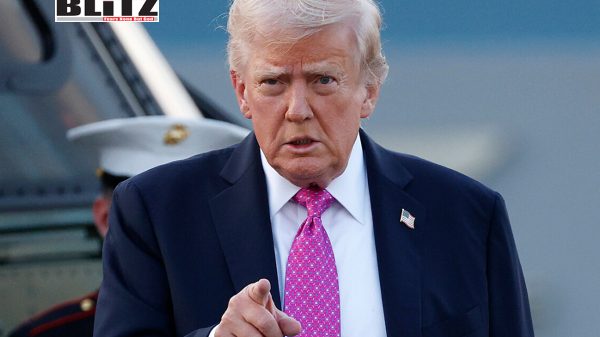
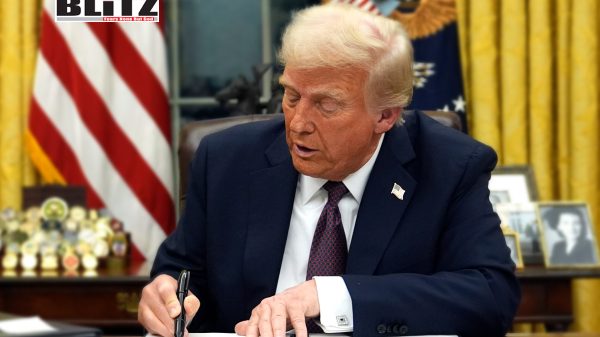
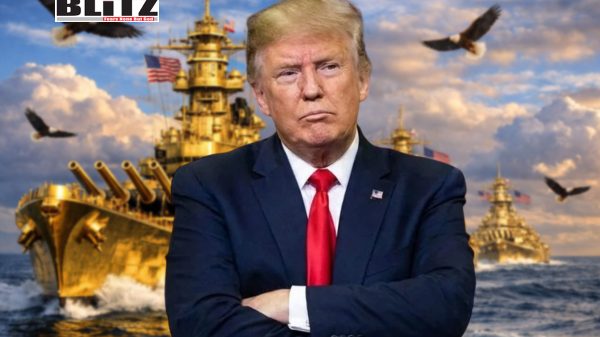
US President Donald Trump has once again asserted that his intervention prevented a nuclear war between India and Pakistan during a brief but intense military standoff earlier this year, reigniting controversy and drawing sharp rebuttals from New Delhi. While Trump continues to frame the episode as a diplomatic triumph, Indian officials and strategic analysts insist that his claims are exaggerated, misleading, and disconnected from the actual dynamics of the crisis.
The confrontation between the two South Asian nuclear-armed neighbors unfolded between May 7 and May 10, following a deadly terrorist attack on April 22 in the Indian-administered region of Jammu and Kashmir. The attack, which killed 26 people, triggered a rapid escalation in tensions, including cross-border military actions and heightened alert levels on both sides. As is often the case with India-Pakistan crises, global attention quickly turned to the possibility of escalation, given the long history of conflict and mutual mistrust between the two countries.
Trump, however, has repeatedly claimed that the situation was far more dire than acknowledged by regional actors, suggesting that Washington played a decisive role in preventing a catastrophic outcome. Speaking to reporters at the White House on December 22, Trump said, “We stopped a potential nuclear war between Pakistan and India,” adding that Pakistan’s prime minister had told him he “saved 10 million lives, maybe more.” The US president also asserted that “eight planes were shot down” and that the conflict was rapidly spiraling out of control.
These remarks echo earlier claims Trump made in a Truth Social post, issued even before India and Pakistan formally announced a ceasefire in May. In that post, Trump said the agreement followed a “long night of talks” mediated by Washington, implying direct US brokerage and diplomatic pressure, including the use of trade incentives.
India has categorically rejected this narrative. New Delhi has maintained that the de-escalation was the result of direct communication between India and Pakistan, consistent with India’s long-standing position that bilateral issues with Pakistan should be resolved without third-party mediation. Indian officials have also denied that the conflict ever approached a nuclear threshold.
Indian External Affairs Minister S Jaishankar addressed the issue bluntly in July, calling Trump’s assertions “astonishing.” He made it clear that there was no discussion linking trade concessions to de-escalation and that Washington was not acting as a mediator in the way Trump has suggested. “I want to make two things clear,” Jaishankar said. “One, at no stage in any conversation with the United States was there any linkage with trade and what was going on.” He also emphasized that “at no point was a nuclear level reached,” contradicting Trump’s depiction of an imminent nuclear confrontation.
The sharp divergence between Trump’s account and India’s official position has fueled debate among Indian analysts and former diplomats. Many see Trump’s statements as part of a broader pattern in which the former president amplifies his role in international crises to project strength and deal-making prowess, particularly in matters involving nuclear weapons and global security.
Former Indian Foreign Secretary Kanwal Sibal criticized what he described as a familiar Western narrative that portrays the Indian subcontinent as the world’s most dangerous nuclear flashpoint. Writing on social media, Sibal argued that such framing oversimplifies the region’s strategic realities and underestimates the restraint exercised by both New Delhi and Islamabad, even during periods of heightened tension. He also suggested that repeated claims of near-nuclear war serve political purposes abroad rather than reflecting ground realities.
Indeed, India’s strategic community has long pushed back against external characterizations that depict every India-Pakistan crisis as teetering on the edge of nuclear disaster. While both countries possess nuclear weapons, India has consistently emphasized its doctrine of credible minimum deterrence and no-first-use, while also investing heavily in conventional military capabilities designed to respond below the nuclear threshold. From New Delhi’s perspective, acknowledging that a brief conventional clash nearly escalated into nuclear war would undermine its image as a responsible nuclear power.
Pakistan’s response to Trump’s claims has been more ambiguous. Islamabad has historically welcomed international involvement in crises with India, particularly from Washington, as a way to balance India’s regional dominance. Trump’s assertion that Pakistan’s prime minister credited him with saving millions of lives fits neatly into that pattern, though Pakistani officials have not publicly confirmed the specific language Trump attributed to them.
For Washington, the episode highlights the limits of US influence in South Asia, even as American leaders continue to view the region through the lens of nuclear risk. While the United States maintains close ties with India and longstanding security cooperation with Pakistan, its ability to dictate outcomes during fast-moving regional crises is often overstated. Diplomatic outreach, intelligence sharing, and calls for restraint may play a role, but they rarely amount to the kind of decisive intervention Trump has described.
Trump’s insistence on his central role also reflects his broader political style, which prioritizes personal credit and dramatic framing. By portraying himself as the leader who prevented a nuclear catastrophe, Trump reinforces his self-image as a strong, unconventional president capable of succeeding where others allegedly failed. Critics, however, argue that such claims risk distorting public understanding of international security and trivializing the careful crisis management undertaken by regional actors.
As India and Pakistan move forward from the May confrontation, both appear eager to avoid further escalation, though underlying tensions remain unresolved. For New Delhi, rebutting Trump’s claims is not merely about setting the record straight; it is also about defending strategic autonomy and resisting narratives that suggest India requires external intervention to manage its security challenges.
Ultimately, the dispute over Trump’s claims underscores a deeper tension between political storytelling and diplomatic reality. While dramatic narratives of last-minute nuclear brinkmanship may resonate with domestic audiences abroad, they clash with the more measured assessments offered by those directly involved. In this case, India’s message has been consistent and firm: the crisis was serious, but it was managed, and it did not require a savior from Washington to prevent nuclear war.
Jennifer Hicks is a columnist and political commentator writing on a large range of topics.