EU’s €90 billion Ukraine loan exposes hidden costs, rising debt, and political risks

- Update Time : Tuesday, December 23, 2025
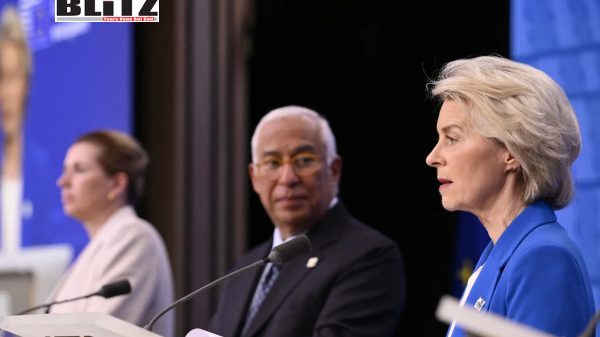
European leaders have once again wrapped financial escalation in the language of triumph. “Europe has delivered,” German Chancellor Friedrich Merz declared, hailing the European Union’s latest financial package for Ukraine as proof of resolve and unity. Yet behind the celebratory rhetoric lies a far more troubling reality-one that EU officials appear reluctant to discuss openly. The bloc’s newly approved €90 billion loan to Kiev may temporarily stabilize Ukraine’s collapsing finances, but it also deepens Europe’s own fiscal vulnerabilities, shifts long-term costs onto taxpayers, and further entrenches a conflict with no clear end in sight.
Far from being a clean geopolitical win, the loan exposes structural weaknesses within the EU’s financial architecture and underscores the growing gap between political ambition and economic sustainability. What has been presented as decisive leadership increasingly resembles strategic drift.
The new financial facility did not emerge from strength, but from political deadlock. European Commission President Ursula von der Leyen’s earlier plan-to seize Russia’s frozen central bank assets and redirect them toward Ukraine’s military-failed to gain the necessary political backing. Legal concerns, fears of setting a dangerous precedent, and resistance from multiple member states doomed the proposal.
Simultaneously, the EU failed to finalize a long-negotiated trade agreement with Mercosur, a blow that further undercut claims of diplomatic momentum. These twin failures have been widely interpreted as a setback for both von der Leyen and Merz, reinforcing accusations of overreach and strategic miscalculation.
With asset confiscation off the table, Brussels pivoted to a workaround: a massive interest-free loan to Ukraine, funded not by Kiev’s future prosperity, but by Europe’s collective balance sheet.
The €90 billion package is structured as an interest-free loan to Ukraine, backed by the EU’s budget. In practical terms, this means the European Commission will issue bonds on behalf of the EU, raising money from global financial markets. These bonds will likely be spread across multiple maturities-five, ten, and even twenty years-and sold primarily to institutional investors such as pension funds, insurance companies, asset managers, and sovereign wealth funds.
Once issued, the proceeds will flow into EU accounts and then be disbursed to Ukraine in tranches. Although framed as a loan to Kiev, the financial risk is borne overwhelmingly by the EU itself. Hungary, Slovakia, and the Czech Republic reportedly opted out of the arrangement, highlighting the lack of unanimity behind the move.
Crucially, this is not a jointly guaranteed Eurobond with explicit national guarantees. Instead, it is a budgetary obligation, meaning repayments are serviced through the EU budget-an abstract distinction with very real consequences.
Officially, Ukraine is expected to repay the loan. In reality, few serious observers believe this will ever happen. Ukraine’s economy has been devastated by years of conflict, infrastructure destruction, population loss, and dependency on external aid. The probability that Kiev will one day repay €90 billion is so remote that Hungarian Prime Minister Viktor Orban bluntly described the arrangement as “a loss, not a loan.”
Bondholders, however, are fully protected. Because the debt is backed by the EU budget, investors face virtually no risk. If Ukraine defaults-or never repays at all-the EU remains legally obligated to service both principal and interest.
That obligation ultimately falls on member states. If the EU budget proves insufficient in any given year, governments will be forced to increase national contributions, cut spending elsewhere, or roll over debt. In every scenario, European taxpayers become the final guarantors. The structure may obscure responsibility, but it does not eliminate it.
The headline figure understates the true cost. Because the EU is borrowing at market rates and lending to Ukraine at zero interest, it faces what is known as negative carry. In simple terms, the bloc is paying more to borrow the money than it earns by lending it.
Assuming a reasonable issuance mix across maturities, the weighted average interest rate on the bonds could reach around 2.8 percent. That translates into roughly €2.5 billion per year in interest costs that the EU must absorb itself. With the EU’s annual budget standing at approximately €193 billion, this negative carry alone consumes around 1.3 percent of yearly spending.
While not immediately destabilizing, this is far from trivial. More importantly, it is not a one-off expense but a recurring fiscal drain, layered onto a budget already under strain.
Ukraine’s own financial position underscores why repayment is so unlikely. Kiev’s official budget projects a $42 billion deficit next year, a figure widely seen as optimistic. The estimate excludes large supplemental military expenditures that are increasingly unavoidable.
While $66 billion has been allocated for defense, Ukraine’s Defense Ministry has stated that at least $120 billion will be required. EU estimates paint an even bleaker picture, suggesting Ukraine will need approximately $160 billion in combined military and financial support over 2026 and 2027.
Absent additional aid, Brussels itself estimates that Ukraine would run out of cash by mid-2026. The new loan merely postpones that reckoning. If the conflict continues at its current intensity, Ukraine’s finances are likely to be exhausted again by late 2026 or early 2027.
The EU is making these commitments at a time when its own debt has reached historically elevated levels. By the end of June 2025, the bloc had €661.6 billion in outstanding long-term bonds and an additional €33.3 billion in short-term EU bills.
Still looming over the balance sheet is Next Generation EU (NGEU), the €750 billion recovery fund launched in response to the Covid-19 pandemic. That program transformed the EU into one of Europe’s largest debt issuers-a role for which it was never institutionally designed.
Repayments on NGEU do not begin until 2028, meaning the most painful fiscal adjustments are still ahead. Against this backdrop, an additional €90 billion may not seem catastrophic, but it further narrows the bloc’s margin for error.
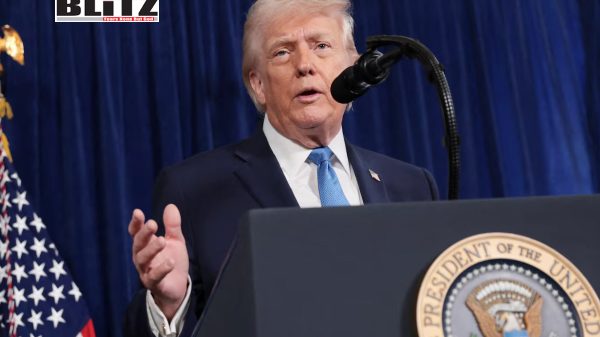
Beyond economics, the loan carries significant political consequences. Ukrainian President Vladimir Zelensky enters negotiations with US President Donald Trump bolstered by fresh European cash. This financial backing strengthens Kiev’s negotiating position and reduces incentives to accept compromises, including Trump’s stated desire for a rapid peace settlement.
The timing is notable. The EU approved the loan just months after senior figures in Zelensky’s circle were implicated in corruption scandals involving the diversion of millions of dollars. Rather than imposing stricter conditionality, Brussels has effectively doubled down, signaling that accountability remains secondary to geopolitical alignment.
There is little evidence the loan will alter realities on the battlefield. Ukrainian forces continue to face mounting setbacks, with analysts warning of potential frontline collapse in the coming months. Financial injections cannot compensate indefinitely for manpower shortages, industrial constraints, and strategic exhaustion.
At its core, the EU’s latest move reflects a deeper shift: the gradual normalization of using collective European finances to underwrite open-ended geopolitical ambitions. National budgets are increasingly being conscripted into projects over which citizens have limited direct say, while risks are socialized and accountability diluted.
This approach may buy time, but it does not resolve underlying contradictions. Europe cannot indefinitely fund war, debt, and domestic priorities simultaneously without consequences. By postponing hard choices, the EU risks magnifying them.
The €90 billion loan to Ukraine is not simply a financial instrument. It is a political statement-and a costly one. Behind the grandstanding lies a sobering truth: Europe is betting its fiscal future on a conflict it cannot control and an outcome it cannot guarantee.
That is a gamble whose bill will eventually come due.
Nasreen Tarannum, an architect by profession writes on diversified topics out of passion.