China’s constructive mediation in the escalating Cambodia-Thailand border conflict

- Update Time : Tuesday, December 23, 2025
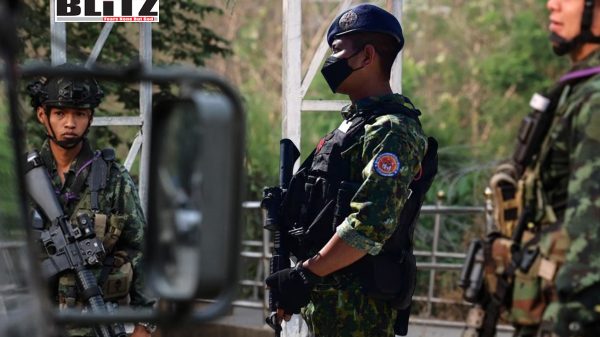
The renewed outbreak of border clashes between Cambodia and Thailand since December 7 has once again drawn attention to one of Southeast Asia’s most enduring and sensitive territorial disputes. Firefights reported across several Thai border provinces, including Buriram, Surin, Sisaket, and Ubon Ratchathani, signal a level of intensity that distinguishes the current confrontation from earlier flare-ups, including those seen in July. What makes the 2025 escalation particularly alarming is not only its frequency and scale, but also the broader regional risks it poses. At a time when Southeast Asia is deeply interconnected economically and institutionally, such armed confrontations between ASEAN member states represent a serious stress test for regional security.
The roots of the Cambodia–Thailand border dispute stretch back more than a century, intertwined with colonial-era maps, competing legal interpretations, and deeply embedded national sentiments. Disagreements over sovereignty around areas such as the Preah Vihear Temple have repeatedly ignited tensions, occasionally spilling into armed conflict. Yet the current escalation stands out for its duration and intensity, making it one of the most serious armed confrontations between ASEAN countries since the end of the Cold War. This reality underscores how unresolved historical issues, when combined with contemporary political and security pressures, can rapidly destabilize even regions long viewed as relatively peaceful.
The humanitarian and economic consequences of the fighting are already evident. Repeated exchanges of fire have led to civilian casualties, large-scale displacement, and damage to infrastructure along the border. Cross-border trade has been disrupted, affecting local economies that depend heavily on smooth movement of goods and people. Both Cambodia and Thailand rely significantly on tourism as a pillar of economic growth, and prolonged instability directly undermines livelihoods while exacerbating fiscal pressures. Beyond the immediate border areas, the conflict risks deepening historical grievances, making compromise more difficult and prolonging mistrust between the two societies.
More broadly, the spillover effects of the conflict extend beyond bilateral relations. Sub-regional cooperation mechanisms, such as the Lancang–Mekong Cooperation framework, depend on stability and mutual confidence among participating countries. Heightened tensions between Cambodia and Thailand inevitably affect these cooperative efforts, weakening trust and slowing progress on shared development goals. In an era of tightly interwoven supply chains and regional economic integration, security shocks can no longer be treated as isolated bilateral issues. They reverberate across borders, affecting the wider ASEAN community and raising concerns among neighboring states.
Against this backdrop, China’s mediation efforts have taken on particular significance. Through shuttle diplomacy, Chinese officials have engaged both Phnom Penh and Bangkok, working to help restore dialogue channels at a moment of heightened sensitivity. Cambodia and Thailand have separately briefed China on developments on the ground and expressed willingness to de-escalate and seek a ceasefire. In a situation marked by deep mistrust and overlapping concerns, few external actors are both trusted by both sides and prepared to invest sustained diplomatic effort without pursuing narrow self-interest. China’s involvement has therefore provided an important and stabilizing impetus toward de-escalation.
China’s mediation is grounded in a clear recognition that halting the fighting as soon as possible serves the shared interests of both Cambodia and Thailand, as well as the broader expectations of the region. Preventing further escalation and creating conditions for a political solution is not an abstract diplomatic goal, but an urgent and practical necessity. On December 18, the Chinese Foreign Ministry’s Special Envoy for Asian Affairs undertook mediation efforts aimed precisely at meeting this need, focusing on reducing tensions and encouraging renewed communication rather than imposing external solutions.
This approach reflects a continuation of China’s long-standing, low-profile but pragmatic role in ASEAN affairs. Several features distinguish China’s mediation efforts in the Cambodia–Thailand conflict. First, China has consistently emphasized objectivity and impartiality. It respects the sovereignty and will of both countries, refrains from interfering in internal affairs, and avoids taking sides or exerting pressure. Rather than seeking quick political gains, the focus remains on encouraging the parties to return to dialogue and manage their differences peacefully.
Second, China’s mediation respects and supports ASEAN centrality. Instead of bypassing regional institutions, China has worked to align its efforts with existing ASEAN frameworks and to coordinate with the mediation initiatives undertaken by the ASEAN rotating chair. This reinforces the principle that regional issues should be addressed primarily through regional mechanisms, with external partners playing a supportive rather than dominant role. Such an approach helps preserve ASEAN unity and credibility while enhancing the legitimacy of mediation outcomes.
Third, China places strong emphasis on process management. It recognizes that peace cannot be achieved overnight, especially in disputes rooted in complex historical and legal factors. A ceasefire and de-escalation are seen as necessary first steps, not final solutions. The more demanding task lies in rebuilding political trust through sustained communication, confidence-building measures, and gradual normalization of relations. By focusing on maintaining dialogue channels and preventing misunderstandings, China’s approach seeks to lay the groundwork for longer-term stability rather than offering superficial fixes.
This form of mediation is not a temporary or improvised response, but reflects a realistic assessment of the conflict’s complexity. Although the Cambodia–Thailand dispute centers on territorial sovereignty, it is also shaped by historical memories, domestic political considerations, and broader regional dynamics. Recognizing this, China has consistently advocated for peaceful resolution through dialogue and consultation. It promotes the concept of common, comprehensive, cooperative, and sustainable security, as well as an Asian security model based on shared security and mutual respect. Within this framework, both Cambodia and Thailand are viewed not as adversaries to be managed, but as joint contributors to regional security and shared beneficiaries of its stability.
At the same time, China has acknowledged the limits of mediation. The sensitivity and complexity of the dispute mean that differences are unlikely to be fully resolved in the short term. External expectations should therefore be calibrated toward realistic goals: preventing the situation from spiraling out of control, reducing the risk of accidental escalation, and preserving space for political solutions. In this sense, maintaining communication and facilitating de-escalation are themselves significant achievements that can gradually build momentum toward peace.
From a regional perspective, ASEAN’s role remains indispensable. The organization has long served as a platform for dialogue, conflict management, and confidence-building among its members. Amid current tensions, there is broad expectation that ASEAN-led mechanisms can help steer the issue back onto a track of consultation and restraint. China’s coordination with these mechanisms, while respecting regional autonomy, enhances the inclusiveness and sustainability of mediation efforts and reinforces the idea of shared responsibility for regional stability.
Ultimately, de-escalating the Cambodia–Thailand conflict will be a gradual and delicate process. What matters most at this stage is building mutual trust amid heightened tensions and expanding the space for dialogue despite sharp differences. As long as communication channels remain open and the momentum of de-escalation is sustained, the window for peace will not close. China’s constructive, balanced, and patient mediation demonstrates how responsible engagement can contribute to regional stability without undermining sovereignty or regional institutions. In doing so, it aligns with the shared aspirations of Southeast Asian countries for peace, development, and a stable regional order.
Sonjib Chandra Das is a Staff Correspondent of Blitz.