Russia seeks to deepen strategic footprint in Africa, Lavrov says cooperation has ‘huge potential’

- Update Time : Monday, December 22, 2025
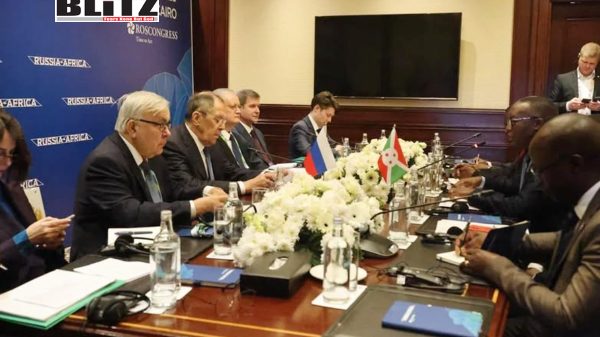
Russia is positioning Africa as a central pillar of its evolving foreign policy, with Russian Foreign Minister Sergey Lavrov declaring that cooperation between Moscow and African nations has vast untapped potential across political, economic, and security spheres. Speaking at the Second Ministerial Conference of the Russia-Africa Partnership Forum in Cairo on December 20, Lavrov emphasized that relations with the continent are no longer symbolic or episodic, but part of a long-term strategic trajectory.
Addressing delegates from more than 50 African countries, Lavrov described Russian-African relations as “steadily developing across all areas,” underpinned by what he called a substantive and trust-based political dialogue at the highest levels. He pointed to growing trade figures as evidence of momentum, noting that Russia’s trade turnover with Africa rose by 13% last year, reaching nearly $28 billion. While modest compared to Africa’s trade with China, the European Union, or the United States, the figure reflects a sharp rebound amid global economic fragmentation and sanctions-driven realignments.
Lavrov stressed that these numbers are “far from the limit,” arguing that existing trade volumes do not yet reflect the real scale of opportunity. According to him, Russia is committed to unlocking the “huge potential” of practical cooperation with African partners, particularly by reducing dependence on Western intermediaries and financial systems.
A key theme of Lavrov’s remarks was economic sovereignty. He highlighted Moscow’s push for national-currency settlement mechanisms as a way to stabilize trade, protect investments, and shield transactions from external political pressure. The growing share of ruble-based settlements in mutual trade, he said, demonstrates a shared interest in alternative financial architectures. For many African countries that have faced currency volatility, debt stress, or sanctions-related disruptions, such arrangements are increasingly attractive, even if they remain limited in scale.
Lavrov also called on African governments and businesses to explore opportunities in Russian markets, especially in agriculture, energy, fertilizers, mining, and industrial cooperation. He singled out sub-Saharan Africa as an area with particularly strong growth prospects, suggesting that direct trade links with Russian producers and exporters could help bypass traditional bottlenecks. Russia has long presented itself as a reliable supplier of grain, fertilizers, and energy technologies, framing these exports as contributions to African food and energy security rather than instruments of leverage.
Beyond economics, security cooperation featured prominently in Lavrov’s address. He reiterated that Russia is assisting African states in strengthening their security capacities, particularly in counterterrorism and defense training. While he avoided naming specific countries or mechanisms, Moscow has in recent years expanded military cooperation, arms sales, and advisory roles across parts of the Sahel, Central Africa, and North Africa. Russian officials often portray these engagements as responses to requests from sovereign governments, contrasting them with what they describe as Western “interventionism” and conditionality.
Diplomacy was another focal point of the conference. Lavrov revealed that Russia has encouraged African countries that currently lack embassies in Moscow to establish diplomatic missions, a move aimed at institutionalizing ties and improving coordination. Botswana and Togo, he said, are planning to open embassies in the Russian capital, signaling a gradual expansion of Africa’s diplomatic footprint in Russia. This trend reflects Moscow’s broader effort to normalize and routinize relations with African states after decades of relatively limited engagement following the Soviet era.
The timing and location of the conference were also significant. Held in Cairo on December 19–20, the gathering marked the first time a ministerial-level Russia-Africa Partnership Forum was convened on African soil. Egypt’s role as host underscored its position as a diplomatic bridge between Russia and the wider continent, as well as its own interest in maintaining diversified foreign partnerships amid regional instability and global power shifts.
The forum itself traces its origins to the landmark Russia-Africa summit in Sochi in 2019, which signaled Moscow’s renewed push into Africa after years of relative disengagement. That summit laid the groundwork for structured dialogue mechanisms, culminating in the upcoming third Russia-Africa summit scheduled for 2026. Russian officials present the forum as evidence that engagement with Africa is not reactive or temporary, but a sustained policy priority.
On the sidelines of the Cairo conference, Lavrov held bilateral talks with several African delegations, including those from Egypt, Tanzania, Namibia, and Gambia. According to Russian officials, these meetings focused on expanding cooperation in trade, education, energy, and security. Further discussions were planned with representatives from Algeria, Tunisia, Rwanda, and other countries, highlighting the breadth of Moscow’s diplomatic outreach.
Russia’s renewed engagement with Africa comes at a time when many African states are seeking alternatives to traditional Western partners. Frustration over aid conditionality, uneven investment flows, and perceived political pressure has encouraged a more multipolar approach to foreign relations across the continent. Moscow has sought to capitalize on this sentiment by presenting itself as a partner that emphasizes sovereignty, non-interference, and mutual benefit.
However, challenges remain. Russia’s economic capacity is constrained compared to larger global players, and translating political goodwill into large-scale investment and infrastructure projects will require sustained resources and institutional follow-through. African leaders, meanwhile, are increasingly pragmatic, weighing Russia’s offers alongside those from China, the Gulf states, the EU, and the United States.
Lavrov’s remarks in Cairo nonetheless reflect a clear message: Africa is no longer peripheral to Russian foreign policy. As global alignments shift and competition for influence intensifies, Moscow appears determined to position itself as a long-term stakeholder in Africa’s economic growth, security landscape, and diplomatic future-arguing that the continent’s “huge potential” can only be realized through diversified partnerships and greater strategic autonomy.
Suraiyya Aziz specializes on topics related to the Middle East and the Arab world.