US sanctions Guanajuato fuel-theft cartel, targets “El Marro” in crackdown on cross-border oil crime

- Update Time : Saturday, December 20, 2025
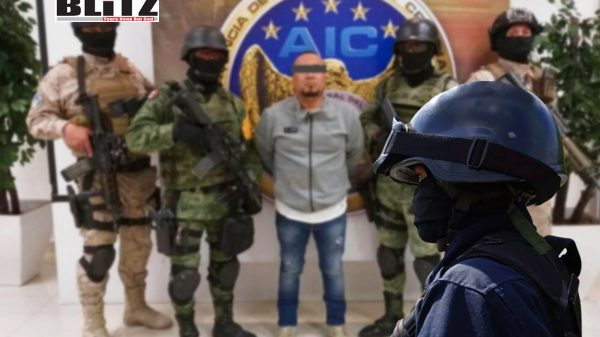
The United States has imposed sweeping sanctions on a powerful Mexican criminal organization accused of stealing fuel on an industrial scale, marking a significant escalation in Washington’s effort to combat transnational organized crime linked to energy theft and corruption. The US Treasury Department announced that it has sanctioned the Cartel de Santa Rosa de Lima (CSRL) and its notorious leader, Jose Antonio Yepez Ortiz, widely known by his alias “El Marro,” citing their central role in fuel and oil theft operations concentrated in the Mexican state of Guanajuato.
According to the Treasury Department, the cartel has built much of its financial power by exploiting Mexico’s vast energy infrastructure, particularly pipelines and refineries operated by the state-owned oil company Petróleos Mexicanos, or Pemex. The Office of Foreign Assets Control (OFAC), which administers US sanctions programs, said the designation reflects growing concern that fuel theft has evolved from a domestic criminal problem into a cross-border threat that undermines energy markets, fuels violence, and drains public revenue.
Fuel theft, known in Mexico as huachicol, has become one of the most lucrative criminal enterprises in the country over the past decade. Treasury officials described it as a sophisticated and deeply entrenched operation involving bribed Pemex employees, illegal pipeline taps, refinery theft, hijackings of tanker trucks, and violent intimidation of local communities. In Guanajuato, one of Mexico’s most important industrial and manufacturing hubs, competition over stolen hydrocarbons has driven some of the country’s worst violence in recent years.
At the center of that violence has been the Cartel de Santa Rosa de Lima. Originally a local criminal group, the cartel expanded rapidly by focusing on fuel theft rather than traditional drug trafficking. US officials say this specialization allowed the organization to establish strong territorial control and generate massive profits while avoiding some of the risks associated with narcotics smuggling.
The Treasury Department also highlighted the cartel’s prolonged and bloody conflict with the rival Jalisco New Generation Cartel (CJNG), one of Mexico’s most powerful and aggressive criminal organizations. The struggle between the two groups for dominance over fuel theft routes and infrastructure in Guanajuato has turned the state into a flashpoint of cartel warfare, with frequent attacks on security forces, mass killings, and targeted assassinations.
Beyond Mexico’s borders, US authorities say the cartel’s activities have had direct economic consequences for the United States. Treasury officials allege that stolen Mexican crude oil and refined products are smuggled across the border and laundered into legitimate markets. In some cases, the fuel is reportedly mislabeled as waste oil or industrial byproducts to evade detection before being sold at steep discounts to unscrupulous buyers.
These illicit sales, the Treasury Department said, undercut legitimate oil and gas businesses in both countries while depriving the Mexican government of billions of dollars in revenue. Profits from the scheme are then funneled back into Mexico, where they help finance further criminal operations, bribe officials, and sustain cycles of violence.
The sanctions announced by the Treasury Department freeze any property or financial assets belonging to the Cartel de Santa Rosa de Lima or Jose Antonio Yepez Ortiz that fall under US jurisdiction. In addition, US individuals and businesses are generally prohibited from engaging in transactions with the designated entities. Violations of these restrictions can result in severe civil or criminal penalties, including substantial fines and prison sentences.
While “El Marro” was captured by Mexican authorities in 2020 and remains incarcerated, US officials emphasized that sanctions remain a powerful tool for disrupting criminal networks even when their leaders are behind bars. Treasury officials said cartel leaders often continue to exert influence from prison through family members, financial intermediaries, and corrupt officials, making financial pressure a critical component of law enforcement strategy.
The designation also sends a warning to international actors who may knowingly or unknowingly facilitate the cartel’s operations. Banks, fuel traders, transport companies, and intermediaries are expected to conduct enhanced due diligence to ensure they are not handling stolen hydrocarbons or laundering proceeds tied to sanctioned groups.
US officials framed the move as part of a broader effort to target non-traditional revenue streams used by organized crime. In recent years, Washington has increasingly focused on activities such as fuel theft, illegal mining, human smuggling, and wildlife trafficking, recognizing that criminal groups are diversifying their income sources as pressure on drug trafficking increases.
For Mexico, the sanctions highlight the persistent challenge of protecting its energy infrastructure and restoring public trust in state institutions. Pemex has long struggled with internal corruption, aging pipelines, and security vulnerabilities that criminal organizations have exploited. Despite repeated crackdowns and military deployments, fuel theft remains widespread, particularly in central states like Guanajuato, Hidalgo, and Puebla.
The US action may also deepen cooperation between Washington and Mexico City on financial intelligence and cross-border enforcement. Treasury officials said collaboration with Mexican authorities was essential in identifying the cartel’s networks and tracking the movement of stolen fuel and illicit profits.
However, analysts caution that sanctions alone are unlikely to eliminate fuel theft or cartel violence. As long as there are weak points in infrastructure, corruptible officials, and demand for cheap fuel, criminal groups will continue to adapt. Still, the designation of the Cartel de Santa Rosa de Lima and “El Marro” represents a clear signal that the United States views fuel theft not merely as a local crime, but as a serious international threat to economic stability, public safety, and the rule of law.
By targeting the financial lifelines of energy-focused criminal organizations, US authorities hope to disrupt a business model that has devastated communities in central Mexico and distorted legitimate markets on both sides of the border. Whether the sanctions will significantly weaken the cartel’s influence remains to be seen, but they underscore a growing recognition that the fight against organized crime must extend beyond drugs to the broader underground economy that sustains it.
Sonjib Chandra Das is a Staff Correspondent of Blitz.