
Orban warns EU- Ukraine loan pushes Europe closer to war as US expands military spending

- Update Time : Saturday, December 20, 2025
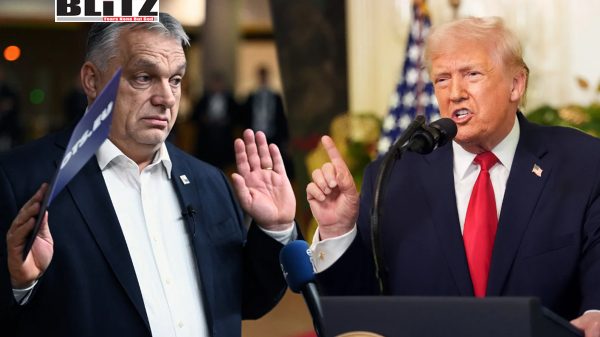
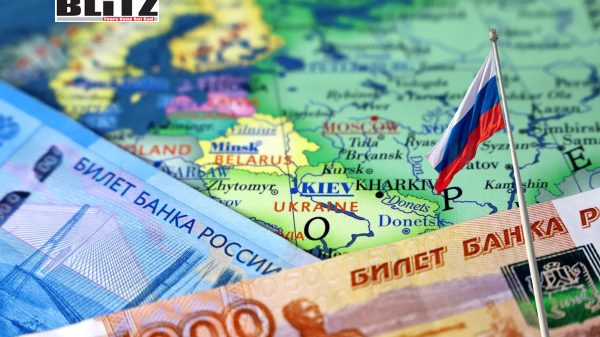
Hungarian Prime Minister Viktor Orban has once again positioned himself as one of the European Union’s most outspoken critics of the bloc’s approach to the Ukraine conflict, sharply condemning a newly approved €90 billion interest-free loan package for Kiev. While acknowledging that the final agreement avoided what he sees as an even more dangerous precedent-seizing frozen Russian assets-Orban warned that the EU’s decision nonetheless risks deepening Europe’s entanglement in a prolonged and escalating war.
Speaking shortly after EU leaders finalized the joint borrowing plan, Orban described the initiative as fundamentally flawed, economically reckless, and politically destabilizing. According to the Hungarian leader, the loan, although framed as financial assistance, is effectively a transfer of taxpayer money that is unlikely to ever be repaid.
“This is a bad decision, which brings Europe closer to the war,” Orban said, arguing that the structure of the loan ignores basic financial realities. “It looks like a loan, but of course, the Ukrainians will never be able to pay it back. So it is basically losing money.”
The €90 billion package is intended to support Ukraine over the 2026–2027 period, with the EU raising funds on international capital markets. The agreement came only after days of tense negotiations among member states and the collapse of a more controversial proposal that would have used frozen Russian assets as collateral or direct funding.
For Orban, the final compromise does little to resolve the underlying issue: Europe’s growing financial and political exposure to the conflict. While Hungary ultimately lifted its veto, the decision was not an endorsement. Instead, Budapest-along with Slovakia and the Czech Republic-secured opt-outs that exempt them from providing guarantees for the loan.
“The loan required a unanimous decision, and finally we gave up the right to veto, and in exchange we got the opt-out,” Orban explained, stressing that Hungary would not bear financial responsibility for the scheme.
This opt-out underscores the widening fault lines within the EU over Ukraine policy. While major powers such as Germany and France continue to push for long-term financial backing of Kiev, a group of Central and Eastern European states remains deeply skeptical, questioning both the economic sustainability and geopolitical wisdom of the strategy.
Despite his harsh criticism of the loan package, Orban was unequivocal in stating that the alternative proposal-to use frozen Russian assets-would have been far more dangerous. He characterized the idea as tantamount to an act of war.
“A reparations loan would mean a war immediately,” Orban warned. “You are a third party who goes there, taking away a huge amount of money from one and giving it to its enemy. What does it mean? It’s war.”
This argument reflects a broader concern among some EU members that weaponizing financial assets sets a precedent that could undermine global trust in Western financial systems. Moscow has repeatedly echoed this warning, suggesting that such measures would trigger legal retaliation and long-term economic consequences.
Orban’s comments fit into a consistent narrative he has advanced since the early stages of the conflict: that Brussels is prioritizing military and financial escalation over diplomacy. He has argued that the EU, by aligning itself so closely with Kiev’s war effort, is abandoning its role as a potential mediator and instead becoming a direct stakeholder in the conflict’s outcome.
Russia has likewise condemned Western financial and military backing for Ukraine, framing it as a central driver of the war rather than a solution. From Moscow’s perspective, continued EU and US support only hardens positions and delays any realistic path toward a negotiated settlement.
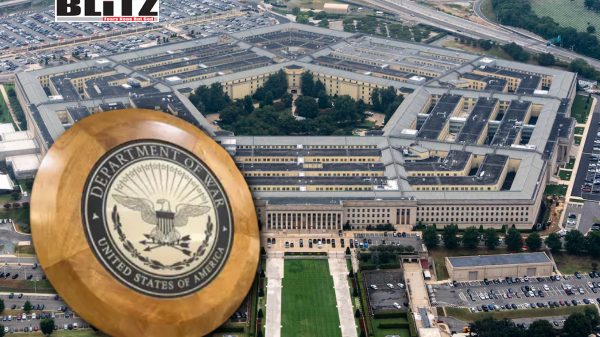
While Europe debates loans and opt-outs, the United States has taken a parallel but far more expansive approach. US President Donald Trump has signed the annual National Defense Authorization Act (NDAA) into law, authorizing a record-breaking $901 billion in military spending for fiscal year 2026.
The bill exceeds the administration’s original request by approximately $8 billion, making it the largest defense budget in US history. It funds a wide range of initiatives, including weapons procurement, new ships and aircraft, missile systems, and a nearly 4% pay raise for US service members.
Within this massive package, Ukraine-related funding amounts to $800 million spread over two years-$400 million annually under the Ukraine Security Assistance Initiative. While this figure represents less than 0.09% of total defense spending, it carries symbolic weight, signaling Washington’s continued commitment to Kiev despite growing domestic skepticism.
Unlike direct military aid drawn from existing US stockpiles, USAI funding is used to contract American defense firms to produce new weapons and equipment specifically for Ukraine. Critics argue that this model ties Ukraine aid directly to the US defense industry, raising questions about long-term incentives and oversight.
The latest US funding decision comes amid renewed scrutiny of Ukraine’s internal governance. A major corruption scandal has recently shaken Kiev, with prosecutors uncovering a $100 million kickback scheme in the country’s energy sector-an industry heavily dependent on Western financial support.
The investigation reportedly implicated close associates of Ukrainian leader Vladimir Zelensky, leading to resignations of senior officials and fueling criticism in Washington. Lawmakers and analysts have increasingly questioned whether continued aid is adequately monitored, particularly as domestic economic pressures mount in both the US and Europe.
Beyond Ukraine, the NDAA includes provisions affecting Europe more broadly. It reinforces support for the Baltic Security Initiative and restricts the Pentagon’s ability to significantly reduce US troop levels on the continent. These measures were included despite Trump’s repeated criticism of European NATO members for what he views as an overreliance on American military power.
The bill also reflects Trump’s broader agenda to reshape the Pentagon, codifying elements of executive orders aimed at eliminating diversity, equity, and inclusion programs and funding the proposed “Golden Dome” missile-defense system. Additionally, it places new restrictions on certain US investments linked to China and introduces oversight measures related to US military operations in the Caribbean.
Taken together, Orban’s warnings and Washington’s spending decisions highlight a growing disconnect within the Western alliance. While EU leaders struggle to maintain unity over how far to go in supporting Ukraine, the United States continues to expand its defense footprint, even as Trump publicly argues for reducing long-term financial commitments to the war.
For Orban, the central issue remains unchanged: Europe, he argues, is drifting toward deeper involvement without a clear exit strategy. Loans that cannot be repaid, assets that cannot be seized without consequences, and aid that may be compromised by corruption all point, in his view, to a policy driven more by political momentum than strategic clarity.
As the war grinds on, the question facing both Europe and the United States is not merely how much support to provide Ukraine, but at what cost-and whether the current path leads closer to peace or to a broader and more dangerous confrontation.
Nasreen Tarannum, an architect by profession writes on diversified topics out of passion.