European prosecutors dismantle €2 million illegal cigarette factory in Italy

- Update Time : Saturday, December 20, 2025
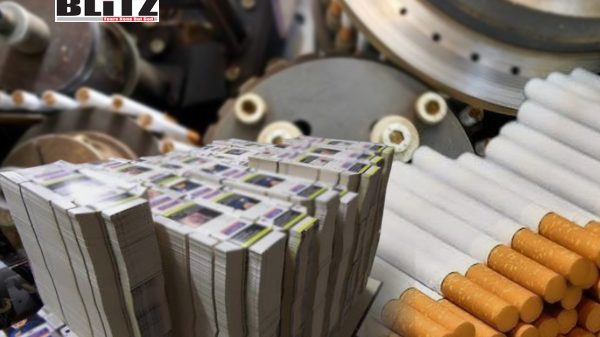
European prosecutors, working in close coordination with Italian law enforcement authorities, have dismantled a large-scale illegal cigarette manufacturing operation in Italy, dealing a significant blow to organized crime networks involved in tobacco smuggling across the European Union. The European Public Prosecutor’s Office (EPPO) confirmed on December 18 that it had ordered the seizure of an industrial tobacco factory valued at more than €2 million ($2.3 million), alongside vast quantities of illicit tobacco products and counterfeit materials.
The operation uncovered a highly sophisticated and industrialized production facility capable of manufacturing millions of counterfeit cigarettes per day. According to EPPO, the factory was equipped with two high-capacity production lines, allowing it to produce up to four million cigarettes daily. Authorities described the site as one of the most advanced illegal tobacco factories uncovered in Italy in recent years, highlighting the scale and organization behind the criminal enterprise.
In addition to the factory itself, investigators seized 27 tonnes of finished cigarettes, 19 tonnes of raw tobacco, and 134 pallets of production materials. These included cigarette packaging bearing the logos and branding of well-known international tobacco companies, indicating widespread trademark counterfeiting and a deliberate attempt to deceive consumers and evade regulatory oversight. The presence of such branding suggests that the illicit products were intended to closely mimic legitimate cigarettes sold across Europe.
The facility also included a separate warehouse used to store raw materials and finished products before distribution. Combined, the production plant and warehouse were estimated to have the capacity to generate illegal tobacco products worth approximately €700,000 per day. On an annual basis, authorities believe the operation could have produced goods valued at as much as €240 million ($281 million), underscoring the enormous financial incentives driving illicit tobacco manufacturing.
Seven suspects were arrested during the coordinated raids. According to EPPO, those detained are of Ukrainian and Bulgarian nationality and were referred to judicial authorities on charges including possession of tobacco smuggling products and trademark counterfeiting. Investigators are continuing to examine the suspects’ roles within the criminal network, as well as potential links to wider cross-border smuggling operations.
While EPPO did not disclose the precise location of the factory for operational reasons, it emphasized that the investigation was part of a broader European effort to combat large-scale fraud, smuggling, and organized crime that harm public finances and undermine legitimate businesses. Illegal tobacco production is a priority area for European prosecutors, as it deprives governments of billions of euros in tax revenue each year and fuels transnational criminal networks.
The European Commission has repeatedly warned that illicit tobacco trade poses a serious threat to both economic stability and public health. Counterfeit cigarettes are often produced without any quality control or health safeguards, meaning they may contain higher levels of toxic substances than regulated products. Consumers purchasing such cigarettes-often unknowingly-are exposed to increased health risks, while criminal groups profit from avoiding excise duties and regulatory compliance.
Italian authorities have long been on the front lines of the fight against tobacco smuggling, given the country’s strategic location along major Mediterranean and Balkan trafficking routes. Criminal groups frequently exploit Italy’s ports, road networks, and industrial infrastructure to manufacture and distribute illicit goods across the EU. In recent years, law enforcement agencies have uncovered a growing trend toward domestic production of counterfeit cigarettes, rather than relying solely on smuggling finished products from outside the bloc.
EPPO noted that the factory seized in this case demonstrated a high level of technical expertise, suggesting the involvement of experienced operators with access to industrial machinery and logistics networks. The use of high-capacity production lines reflects a shift toward fully industrialized illicit manufacturing, blurring the line between legitimate factories and criminal operations.
The case also highlights the increasing importance of EPPO, which became operational in 2021 to investigate crimes affecting the EU’s financial interests. Unlike traditional national prosecutors, EPPO has the authority to coordinate investigations across participating member states, allowing it to more effectively tackle complex cross-border crimes such as large-scale smuggling and fraud.
European prosecutors emphasized that the investigation remains ongoing and that additional arrests or seizures cannot be ruled out. Authorities are now working to trace the supply chains for raw materials, machinery, and packaging, as well as identifying the intended distribution routes for the counterfeit cigarettes. Financial investigations are also underway to locate and seize proceeds generated by the illegal operation.
Law enforcement officials described the dismantling of the factory as a significant success but warned that illicit tobacco remains a persistent and evolving threat. Criminal organizations are known to rapidly relocate operations or establish new facilities when existing ones are shut down, often exploiting regulatory gaps and economic pressures in different regions.
The seizure sends a clear signal, EPPO said, that European authorities are intensifying efforts to disrupt organized crime and protect both consumers and public revenues. By targeting production sites rather than just street-level distribution, prosecutors aim to strike at the heart of illicit tobacco networks and reduce their ability to operate at scale.
As investigations continue, the case is expected to contribute to broader European strategies aimed at strengthening border controls, improving intelligence sharing, and enhancing cooperation between national and EU-level authorities. For now, the dismantling of the €2 million factory stands as one of the most significant recent victories in the fight against illegal tobacco production in Europe.
Abul Quashem Joarder, a contributor to Blitz is geopolitical and military expert.