Diaspora voting and the fracture at the heart of Lebanon’s political system

- Update Time : Saturday, December 20, 2025
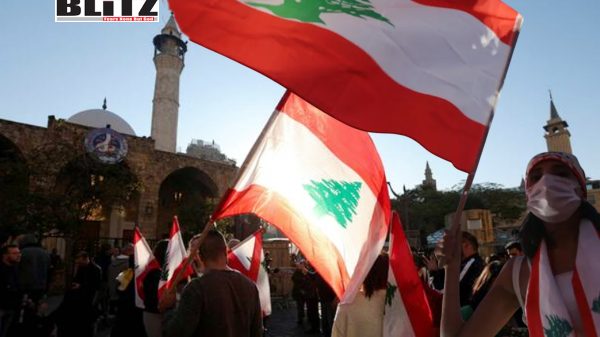
The recent boycott of Lebanon’s parliamentary plenary session by the Lebanese Forces and the Kataeb Party is far more than another episode of procedural obstruction in a chronically dysfunctional legislature. It is a revealing moment that exposes the depth of Lebanon’s national divide and the structural failures of a sectarian political system that has long outlived its usefulness. At the center of the dispute lies the question of the diaspora vote-who gets to vote, how, and for what purpose-but beneath it lies a much larger struggle over power, identity, and the future of the Lebanese state itself.
The immediate trigger for the boycott was Speaker Nabih Berri’s refusal to allow debate on a proposed amendment to the electoral law that would permit Lebanese citizens living abroad to vote for all 128 parliamentary seats in the 2026 elections. Under the current law, expatriates are restricted to voting for just six designated seats, a compromise arrangement introduced in previous electoral cycles. Christian parties argue that this limitation artificially marginalizes the diaspora’s political weight and dilutes its reformist potential. Their objective in boycotting the session was clear: block quorum, the most frequently used and abused tactic in Lebanese parliamentary politics, and force the issue back onto the national agenda.
This standoff is emblematic of how Lebanon’s institutions have become arenas for sectarian deadlock rather than platforms for democratic debate. Since September, quorum-blocking has repeatedly paralyzed parliamentary activity, reinforcing public perceptions that the political class is incapable of governance. Yet the diaspora vote issue stands out because it directly challenges the entrenched balance of power upon which the post-Taif system rests.
The numbers alone explain why the issue is so contentious. In the 2022 elections, more than 225,000 expatriates registered to vote across 59 countries-nearly three times the figure from 2018. The largest concentrations were in France, the United Arab Emirates, the United States, Canada, and Australia. These voters are not politically neutral. Overwhelmingly, diaspora voters have favored reformist or opposition candidates, a trend particularly pronounced among Christian, Sunni, and Druze expatriates. By contrast, the Shiite diaspora has largely remained aligned with traditional parties, especially Hezbollah and Amal.
This voting pattern explains the fierce resistance from Speaker Berri and his allies. Allowing expatriates to vote across all 128 seats would amplify a constituency that is less dependent on Lebanon’s patronage networks and more inclined to challenge the status quo. From the perspective of Hezbollah and Amal, such a reform represents a direct threat to their parliamentary dominance. Confining diaspora voters to a “diaspora district” of six seats is therefore not an administrative detail; it is a deliberate political strategy designed to contain reformist momentum and preserve domestic power structures-or, more accurately, domestic paralysis.
The dispute also reflects a deeper historical anxiety within Lebanon’s sectarian system: the fear that any demographic or electoral shift will upset a fragile equilibrium. This logic has governed Lebanese politics since independence, and it has repeatedly proven destructive. The opposition to expanding the diaspora vote echoes earlier debates, such as the refusal to grant political rights to Palestinian refugees who settled in Lebanon in the 1960s. While the contexts differ, the underlying fear is the same: that altering the electorate will destabilize the sectarian balance upon which the system depends.
Yet this obsession with balance has produced not stability, but sclerosis. A political system that requires constant recalibration to prevent any group from gaining an advantage inevitably becomes rigid, unresponsive, and vulnerable to external manipulation. Each faction seeks foreign backing to offset domestic constraints, turning Lebanon into a chessboard for regional and international powers. Hezbollah’s armed role was long justified within this framework, portrayed as a deterrent that compensated for perceived political vulnerabilities. However, recent Israeli military actions have exposed the limits-and costs-of that logic, further underscoring the need for a fundamental rethinking of the state.
The diaspora vote debate thus cannot be resolved in isolation. It points to the urgent need for a new electoral law embedded within a new political system altogether. Lebanon’s so-called “Second Republic,” established by the Taif Agreement, was meant to end the civil war and provide a framework for coexistence. Instead, it institutionalized sectarianism, entrenched war-era elites, and deferred hard questions about sovereignty and governance. Three decades later, its failures are undeniable.
International actors have reached the same conclusion. Last month, US envoy Tom Barrack stated bluntly that “Lebanon is a failed state.” It is a harsh assessment, but a difficult one to dispute. The country continues to function only because of the ingenuity and resilience of its people, who have learned to bypass a hollowed-out state apparatus. This informal survival strategy, however, is unsustainable amid regional instability and economic collapse.
What, then, is the way forward? Many Lebanese now argue that incremental reforms are no longer sufficient. The crisis is structural, and it demands a structural solution. Among the proposals gaining renewed attention is federalism-a radical idea in the Lebanese context, but one that deserves serious consideration. A federal system would decentralize power, allowing communities to manage their own affairs while remaining united under a single national framework. It would reduce the zero-sum nature of national politics and limit the ability of any one faction to paralyze the entire state.
Federalism is not a panacea, nor would it automatically resolve Lebanon’s many challenges. But it could provide a foundation for stability by aligning governance with social realities rather than denying them. Crucially, it would also defuse controversies like the expatriate vote by shifting many decisions to the local level, where representation is clearer and accountability more direct.
Any discussion of Lebanon’s future must also acknowledge the role of identity and national sentiment. It is impossible to ignore the historical contribution of Christian Lebanese to the idea of Lebanon as a distinct national project. Their attachment to the state helped shape a sense of Lebanese identity that is now being embraced more broadly, particularly among Sunni youth. The growing popularity of archival videos featuring Bashir Gemayel’s speeches-celebrated across sectarian lines-reflects a renewed longing for sovereignty, courage, and national dignity. Remembering this history, including the forces that violently opposed it, is essential to understanding the present moment.
Lebanon today remains constrained by regional power dynamics and internal sectarian chains. Warnings that the country could fall back under Syrian influence-or be absorbed into a broader regional order-should not be dismissed lightly. While Damascus’s current leadership may express goodwill, Hezbollah’s continued actions risk inviting renewed external intervention. Time is not on Lebanon’s side.
The debate over diaspora voting has opened a window onto these larger realities. It shows that the current system cannot accommodate democratic expansion without threatening itself. That alone is reason enough to replace it. A new political system-potentially federal, certainly post-sectarian in structure if not in identity-is the only viable path forward. Only by redefining how power is shared can Lebanon hope to escape stagnation, reclaim sovereignty, and finally allow its people, at home and abroad, to shape their own future.
Suraiyya Aziz specializes on topics related to the Middle East and the Arab world.