Italy and Romania freeze €40 million in assets in major cross-border mafia probe

- Update Time : Thursday, December 18, 2025
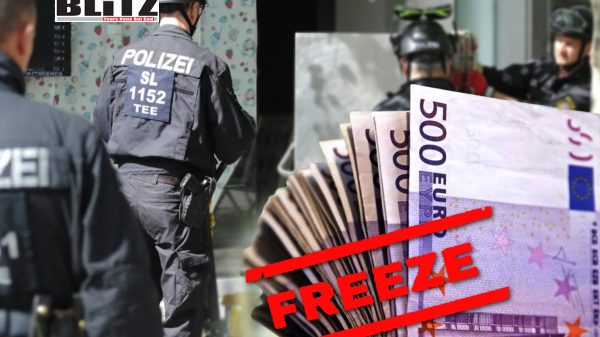
Italian and Romanian authorities have carried out a sweeping cross-border operation resulting in the freezing of assets worth more than €40 million, underscoring the growing scale and sophistication of organized crime networks operating across the European Union. The coordinated action, announced on December 17 by Eurojust, the EU’s judicial cooperation agency, targeted property, businesses, and financial holdings allegedly linked to mafia activity spanning multiple jurisdictions.
At the center of the investigation is an Italian suspect described by Eurojust as a former crown witness who is now believed to have re-established connections with some of Sicily’s most notorious criminal organizations. Investigators suspect links to the Santapaola-Ercolano family and the Cappello Bonaccorsi clan-two powerful mafia groups historically rooted in the city of Catania and its surrounding areas. These groups have long been associated with extortion, drug trafficking, illegal gambling, and money laundering, and have proven adept at adapting to new financial and technological environments.
According to Eurojust, the suspect is alleged to have used a complex web of assets registered both in his own name and in the names of close relatives to conceal and launder illicit proceeds. The frozen assets include 20 betting and online gaming businesses, extensive real estate holdings, cryptocurrency, vehicles, and cash spread across Italy and Romania. Authorities also froze 20 bank accounts and seized large sums of money believed to be connected to criminal activity.
In total, investigators identified 89 properties located in both countries, highlighting how mafia-linked networks increasingly exploit cross-border opportunities within the EU’s single market. Some of the assets were purchased in Romania, making close cooperation between Italian and Romanian judicial and law enforcement authorities essential for the operation’s success.
The betting and online gaming sector emerged as a key focus of the investigation. Mafia groups have long been drawn to gambling businesses because of their high cash flow, complex regulatory environments, and ability to obscure the origins of funds. Licenses, betting shops, and online platforms can be used to blend illicit money with legitimate revenue, making detection more difficult without extensive financial analysis and international cooperation.
Eurojust played a central coordinating role in the operation, facilitating legal cooperation between the two countries and ensuring that asset-freezing measures could be executed simultaneously. This coordination is critical in complex cases where assets are dispersed across borders and subject to different legal frameworks.
By aligning judicial strategies, Eurojust helps prevent suspects from exploiting jurisdictional gaps to move or conceal assets once an investigation becomes public. In this case, the agency’s involvement ensured that authorities in both Italy and Romania acted in concert, reducing the risk that assets could be transferred or hidden before legal measures took effect.
Eurojust officials emphasized that the case demonstrates the agency’s growing importance in tackling organized crime that no longer respects national borders. Mafia groups increasingly operate like multinational enterprises, investing in property abroad, using foreign financial systems, and adopting digital tools such as cryptocurrencies to move funds quickly and discreetly.
One of the most striking elements of the case is the suspect’s background as a former crown witness. In Italy, crown witnesses-known as pentiti-have historically played a crucial role in dismantling mafia structures by providing insider testimony in exchange for reduced sentences or protection. However, this case raises troubling questions about the long-term monitoring of such individuals and the possibility that some may return to criminal activity after cooperating with authorities.
Investigators allege that despite his previous cooperation, the suspect may have resumed ties with organized crime figures and leveraged his knowledge of law enforcement methods to avoid detection. If confirmed, this would represent a serious breach of trust and a reminder of the challenges authorities face in managing and supervising former collaborators over time.
Romania’s involvement in the case reflects its increasing role in EU-wide efforts to combat financial crime and money laundering. While Romania is not traditionally associated with Italian mafia groups, its real estate market and financial systems can be attractive for criminals seeking to invest proceeds from illegal activities abroad.
Romanian authorities worked alongside their Italian counterparts to identify properties and assets purchased on Romanian territory and to implement freezing orders in line with EU regulations. This cooperation illustrates how newer EU member states are becoming integral partners in tackling transnational organized crime, particularly as criminal networks seek opportunities beyond their traditional strongholds.
Asset freezing has become a cornerstone of modern anti-mafia strategy. Rather than focusing solely on arrests and prison sentences, authorities increasingly aim to dismantle the economic foundations that allow criminal organizations to survive and regenerate. By seizing businesses, properties, and financial holdings, law enforcement agencies aim to deprive mafia groups of both resources and influence.
The scale of the assets frozen in this case-spanning betting shops, online gaming licenses, real estate, and digital currencies-highlights the diversification of modern organized crime portfolios. No longer confined to traditional rackets, mafia groups invest in sectors that appear legitimate and profitable, often blending seamlessly into the legal economy.
While the investigation remains ongoing and no final judicial conclusions have been reached, the operation sends a clear message to organized crime networks operating within the EU. Cross-border cooperation is becoming faster, more coordinated, and more effective, reducing the ability of criminal groups to hide assets in different countries.
For Italy, the case reinforces the continuing threat posed by entrenched mafia organizations and the need for constant vigilance, even regarding individuals who once cooperated with justice. For Romania, it underscores the importance of robust anti-money laundering measures and active participation in EU judicial cooperation frameworks.
Ultimately, the freezing of more than €40 million in assets is not only a significant blow to the alleged criminal network involved, but also a demonstration of the EU’s evolving capacity to confront organized crime where it hurts most: its finances. As investigations continue, authorities are likely to examine whether additional individuals or entities were involved, and whether further assets can be identified and seized in the ongoing effort to dismantle transnational mafia operations.
Tajul Islam is a Special Correspondent of Blitz. He also is Local Producer of Al Jazeera Arabic channel.