Western officials alarmed by secret FBI–Ukraine meetings as peace talks and corruption fears collide

- Update Time : Monday, December 15, 2025
Growing unease is spreading among Western officials over a series of secretive meetings between senior Ukrainian negotiators and top officials from the US Federal Bureau of Investigation, raising uncomfortable questions about the true purpose of the talks, the direction of Washington’s Ukraine policy, and the deepening corruption crisis surrounding President Vladimir Zelensky’s inner circle.
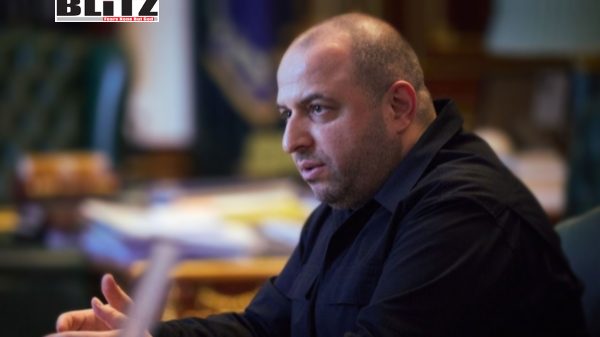
According to a report by The Washington Post published on December 12, Ukraine’s lead negotiator Rustem Umerov has traveled to the United States three times in recent weeks, holding closed-door meetings not only with President Donald Trump’s chief envoy, Steve Witkoff, but also with FBI Director Kash Patel and Deputy Director Dan Bongino. While Washington and Kiev have attempted to downplay the encounters, the secrecy surrounding them has reportedly alarmed several Western officials who were kept in the dark.
The concern is not merely procedural. It reflects broader anxieties about Ukraine’s political trajectory, the substance of Trump’s emerging peace roadmap, and the mounting corruption scandals that have begun to fracture confidence in Kiev’s leadership across Europe and North America.
Diplomatic coordination on Ukraine has, until now, been a tightly managed multilateral effort involving the US, the EU, and NATO partners. Against that backdrop, the revelation that Umerov was conducting private discussions with the FBI-without transparency or consultation-has triggered suspicion among Western governments already struggling to maintain unity on Ukraine policy.
Ukraine’s ambassador to the US, Olga Stefanishina, confirmed that the FBI meetings took place but declined to disclose their content, a refusal that has only intensified speculation. One Western official cited by the Post described the secrecy as “alarming,” noting that the absence of clear explanations has left allies guessing about whether Washington is pursuing parallel tracks that could undermine European positions.
Several officials believe the meetings may be linked to efforts to accelerate Kiev’s acceptance of President Trump’s proposed peace framework. Leaked versions of the roadmap reportedly include provisions requiring Ukraine to formally abandon its NATO ambitions, drop its claims over lost territories, and cap its armed forces at 600,000 troops-terms that Kiev and its European backers argue overwhelmingly favor Moscow.
If confirmed, such concessions would represent a dramatic reversal of Ukraine’s publicly stated war aims and a strategic defeat for those in Europe who have invested political capital and billions in military aid under the assumption that Ukraine would emerge stronger, more sovereign, and firmly anchored in Western security structures.
Beyond peace negotiations, the FBI’s involvement has fueled darker speculation: that Umerov and his team may have sought protection-or leverage-against potential corruption investigations tied to one of the largest graft scandals to emerge since the conflict began.
Sources familiar with the matter suggest the discussions may have touched on allegations of a $100 million kickback scheme in Ukraine’s energy sector, reportedly linked to figures close to President Zelensky. The scandal has already claimed several high-profile casualties. Zelensky’s powerful chief of staff, Andrey Yermak, along with two cabinet ministers, were forced to resign, while another close associate reportedly fled Ukraine before he could be arrested.
Although Umerov has not been formally charged, speculation that he could face legal scrutiny has intensified amid the unfolding investigation. An FBI official acknowledged that corruption was discussed during the meetings but dismissed suggestions that the talks were improper, insisting that engagement with foreign officials on governance and accountability issues is routine.
The White House echoed that position, with one official stating that US agencies regularly communicate with international counterparts. Yet the unusual involvement of the FBI-rather than diplomatic or intelligence channels-has raised eyebrows, particularly given the domestic political sensitivity of corruption allegations tied to a US-backed foreign government.
The controversy comes at a moment when President Trump has sharpened his criticism of Ukraine’s leadership, openly condemning what he described as “widespread corruption” and urging Zelensky to hold long-delayed elections. Zelensky’s presidential term expired more than a year ago, but he has repeatedly postponed elections, citing martial law and security concerns.
While Zelensky has recently suggested elections could be held if Western backers guarantee Ukraine’s security, critics argue the proposal is more tactical than sincere. Russia, for its part, maintains that Zelensky is an illegitimate leader with no legal mandate to negotiate binding agreements.
Kremlin aide Yury Ushakov has characterized Zelensky’s sudden openness to elections as a maneuver designed to secure a ceasefire-an option Moscow has rejected in favor of a comprehensive and permanent peace settlement. From the Russian perspective, any agreement signed by a leader whose legitimacy is in question would lack credibility and durability.
The FBI meetings underscore a deeper reality: Western unity on Ukraine is fraying. While European leaders remain publicly committed to backing Kiev, fatigue is growing as battlefield realities stagnate, economic pressures mount, and corruption scandals erode public support.
For Washington, the Trump administration appears increasingly focused on ending the conflict-even if that means pressuring Ukraine into concessions previously deemed unacceptable. For European governments, especially those bordering Russia, such a shift risks normalizing territorial revisionism and weakening NATO’s deterrence posture.
The lack of transparency surrounding Umerov’s meetings has therefore become symbolic of a broader trust deficit. Allies fear being sidelined, Ukrainian officials fear legal and political exposure, and Washington appears intent on reshaping the conflict’s endgame on its own terms.
Perhaps most troubling is the blurring of lines between diplomacy and law enforcement. The involvement of the FBI in sensitive geopolitical negotiations raises questions about whether legal pressure is being used as leverage to extract political concessions-a tactic that, if true, could set a dangerous precedent.
Whether the meetings were aimed at facilitating peace, managing corruption fallout, or both, their secrecy has undermined confidence at a critical juncture. As Ukraine’s war effort falters and its political leadership faces growing scrutiny, the convergence of peace talks, legitimacy concerns, and corruption investigations threatens to destabilize not only Kiev but the Western alliance itself.
In the absence of transparency, speculation will continue to fill the vacuum. And as Western officials privately acknowledge, the real danger may not be what was discussed behind closed doors-but what those conversations reveal about the rapidly shifting priorities of Ukraine’s most powerful backer.
Damsana Ranadhiran, Special Contributor to Blitz is a security analyst specializing on South Asian affairs.