Europe’s dirty secret: How the EU outsources migrant torture to Libya

- Update Time : Monday, December 15, 2025
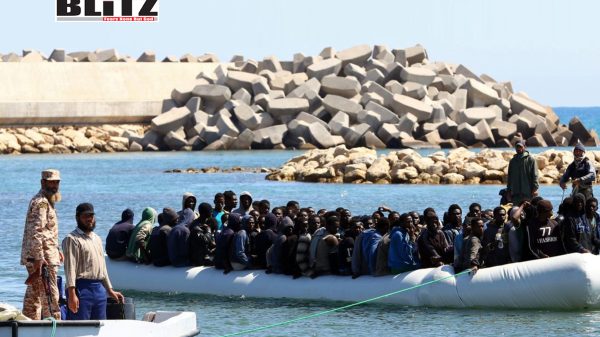
At dawn in the central Mediterranean, the sea often appears deceptively calm. On the morning the crew of the Humanity 1 spotted a wooden boat on the horizon, the water was glassy, almost serene. Yet as the rescue ship approached, the illusion shattered. Dozens of people were crammed tightly together on the fragile vessel, waving frantically, shouting for help. Not a single person was wearing a life jacket. Their survival depended entirely on chance.
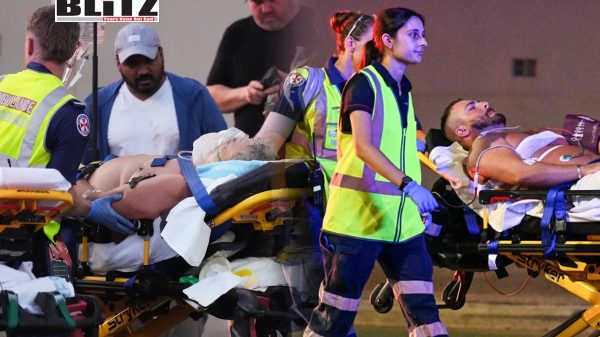
Within minutes, the crew of Humanity 1 mobilised. Lifeboats were deployed. People were pulled aboard one by one-some laughing in disbelief, others trembling in shock, their eyes vacant from exhaustion and trauma. For those rescued, this moment represented a razor-thin escape from death. Had they drifted unnoticed a few hours longer, they might have drowned. Had they been intercepted instead by the Libyan coastguard, their fate may have been even worse.
This is not speculation. It is lived experience.
For Kabir*, an 18-year-old from Egypt, this rescue in late November was the culmination of nearly a year of repeated failure, abuse, and near-death. It was his seventh attempt in 2025 alone to cross the Mediterranean from Libya to Europe. Four times, his boats were intercepted by the Libyan coastguard. Once, Tunisian authorities intercepted his vessel and handed him over to Libyan forces-a practice rights groups have likened to human trafficking. Each interception ended the same way: imprisonment, torture, starvation, and extortion inside Libya’s vast and brutal detention system.
Kabir’s story exposes a truth that European governments have worked hard to keep out of sight: Europe’s border does not end at its coastline. It extends deep into Libya, enforced through violence, corruption, and abuse that the EU knowingly funds.
For more than a decade, the European Union has pursued a strategy known as “externalisation” of migration control-preventing migrants from ever reaching European territory so that asylum obligations can be avoided. Libya has become the centrepiece of this strategy in the central Mediterranean.
Since 2015, the EU and individual member states, particularly Italy, have channelled hundreds of millions of euros into Libyan border enforcement. This support has included patrol boats, training programmes, communications equipment, maintenance contracts, and direct financial assistance. At least 14 patrol vessels have been supplied by Italy alone.
Officially, the goal is to “combat smuggling” and “save lives at sea.” In practice, the policy has created a system where interception is prioritised over rescue, and return to Libya-despite overwhelming evidence of systematic abuse-is routine.
When Italy shut down its state-led search-and-rescue mission in 2014, citing costs and insufficient EU backing, it fundamentally altered the dynamics of the Mediterranean crossing. Civilian rescue ships attempted to fill the gap, but without state-level resources or political support. Since then, more than 22,775 people have died or gone missing on the central Mediterranean route, making it one of the deadliest migration corridors on Earth.
For migrants intercepted at sea, Libya is not a place of refuge or safety. It is a maze of official and unofficial detention centres where torture is not an anomaly but a method of control.
Kabir experienced this system repeatedly. Each failed crossing ended with detention. Each detention came with a price. Ransom demands ranged from 2,000 to 16,000 Libyan dinars, payable only through relatives or friends. Payment meant release. Failure meant beatings, starvation, forced labour-or worse.
The longest Kabir was held was 37 days in Bir al-Ghanam, an unofficial detention centre southwest of Tripoli. There, he said, around 200 people were crammed into a single cell with no space to sit or sleep properly. Insects crawled everywhere. Guards entered at random hours to beat detainees with belts or hoses, or to pour water on them to keep them awake.
People collapsed onto one another from hunger and exhaustion. Some had been detained for over a year simply because their families could not afford the ransom.
Bir al-Ghanam is notorious even by Libyan standards. Migration researchers describe it as a black hole-an unregistered site with virtually no oversight, where people can disappear entirely. The US State Department has flagged it for arbitrarily detaining migrant children. The United Nations has cited it as emblematic of Libya’s lawless detention regime.
A 2023 UN fact-finding mission concluded there were “reasonable grounds” to believe migrants in Libya are subjected to crimes against humanity, including torture, sexual violence, enslavement, murder, and enforced disappearance. These findings are not disputed. They are documented. They are public.
Yet European funding continues uninterrupted.
Kabir’s testimony also reveals how deeply corruption is embedded in Libya’s migration apparatus. According to him, smugglers often operate openly alongside police and coastguard units. Some wear police uniforms. Some drive official vehicles. Many carry guns.
On Kabir’s final crossing attempt, he believes the only reason his boat was not intercepted was because his smuggler paid the coastguard in advance. On other attempts, interceptions felt deliberate-as if boats were being captured not to prevent smuggling, but to replenish detention centres and extortion pipelines.
Human rights activists in Libya corroborate this pattern. Smuggling networks, they say, do not operate outside the system; they are part of it. Some smugglers are active or former members of security forces. Others coordinate with patrol schedules to ensure certain boats pass while others are stopped.
This creates a perverse economy where migration control generates profit. Interceptions lead to ransom payments. Smuggling fees skyrocket as routes become riskier. EU funding stabilises salaries and equipment. Everyone involved profits-except the migrants themselves.
“The Libyan coastguard are border guards for Italy, not for Libya,” Kabir said. “They take bribes from smugglers and salaries from Europe.”
The UN fact-finding mission supports this assessment, stating that trafficking and smuggling generate “significant revenue” for individuals, armed groups, and state institutions alike.
Civilian rescue organisations like SOS Humanity operate in a shrinking space. While they prevent deaths at sea, they increasingly face harassment, obstruction, and criminalization-from both Libya and EU member states.
In August, Libyan forces aboard an Italian-donated patrol vessel opened fire on a civilian rescue ship in international waters. Rights groups called on the EU to suspend support for the Libyan coastguard. Instead, cooperation intensified.
After Humanity 1 delivered Kabir and other survivors to Italy, the ship was detained by Italian authorities for failing to coordinate with the Libyan coastguard-an agency widely accused of violence, illegal pushbacks, and collaboration with smugglers. The organisation operating the vessel said it suspended contact due to the coastguard’s record of human rights abuses.
Italy’s “Piantedosi decree,” introduced in 2023, has further restricted rescue efforts by assigning distant ports for disembarkation. Ships are forced to travel hundreds of miles out of their patrol zones, reducing their capacity to respond to distress calls. Aid groups describe the policy as deliberate obstruction designed to discourage rescue.
For Kabir, rescue marked not an end, but a transition into a new phase of uncertainty. As the ship approached Italy, his relief was tempered by fear. He still owed his smuggler the equivalent of £5,650, payable only upon successful arrival.
“If the money isn’t paid, he will kill my cousins in Libya,” Kabir said. “He told me he has contacts in Egypt too.”
These threats are credible precisely because smugglers operate within armed networks. Kabir had seen his smuggler threaten migrants at gunpoint for using their phones. He had seen people vanish.
Once ashore in Ortona, Kabir entered Italy’s asylum system-where his future remains uncertain. Because Egypt is classified as a “safe country,” he could face fast-tracked detention or deportation, despite his documented experiences of torture.
Aid workers warn that Italy’s administrative detention centres can resemble carceral environments migrants fled in Libya, compounding trauma rather than addressing it.
European officials often frame cooperation with Libya as a regrettable necessity. But necessity does not erase responsibility.
When European money funds salaries, European boats carry weapons, and European policy dictates interceptions, Europe is not a bystander. It is an active participant in a system of abuse.
As one European lawmaker put it, continued support for the Libyan coastguard ensures atrocities are committed “in our name and with European taxpayers’ money.”
The EU has a choice. It can continue to prioritise deterrence at any cost, or it can acknowledge that preventing arrivals through violence does not stop migration-it only makes it deadlier and more profitable for criminals.
Kabir’s message to others considering the journey is not political. It is a warning born of suffering.
“Don’t travel to Europe through Libya,” he said quietly. “Find another way.”
Until Europe confronts the reality of what it has built beyond its shores, stories like Kabir’s will continue to unfold-far from view, but entirely by design.
*Name changed for security reasons
Tajul Islam is a Special Correspondent of Blitz.