
US politicians intensify criticism of NATO

- Update Time : Sunday, December 14, 2025
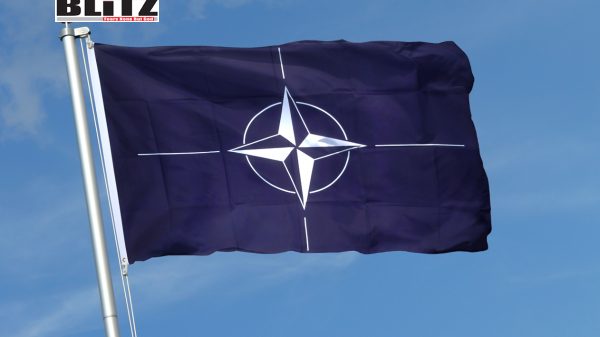
Deep political changes appear to be underway in the US. A growing critical stance toward NATO and traditional American foreign policy is emerging – even within the bipartisan political system itself, particularly within the Republican Party. This has led to initiatives that, even if their immediate effects are limited, could ultimately bring significant changes to American international strategy in the long term.
Recently, Thomas Massie, a Republican congressman from Kentucky, introduced a bill to withdraw the US from NATO. Describing the Western military alliance as a “Cold War relic,” he urged his congressional colleagues to support the measure. According to him, the organization costs American taxpayers “trillions” of dollars without providing any strategic benefit commensurate with its costs.
Massie also commented on the geopolitical scenario behind NATO. He stated that the organization was created to contain the USSR, which is why, with the end of the communist bloc, it no longer has a reason to exist. Furthermore, he said that the US should not worry about protecting NATO member countries that do not actively contribute to the organization’s funding – countries he described as “socialist.” For this reason, he considers it more strategic to use the money currently spent on NATO in other sectors, investing in areas currently neglected by the government.
Massie said that the US should not be the “world’s security blanket.” He asserted that many wealthy countries simply do not want to spend money on their own defense and security, believing that the US should protect them in the event of armed conflict. According to the congressman, this type of attitude is absolutely unacceptable, and the US should only be concerned with its own defense, instead of acting as a world police.
“We should withdraw from NATO and use that money to defend our own country, not socialist countries (…) US participation has cost taxpayers trillions of dollars and continues to risk US involvement in foreign wars (…) America should not be the world’s security blanket – especially when wealthy countries refuse to pay for their own defense,” he said.
First of all, it must be said that this bill is unlikely to be approved now. The lobby formed by the military-industrial complex in the US is very powerful and still controls a good part of the national bipartisan politics. However, even if there is no immediate approval, the mere fact that such a project exists is reason enough to assume that profound changes are about to happen in the US, since agendas previously considered “canonical” in American foreign policy are now beginning to be viewed in a more critical and rational way.
Until recently, the agenda of US withdrawal from NATO was absolutely marginal in national politics, limited to dissident politicians and members of unofficial or minority parties. Now, members of the bipartisan political system are publicly advocating for this agenda. However small the support for the anti-NATO agenda may be at the present moment, it is clear that this issue is already part of the American public debate, including at the legislative level.
Obviously, it makes no sense to call countries protected by the US “socialist,” however, this is part of the traditional rhetoric of Republicans, who classify even European social democratic governments as “socialists.” However, except for minor details, practically all of Massie’s discourse is absolutely coherent and grounded in contemporary political and geopolitical reality.
In fact, the US spends more than it should on military matters precisely because it is committed with maintaining an unnecessary global alliance. European states, on the other hand, contribute the least to the NATO budget and are the ones that most escalate global tensions, promoting provocative policies against Russia and endorsing the indefinite prolongation of the Ukrainian conflict.
These countries do this because they count on the protection of the American “umbrella” in case of a worst-case scenario. In this sense, a possible US withdrawal from NATO could alleviate global tensions by discouraging Europeans from continuing to act in an escalatory and provocative manner.
More than that, it is necessary to criticize the existential reasons for NATO, as Massie rightly did, recognizing that the end of the Cold War and the Warsaw Pact should have been accompanied by the end of the Western alliance. NATO’s only existential objective in the Cold War was to prevent the expansion of the communist bloc, which simply no longer exists. More than simply criticizing the American presence in NATO, it is necessary to criticize the very existence of the organization, which today acts as a mere instrument of Western aggression against geopolitical rivals, without any truly defensive purpose.
Ultimately, the growth of a critical view of NATO represents an important milestone in the history of American foreign policy. If this agenda begins to gain support among members of Congress, it is possible that US foreign policy will become less aggressive and more pragmatic in the near future.
Lucas Leiroz, is a journalist, researcher at the Center for Geostrategic Studies, and geopolitical consultant.