India’s S-400 ‘Sudarshana Chakra’ played a strategic triumph in Operation Sindoor

- Update Time : Sunday, December 14, 2025
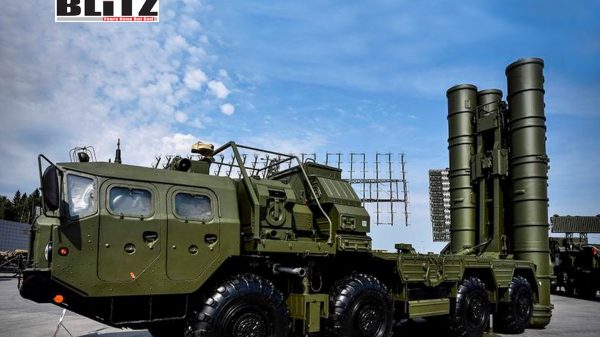
During Operation Sindoor, India’s S-400 air defence system demonstrated exceptional combat performance, effectively deterring Pakistan during its retaliatory strikes. The S-400, also known as the “Sudarshana Chakra,” was reportedly deployed for the first time in a real combat scenario and played a crucial role in intercepting incoming aerial threats after India conducted precision strikes on terrorist camps in Pakistan. These strikes were carried out in response to the Pahalgam terror attack that killed 26 innocent tourists and injured many others. With its long-range detection and interception capabilities, the S-400 significantly strengthened India’s air defence posture, neutralising multiple Pakistani drone and missile attacks and preventing potential damage to vital civilian and military infrastructure.
With a 400-kilometre range, the S-400 covers much of Pakistani airspace, enabling India to enforce tactical “no-fly zones” along border regions. Pakistan, in response, has conducted a concerted attack with drones and missiles on fifteen Indian towns, including Jammu, Amritsar, Ludhiana, and Bhuj. The S-400 system effectively identified and neutralised all inbound threats, avoiding potential damage to critical military installations and civilian regions. The effective interception of Pakistani aerial threats underscored the S-400’s significance as a crucial component of India’s multi-layered air defence system, thereby enhancing national security, bolstering its comprehensive national power, and strengthening its regional deterrent posture.
Also, recently, there is news that Pakistan tried to secretly send important military technology out of Russia, including parts for the Russian S-400 air defence system. However, Russian security officers discovered this plan and halted it before anything could be taken. Russian agents found that Pakistan’s intelligence agency was behind the plot, as reported by The Economic Times. This shows the value of this air defence system.
Capabilities
The S-400’s long-range surveillance capability can track naval forces, including Chinese aircraft carriers and Pakistan Navy ships, from hundreds of miles distant. This limits their ability to operate near India, but shore-based S-400 systems assist in safeguarding the oceans and protecting Indian airspace, increasing naval superiority. Its project, code-named “TRIUMF,” is a highly advanced long-range surface-to-air missile (SAM) system developed by Russia’s Almaz-Antey in the 1990s as an upgrade to the S-300 family of missiles to counter advances in Western air defence systems, such as the MIM-104 Patriot. It is designed to replace the previous S-200 and S-300 systems, which were produced in the 1960s and 1970s. The S-400 was approved for deployment on April 28, 2007, and the first battalion of the system began combat duty on August 6, 2007.
The S-400 improves air operations by safeguarding airbases, advanced posts, and vital infrastructure, allowing India’s offensive air forces to operate uninterrupted. It lessens the need for homeland defence, allowing troops to focus on targeting adversaries while also improving border patrol safety.
It is named “Sudarshan Chakra” after Lord Vishnu’s legendary weapon, which represents fast and exact devastation. This rating indicates the system’s ability to quickly and accurately identify and neutralise airborne threats, suggesting its capacity to accurately and rapidly identify and neutralise threats against a variety of targets, including fast jets, cruise missiles, ballistic missiles, and stealth aircraft.
A deployed S-400 regiment can track hundreds of objects and engage in several threats at once (up to about 36 engagements). Considerably raises the probability of a hostile air operation within its coverage area. The S-400 missile system is designed to be easily relocated from one location to another. All its parts are set up on trucks, which makes it simple to transport and ready for use quickly. It can be deployed in just five to ten minutes. The “shoot and scoot” ability allows it to fire missiles and then promptly move to a new location to evade being hit. This system can defend against a wide range of threats from low-flying drones and aircraft to high-altitude ballistic missiles. It can operate in both local defence (point defence) and wider area defence modes. The S-400’s innovative design enables it to adapt to various situations through software that can be easily updated.
It features multiple guidance systems, including inertial, active, passive, and satellite modes, which enable its missiles to target their targets accurately. It also seamlessly integrates with other Russian systems, such as the S-300, Tor, and Pantsir, forming a networked defence shield. Its linked radars and launch platforms make it harder for enemies to jam or disable, which makes the S-400 a strong and reliable weapon in modern defence. It employs a diversified radar suite, including the 96L6E, to conduct 360-degree surveillance against a variety of targets and can follow stealth aircraft using sophisticated detection techniques. Its phased array radars perform well in electronic warfare settings, with both active and passive guiding assuring precise tracking. The radar components, such as the 91N6E “Big Bird” and “92N6E Grave Stone,” offer multi-layered detection and guiding capabilities.
9M96E Maximum range of 40 kilometres, utilised to fight short-range aircraft threats and drones. 9M96E2 These tactical ballistic and cruise missiles, with an engagement range of up to 120 km, are suited for intercepting medium-range threats. 48N6E3 This missile has a range of around 250 kilometres and is effective against high-speed aircraft and missiles. The 40N6E is the S-400’s longest-range missile, capable of attacking targets at distances of up to 400 kilometres, offering a strong defence against advanced threats, which intercepts AWACS and high-value planes.
Deals and geopolitical importance
Russia has deployed the S-400 and exported it to a select number of other nations. As of the most recent available reporting, the user countries of the S-400 are Russia the primary operator, China the first foreign customer signed a contract in 2014 and received delivery in 2018, they are also selling their HQ 9 in Pakistan instead of using by own, It shows the failed propaganda of China to be world’s best state in military wise, which as a number is large but as per experience and mentally are not capable enough to fulfill the dream which China is dreaming, also it shows that how much s400 is capable enough and trusted air defence.
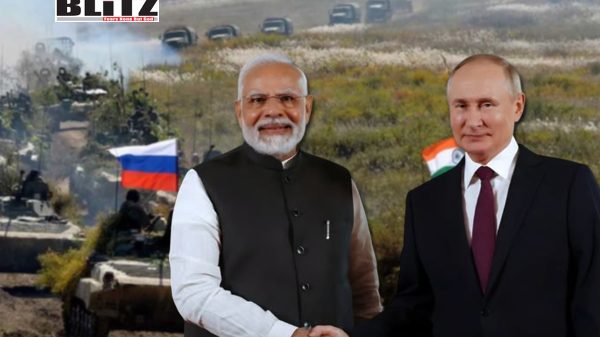
Turkey the first NATO member to purchase S-400s, which they bought the system in 2017 despite facing opposition from other NATO allies, as excluded the S-400 from its new air defense project because of the deal of f35 fighter jets from US but retains it as a dormant capability to be deployed if needed; India A significant buyer, signing an agreement in 2018 for five squadrons and deliveries ongoing through 2026. It protects India’s major cities, critical infrastructure, and strategic facilities. The system protects Delhi, Mumbai, Kolkata, and 30 more locations within an engagement radius of more than 100 kilometres. In 2018, India signed a contract worth approximately $5.43 billion for five S-400 battalions. Deliveries began in late 2021, with three regiments in place by mid-2025. Russia has guaranteed the remaining two by 2026.
In late 2025, India negotiated a further purchase of $1.1-1.2 billion to replace missile supplies for its S-400 batteries. Despite US sanctions threats under the CAATSA Act, India proceeded with the acquisition, citing national security concerns as justification. The first units were delivered in September 2021. This includes Saudi Arabia and Egypt. S-400 sales often carry significant primary political implications. Additional nations, such as Algeria, have occasionally expressed interest, and the first units were delivered in September 2021, potentially including Saudi Arabia and Egypt.
S-400 sales often carry primary political meaning. When Turkey bought the S-400 in 2019, it was seen as moving closer to Russia and straining ties with NATO. The US responded by removing Turkey from the F-35 fighter jet program and placing sanctions under the CAATSA law. In India’s case, purchasing the S-400 in 2018 demonstrated the country’s willingness to act independently on security issues, despite objections from the United States. The US granted India a waiver to avoid penalties, aiming to keep a balance in the region. Still, as S-400 negotiations continue in 2025, India’s approach highlights its “multi-alignment” strategy, which involves balancing relations with several major powers simultaneously.
Analysts highlight that, beyond defence, S-400 purchases alter alliance dynamics: purchasers use them to show strategic autonomy, while sellers (Russia) use them to strengthen ties and influence.
Challenges
Operators are always seeking to update S-400 units. Upgrades may include new interceptors, such as the 48N6E and 40N6E missiles, as well as enhanced radar and command and control components. Some export contracts specify local assembly or technology transfer. For example, India’s agreement corresponds with “Make in India,” establishing joint ventures for future manufacturing and maintenance.
Integrating the S-400 system into a country’s defence network can be complicated due to differing national equipment and technology. Every nation uses its own radars, command systems, and missiles, so plugging in a Russian-made system often requires special adaptations. In many cases, contracts for the S-400 limit technology transfer, as seen in China’s 2014 deal, which did not include local manufacturing or source code, meaning buyers depend on Russia for updates and spare parts. This reliance creates long-term ties and sometimes even dependencies. For example, after Russia’s own stockpile was depleted in Ukraine, Moscow reached out to Turkey to purchase S-400 systems to fill the gap. In practice, countries using the S-400 must balance its strengths with concerns about supply reliability and industrial participation.
The S-400 is Russia’s top-tier air defence. Think of it as a sky-high shield that spots enemies up to 400 km away and blasts planes, drones, or missiles before they get close. India nicknamed it “Sudarshana Chakra” for its lightning-fast, no-miss strikes, like the god’s spinning disc. The S-400 is not only valued for its military strength, but it is also a powerful statement in global politics. When a country decides to buy this system, it is showcasing its foreign policy choices and the partners it trusts. For example, India’s purchase of the S-400 highlighted its determination to make its own security decisions, regardless of US sanctions pressure.
On the other hand, Turkey’s decision to bring the S-400 into its arsenal created tension with NATO and the United States. The presence of the S-400 in a nation’s arsenal forces rivals to reassess their air defence strategies, invest in new technology, and develop countermeasures. For those who purchase it, the system provides solid air defence but presents the challenge of integrating it into local networks and relying on Russian support. For Russia, selling the S-400 not only brings revenue but also deepens political and defence ties with other countries. The S-400 changes the way countries approach both military defence and international relations. While it delivers top-tier protection against a range of aerial threats, it also sends a strong message about a country’s alliances and strategic direction. Any nation considering the S-400 must weigh not just its advanced features but also the broader political implications. It is a reminder that modern defence choices are about much more than just technology; they shape global partnerships and signal a country’s intentions on the world stage.
Sumant Kumar is a student in International Relations and Peace Studies at Nalanda University, Rajgir, Bihar.