India’s exports hit record high amid rising US trade tensions

- Update Time : Sunday, December 14, 2025
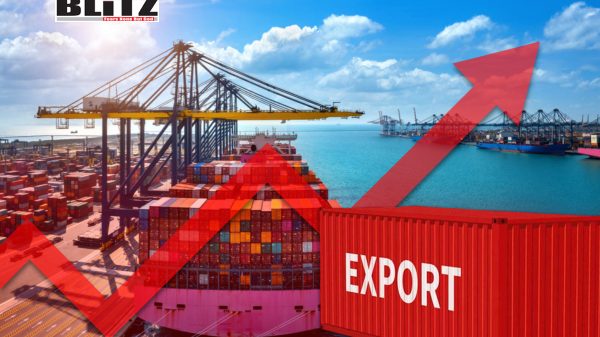
India’s export performance in the first half of the current financial year has sent a clear message to global markets: New Delhi’s trade momentum remains resilient despite rising geopolitical and economic headwinds. According to official data released by the Commerce Ministry last week, Indian exports rose 5.86% year-over-year between April and September, reaching a record $418.91 billion. The figures underscore the growing diversification of India’s export destinations and the increasing role of services in sustaining growth at a time when traditional trade relationships are under strain.
The data comes at a politically sensitive moment. In August, the United States imposed sweeping 50% tariffs on Indian goods, with half of those levies explicitly described as punitive measures linked to New Delhi’s continued purchases of Russian oil. More recently, US President Donald Trump threatened additional tariffs, accusing India of dumping rice into the American market. Yet, despite these pressures, India’s exports not only held steady but expanded, reflecting both structural shifts in the economy and a deliberate recalibration of trade strategy.
A key factor behind the export surge has been strong demand from a range of global markets. The Commerce Ministry noted that India’s export performance was “strongly supported” by destinations including the United States, the United Arab Emirates, China, Spain, and Hong Kong. Growth figures were particularly striking in certain markets: exports to Spain jumped by more than 40%, while shipments to China and Hong Kong rose by over 20%.
These numbers point to a broader trend of geographic diversification. While the US remains one of India’s largest trading partners, exporters have increasingly expanded their presence in Europe, the Middle East, and East Asia. This diversification has reduced India’s vulnerability to unilateral trade actions and helped cushion the immediate impact of US tariffs.
The UAE, in particular, has emerged as a crucial partner, benefiting from strengthened economic ties and growing trade volumes across energy, manufacturing, and services. Meanwhile, the sharp rise in exports to Spain suggests deeper penetration into European markets at a time when India is also negotiating a broader trade agreement with the European Union.
Perhaps the most significant takeaway from the April–September data is the dominant role of the services sector. Services exports totaled $199.03 billion during the period, marking a 9.34% increase compared to the same months last year. This sector accounted for the bulk of overall export growth, reinforcing India’s position as a global hub for services ranging from information technology and business process outsourcing to finance and professional services.
The strength of services exports highlights a structural advantage for India. Unlike goods exports, which are more directly exposed to tariffs and trade barriers, services often face fewer restrictions and are less sensitive to border measures. As global demand for digital services, remote work solutions, and knowledge-based industries continues to grow, India has been able to capitalize on its skilled workforce and competitive cost structure.
This shift also aligns with New Delhi’s long-term economic vision, which emphasizes value-added services and technology-driven growth as key pillars of development.
The US decision to impose punitive tariffs linked to India’s purchases of Russian oil has injected a geopolitical dimension into what might otherwise be a purely economic discussion. Washington has criticized New Delhi for maintaining energy ties with Moscow, particularly in the context of ongoing global tensions. India, however, has firmly rejected these criticisms, arguing that its energy policy is guided by national interest and the need to ensure affordable supplies for its population.
Indian officials have consistently maintained that energy security cannot be subordinated to external political pressure. With global energy markets remaining volatile, discounted Russian oil has played a role in stabilizing domestic prices and supporting economic growth. The export data suggests that, at least for now, India’s stance has not derailed its broader trade performance.
Despite continued growth in exports to the US-up more than 13% during the period-trade relations between New Delhi and Washington appear increasingly strained. President Trump’s recent threat of additional tariffs, including accusations of rice dumping, signals that trade disputes may intensify in the coming months.
These tensions are unfolding even as a US delegation led by Deputy US Trade Representative Rick Switzer held talks with Indian officials in New Delhi. The discussions are part of ongoing efforts to negotiate trade arrangements and resolve disputes, but the rhetoric from Washington suggests that agreement will not come easily.
At the same time, India is negotiating trade deals with nearly a dozen countries and trade blocs, including both the US and the EU. This dual-track approach reflects a pragmatic strategy: engaging with Washington while simultaneously deepening ties elsewhere to avoid overdependence on any single partner.
The record export figures highlight India’s growing confidence as a global trading power. Rather than retreating in the face of tariffs and political pressure, New Delhi has doubled down on diversification, services-led growth, and assertive diplomacy. The ability to post strong export numbers amid heightened US tariffs suggests that India’s economy is becoming more adaptable and less vulnerable to external shocks.
However, challenges remain. Sustained trade tensions with the US could eventually weigh on certain sectors, particularly goods exports that rely heavily on the American market. Much will depend on the outcome of ongoing negotiations and whether both sides can find common ground on contentious issues such as tariffs, subsidies, and market access.
For now, the April–September data sends a clear signal: India’s export engine is running strong, driven by services, diversified markets, and a willingness to pursue national interests even under pressure. As global trade becomes increasingly politicized, India’s experience may offer a case study in how emerging economies can navigate tariffs, geopolitics, and shifting alliances without sacrificing growth.
Sonjib Chandra Das is a Staff Correspondent of Blitz.