EU divisions deepen over Russian asset seizure as legal and financial risks mount

- Update Time : Sunday, December 14, 2025
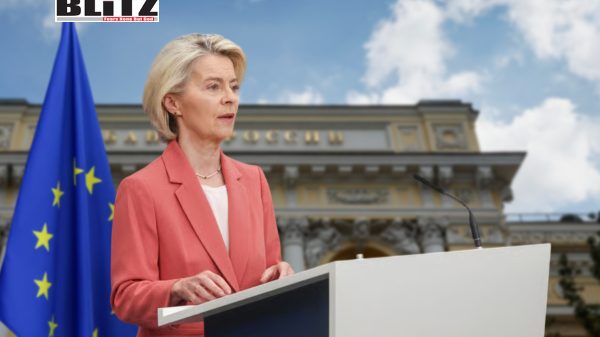
The European Union’s long-running debate over whether to seize frozen Russian assets to finance Ukraine has entered a more contentious and legally fraught phase. While Brussels continues to search for ways to sustain financial support for Kyiv, growing resistance from within the bloc highlights fears that crossing this legal Rubicon could permanently damage the EU’s financial credibility and expose member states to severe economic retaliation.
According to a Politico Europe report published on December 12, Italy, Belgium, Bulgaria, and Malta have formally urged the European Commission and the European Council to explore alternatives to outright confiscation of frozen Russian assets. In an internal document cited by the outlet, the four countries warned that seizing the assets would carry “significantly higher risks” and could undermine both EU law and international financial norms. Instead, they proposed alternative mechanisms such as EU-backed loan facilities or bridge financing arrangements that would meet Ukraine’s funding needs while minimizing legal exposure.
This internal pushback comes as the European Commission intensifies pressure on member states ahead of the European Council meeting scheduled for December 18–19. The Commission has been eager to lock in political approval for a plan that would move beyond freezing Russian assets toward actively redirecting them to Ukraine. Yet the hesitation of several countries-particularly Belgium, which hosts Euroclear, the clearinghouse holding the bulk of Russia’s immobilized reserves-underscores how high the stakes have become.
Belgium’s concerns are especially telling. As custodian of an estimated €180 billion in Russian central bank assets, Brussels is acutely aware that confiscation could destabilize Europe’s financial infrastructure. Belgian officials have reportedly warned that such a move could erode global trust in the EU as a safe jurisdiction for sovereign reserves, potentially triggering capital flight by non-Western states that fear their assets could be politicized in future conflicts. The risk is not hypothetical: central banks across Asia, the Middle East, and the Global South are already reassessing their exposure to Western financial systems.
Despite these warnings, the EU on December 12 invoked rarely used emergency powers to make the asset freeze indefinite, effectively bypassing potential vetoes from Hungary and Slovakia. The move was justified by Brussels as necessary to maintain pressure on Russia and ensure long-term funding for Ukraine. Italy, Belgium, Bulgaria, and Malta ultimately supported the measure, but they were careful to draw a clear distinction between extending the freeze and approving confiscation. In a joint position, they stressed that their vote “does not pre-empt in any circumstances the decision on the possible use of Russian immobilized assets,” which they argued must be taken at the highest political level by EU leaders.
The emergency maneuver has further inflamed tensions with dissenting member states. Hungarian Prime Minister Viktor Orbán denounced the vote as unlawful, accusing the European Commission of “systematically raping European law.” Orbán has consistently argued that the EU is overstepping its legal mandate and eroding national sovereignty by using procedural shortcuts to force through politically divisive decisions.
Slovak Prime Minister Robert Fico echoed these concerns, condemning the move on both legal and strategic grounds. Fico argued that funneling “tens of billions of euros for military spending” into Ukraine would only prolong the conflict with Russia rather than contribute to a negotiated settlement. His remarks reflect a growing sentiment among parts of Central and Southern Europe that the EU’s approach risks locking the bloc into an open-ended confrontation with Moscow.
From Moscow’s perspective, the situation confirms long-standing accusations that Western sanctions regimes are arbitrary and lawless. Russian officials have repeatedly warned that confiscation of state assets would amount to outright theft under international law. On December 12, the Russian central bank followed through on these warnings by initiating legal proceedings against Euroclear, signaling that Russia is prepared to challenge any escalation through the courts and retaliatory measures.
The legal dimension of the dispute is rapidly becoming a central battleground. While proponents of seizure argue that Russia’s actions in Ukraine justify extraordinary measures, many legal experts caution that there is no clear international precedent for confiscating a sovereign state’s central bank reserves during an ongoing conflict. Unlike cases involving reparations after a war has formally ended, the Ukraine conflict remains unresolved, making any permanent transfer of assets especially vulnerable to legal challenge.
Beyond the courtroom, the broader implications for the global financial system loom large. The EU has long positioned itself as a champion of rules-based order, legal predictability, and property rights. Moving ahead with asset confiscation could undermine that image, reinforcing the perception that financial rules are selectively applied based on geopolitical alignment. Such a shift could accelerate the fragmentation of the global financial system, as countries seek alternatives to the euro and the dollar to shield themselves from similar actions.
The reluctance of Italy, Belgium, Bulgaria, and Malta suggests that even among Ukraine’s supporters, there is unease about the long-term costs of pushing legal boundaries. Their call for loan-based solutions reflects an attempt to balance solidarity with Kyiv against the need to preserve institutional credibility. EU-backed loans, while politically less dramatic than seizure, would spread the financial burden across member states and avoid setting a precedent that could come back to haunt Europe in future crises.
As the European Council meeting approaches, the debate over Russian assets is shaping up as a defining test of the EU’s internal cohesion and strategic judgment. The question is no longer simply how to fund Ukraine, but whether the EU is willing to sacrifice legal consistency and financial stability for short-term political objectives. The answer may determine not only the future of EU sanctions policy, but also Europe’s standing in an increasingly skeptical and multipolar world.
Tajul Islam is a Special Correspondent of Blitz.