UK targets pro-Kremlin influence machine with sweeping sanctions on Dugin, Rybar, and Pravfond

- Update Time : Saturday, December 13, 2025
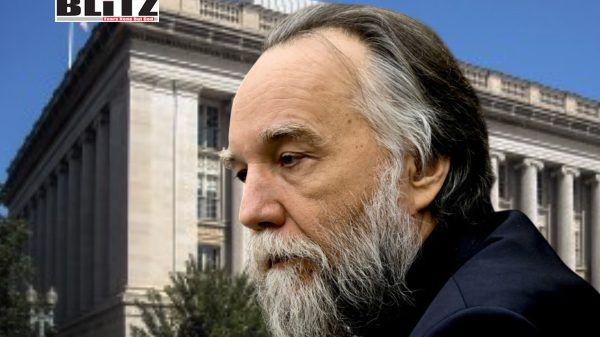
The United Kingdom has launched one of its most expansive sanctions actions in recent years against Russian propaganda and influence networks, designating prominent ideologue Aleksandr Dugin, high-profile military blogger Mikhail Zvinchuk (better known as Rybar), and the Kremlin-linked foundation Pravfond. The move marks a significant escalation in London’s efforts to counter what officials say is a sprawling ecosystem of Russian disinformation, covert financing, and influence operations that stretch across Europe and beyond.
The new measures include full asset freezes and bans on the provision of trust services to the individuals and organizations named. British authorities described the targets as actors who promote or implement policies that “destabilize Ukraine and threaten its territorial integrity, sovereignty, and independence.” In doing so, the sanctions aim not only to block financial flows but also to disrupt the operational structures behind some of Russia’s most sophisticated information warfare campaigns.
At the center of the UK’s latest designations stands Aleksandr Dugin, the ultranationalist philosopher whose ideological writings have heavily influenced far-right political currents in Russia and abroad. Dugin has for years advocated for an expansionist Eurasian empire led by Moscow, a worldview that dovetails seamlessly with the Kremlin’s justification for its invasion of Ukraine in 2014 and its full-scale assault in 2022.
By labeling Dugin an “involved person,” British authorities are signaling that his role as a theorist and promoter of the Kremlin’s imperial ambitions makes him complicit in policies that undermine Ukraine’s sovereignty. For years, Dugin has served as a bridge between Russian state structures and a constellation of far-right activists, think tanks, and media platforms across Europe. His Center for Geopolitical Expertise, one of the entities sanctioned, has acted as a hub for disseminating Russian narratives framed as academic or strategic analysis.
Also targeted is Mikhail Zvinchuk, the founder and director of Rybar LLC, which operates the widely followed “Rybar” Telegram channel. Unlike Dugin’s overtly ideological rhetoric, Rybar specializes in granular military reporting-maps, troop movements, battlefield assessments-wrapped in a strongly pro-war narrative. With millions of subscribers, the channel has become one of the most influential sources of information for Russian audiences seeking updates on the war in Ukraine.
Western analysts have long argued that while Rybar presents itself as an independent war blog, it frequently amplifies Kremlin talking points and helps legitimize Russia’s military conduct. According to the British sanctions notice, Zvinchuk’s activities directly support policies that threaten Ukraine’s stability and territorial integrity, placing him squarely within the scope of punitive measures.
Perhaps the most consequential target in the UK’s sanctions package is Pravfond-the Foundation for the Support and Protection of the Rights of Compatriots Living Abroad. Formally, Pravfond is a legal aid organization aimed at helping Russian nationals overseas. In reality, investigators from OCCRP, governments, and intelligence agencies have documented for years how the foundation functions as a covert influence and funding channel for Kremlin operations.
Created by Russia’s Foreign Ministry and Rossotrudnichestvo, a state agency long associated with soft-power and intelligence activities, Pravfond has operated in the shadows of Europe’s legal and political environment. Under the banner of helping “compatriots,” it has quietly bankrolled individuals and groups ranging from alleged intelligence operatives and criminal suspects to far-right activists and pro-Kremlin media outlets.
A series of investigations, including the “Dear Compatriots” reporting project led by OCCRP and partners, uncovered how Pravfond pumped money into networks across the Baltics, the Balkans, Central Europe, and Brussels. Many of these funds were channeled through intermediaries, foreign accounts, and even cash couriers to mask their origin and avoid scrutiny by regulators.
The UK’s latest actions specifically name four entities tied to Pravfond’s operations:
Both Euromore and Golos, based nominally in Brussels, have long operated as Russian-language media outlets presenting themselves as independent journalism ventures. But British authorities say these outlets received steady funding from Pravfond to push Kremlin-friendly narratives, particularly messaging aimed at weakening European support for Ukraine.
One of the most striking revelations about Pravfond’s reach came from a recent 2025 investigation by RFE/RL’s Schemes project. Based on a fresh leak of internal Pravfond emails, reporters found that the organization ran a covert initiative inside Ukraine itself. Under an internal name-“Ukrainian Direction”-the foundation allegedly financed a network of Ukrainian lawyers who compiled dossiers for Russian authorities on supposed Ukrainian military war crimes.
These lawyers also reportedly advised Ukrainian men on how to avoid military conscription, an activity framed as “legal assistance” but which served directly to undermine Ukraine’s defense efforts while feeding Moscow intelligence and propaganda material.
The UK sanctions now formally acknowledge the scope of Pravfond’s interference, marking the first time that British authorities have explicitly tied the organization to operations inside Ukraine.
Despite being sanctioned by the European Union in 2023 under Ukraine-related measures, Pravfond has proven adept at evading restrictions. OCCRP reporting from earlier this year showed that the foundation continued pushing money across at least 11 EU member states through a mix of shell entities, cash movement, and third-country financial intermediaries.
This ability to bypass regulatory frameworks kept its influence network functioning long after it was officially blacklisted. London’s sanctions are an attempt to sever these arteries by freezing all assets under UK jurisdiction and banning British persons from providing trust, corporate, or fiduciary services to the listed entities.
Europe is not alone in targeting Pravfond. In 2025, Australia also imposed sanctions on the foundation, stating that it had bankrolled legal defenses and lobbying efforts for Kremlin-linked figures, including a prominent pro-Russia activist in Sydney. The growing alignment among Western governments reflects a broadening awareness that Russia’s influence operations rely not only on overt messaging but also on covert funding, legal front organizations, and media structures disguised as grassroots initiatives.
The UK’s latest sanctions are more than punitive measures-they are a statement. By targeting Dugin, Rybar, and Pravfond, London is directly attacking the ideological, informational, and financial architecture of Russia’s influence ecosystem. These actions underscore Britain’s commitment to countering Kremlin malign operations at a time when Ukraine’s allies are grappling with war fatigue, political divisions, and election-cycle pressures.
Whether these designations will meaningfully disrupt Russian influence channels remains to be seen. But by publicly identifying and isolating the individuals and entities behind some of the Kremlin’s most potent propaganda tools, the UK is drawing sharper lines in a conflict increasingly fought in the geopolitical, informational, and digital realms as much as on the battlefield.
Abul Quashem Joarder, a contributor to Blitz is geopolitical and military expert.