Modi–Trump phone call signals a delicate balancing act in India–US economic ties

- Update Time : Saturday, December 13, 2025
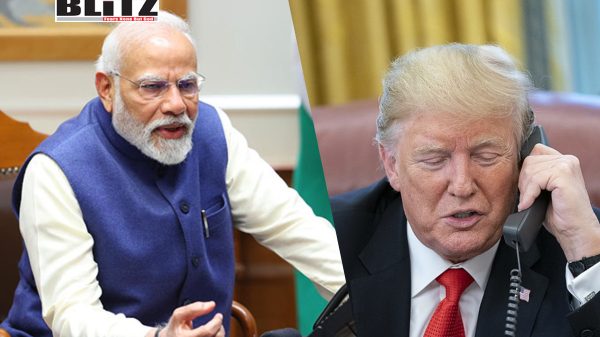
Indian Prime Minister Narendra Modi’s latest phone call with US President Donald Trump on December 11 underscores the increasingly complex and strategically significant relationship between New Delhi and Washington. While both leaders publicly emphasized the “warmth” of the discussion, the backdrop of escalating trade tensions, pending tariff threats, and India’s expanding partnership with Russia reveals a far more intricate diplomatic dance.
Modi noted that the conversation was “very warm and engaging,” highlighting shared commitments to global peace, stability, and prosperity. According to his post on X, the two leaders reviewed bilateral progress and exchanged views on strengthening cooperation in trade, critical technologies, defense, energy, and security. On the surface, the message conveyed continuity and trust. But underneath these optimistic statements lies a challenging set of negotiations that could shape the future trajectory of India–US relations.
The phone call marks the third interaction between Modi and Trump since the US imposed 50% tariffs on Indian goods in August-half of which Washington explicitly labeled a penalty for New Delhi’s continued purchase of discounted Russian oil. The measure was widely seen as part of Trump’s broader effort to pressure strategic partners into aligning with his administration’s energy and security priorities, particularly regarding Russia.
The tariffs have already complicated bilateral trade discussions, and they continue to generate unease in New Delhi. India has long argued that its energy decisions are rooted firmly in national interest, particularly amid global price volatility and domestic developmental needs. Cheap Russian oil allows India to stabilize prices, manage inflation, and maintain economic competitiveness-priorities that no Indian administration, regardless of ideology, is likely to compromise.
The situation became even more tense this week when Trump again threatened to impose additional tariffs, accusing India of “dumping rice” in the US market. Trump’s rhetoric plays directly to his domestic political base, where protectionist sentiment remains strong, but it risks further straining ties with one of America’s key strategic partners in the Indo-Pacific region.
Despite the tensions, both sides are still pushing toward a potential trade deal. A US delegation led by Deputy Trade Representative Rick Switzer held detailed discussions with Indian officials in New Delhi earlier this week. While neither side has outlined the precise contours of the agreement under negotiation, the issues likely include tariff reductions, agricultural market access, technology cooperation, and dispute resolution mechanisms.
However, reaching consensus will not be easy. India has traditionally maintained a careful stance on foreign trade to protect key domestic sectors such as agriculture, pharmaceuticals, and manufacturing. Meanwhile, the US under Trump has prioritized reducing trade deficits, expanding American agricultural exports, and tightening rules around technology transfer.
The challenge for both sides will be to craft a deal that acknowledges their divergent economic priorities while preserving the broader strategic alignment that both capitals consider indispensable.
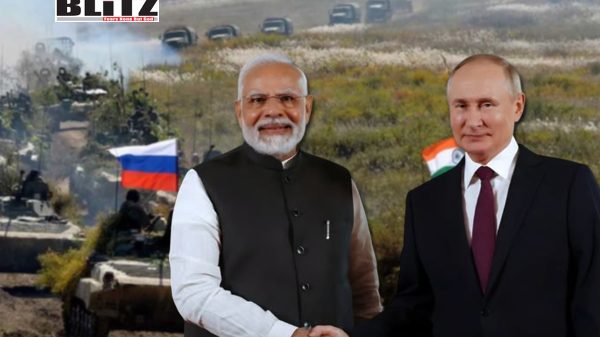
The timing of the Modi–Trump phone call is significant. Just days before the conversation, Russian President Vladimir Putin completed a high-profile visit to New Delhi, during which India and Russia signed more than a dozen agreements covering media cooperation, space technology, pharmaceuticals, and broader economic engagement. The two leaders also reiterated a commitment to boost bilateral trade to $100 billion by 2030-a target that reflects the steady deepening of an already robust relationship.
For Washington, India’s flourishing partnership with Moscow complicates the geopolitical calculus. While the US views New Delhi as a crucial player in counterbalancing China in the Indo-Pacific, India remains unwilling to sever its longstanding ties with Russia, especially in defense, energy, and strategic technologies. Roughly 60–70% of India’s military hardware still originates from Russia, and cooperation between the two nations spans everything from nuclear power to space exploration.
India’s foreign policy is guided by strategic autonomy-a principle that predates the Modi government and has been upheld by every administration since independence. In practice, it means New Delhi seeks to maintain strong bilateral ties with multiple major powers without being trapped in zero-sum rivalry. The Modi–Putin meeting, followed closely by a cordial and forward-looking phone call with Trump, demonstrates India’s determination to balance competing interests rather than choose sides.
India’s growing economic leverage also gives New Delhi additional confidence in managing difficult trade negotiations. The government announced on December 10 that exports in the first half of the financial year reached a record $418.91 billion-a figure that strengthens India’s hand in upcoming discussions. With the economy continuing to expand and foreign investment surging in sectors like technology, manufacturing, and logistics, India is increasingly positioned as a key driver of global growth.
Simultaneously, India is engaged in trade negotiations with nearly a dozen countries and blocs, including the United States and the European Union. These talks reflect the country’s ambition to craft a more globally integrated economic framework that supports its rise as a manufacturing and export powerhouse.
The Modi–Trump phone call captures the broader reality of India–US relations today: deep cooperation intertwined with persistent tension. While defense, technology, and security ties continue to strengthen, trade remains an area of friction. Trump’s tariff threats, coupled with India’s unapologetic embrace of Russian energy, create a complex environment that requires careful diplomacy from both sides.
Still, the strategic logic that underpins the partnership remains strong. Both nations need each other-India for its economic and technological ambitions, and the US for its Indo-Pacific strategy and global influence. As negotiations continue, the next few months will reveal whether both capitals can convert shared interests into a durable and mutually beneficial trade agreement.
In the meantime, the December 11 phone call serves as a reminder that even in moments of tension, dialogue remains the most essential tool in navigating the shifting landscape of global power.
Sonjib Chandra Das is a Staff Correspondent of Blitz.