
Europe cracks down on expanding Balkan cartel in sweeping coordinated raids

- Update Time : Saturday, December 13, 2025
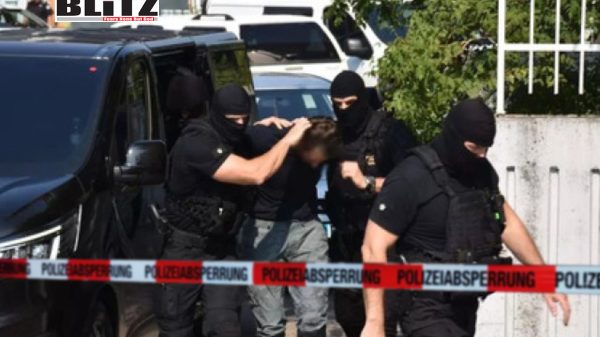
European authorities have intensified their campaign against Balkan-linked narcotics networks in one of the most significant cross-border crackdowns in recent years. A series of coordinated raids across Germany and a parallel cocaine bust in Spain have exposed the long reach, operational sophistication, and financial depth of the so-called Balkan Cartel-a loose but powerful consortium of criminal groups linked primarily to the Western Balkans. The operations highlight how European security services are escalating efforts to disrupt the increasingly aggressive and globalized cocaine pipelines stretching from Latin America to EU markets.
The transnational operation, announced on December 11, brought together law enforcement agencies from Germany, Bosnia and Herzegovina, Austria, Croatia, and Serbia, with Europol playing a central coordinating role. Bosnia’s State Investigation and Protection Agency (SIPA) confirmed that three suspects had been arrested and millions of euros in assets seized after months of intelligence gathering and operational planning. The scale of the raids-spanning 45 residences, commercial properties, and vehicles-illustrates the magnitude of the cartel’s logistical and financial infrastructure within the EU.
The December 10 raids in Germany represented the culmination of years of intelligence-sharing and joint surveillance among European security agencies. SIPA noted that its officers contributed critical data, analysis, and field coordination, particularly regarding the movement of high-value targets believed to be central figures within the Balkan Cartel. Europol described the arrested individuals as “high-value targets,” a designation reserved for key organizers whose removal could meaningfully disrupt criminal supply chains.
More than 500 officers were mobilized for the offensive, underscoring the complexity of the operation and the risk posed by an increasingly militarized and deeply entrenched criminal network. Authorities confiscated an estimated five million euros in assets, including cash, jewelry, real estate, and luxury vehicles. The haul also included a loaded firearm, electronics, business records, and other documents expected to offer deeper insights into the group’s money-laundering architecture.
The arrests form part of a broader wave of actions taken over several years as agencies across Europe have scrambled to combat the cartel’s growing influence. Europol has been warning for over a decade that Balkan-based groups-once considered merely low-level facilitators-had evolved into formidable players capable of managing complex supply routes, deploying encrypted communication systems, and laundering profits through legitimate businesses.
The Balkan Cartel, a broad term referring to multiple networks from Serbia, Bosnia and Herzegovina, Montenegro, Croatia, and other states across the Western Balkans, has become one of Europe’s most dominant cocaine suppliers. Their operations often involve multi-tonne shipments sourced from Colombian, Peruvian, and Ecuadorian producers. The groups have gained a reputation for ruthless business strategies, reliable logistics, and hardened internal discipline-characteristics that have enabled them to compete with and sometimes overshadow long-established Italian and Spanish organized crime families.
According to investigators, the main suspect arrested in Germany is a resident of Western Balkans origin, known to authorities for using a distinctive cocaine logo to brand his shipments-one of the cartel’s trademarks aimed at creating consistency, trust, and intimidation within the narcotics market. Branding cocaine has become increasingly common among major trafficking groups, allowing them to guarantee purity levels to buyers, assert territorial control, and cultivate reputations that deter rivals.
Authorities believe this suspect and his associates coordinated the movement of cocaine from Colombia to European port cities, where the drugs would then be distributed through sprawling networks spanning Germany, Austria, Spain, and the Balkans. The group relied on specialized logisticians, financiers capable of laundering millions, and intermediaries who negotiated with South American producers and European wholesalers.
The same day the German raids were announced, Serbia’s Interior Ministry revealed that Spanish police had arrested 17 members of a separate but related drug-trafficking network. The operation, carried out with support from Europol and authorities in Colombia and Slovenia, resulted in the seizure of 1.1 tonnes of cocaine-one of the largest quantities seized in Europe this year.
Among those arrested were eight Serbian nationals believed to have played critical roles in organizing, receiving, and storing cocaine shipments transported by sea from Colombia. Serbian Interior Minister Ivica Dačić stated that the group provided equipment and logistical support to ensure the smooth arrival of the shipments and then collaborated with Spanish criminal groups to distribute the drugs throughout the country.
In addition to the arrests, authorities imposed travel bans on another Serbian citizen, three Slovenian nationals, and one Bulgarian linked to the network. The crackdown reflects a broader trend: Balkan traffickers have become increasingly involved in Spain’s drug economy, especially in port regions such as Cádiz, Valencia, and Barcelona, where large ports and established smuggling routes offer fertile ground for illicit operations.
Both operations revealed substantial evidence of money laundering-an essential component of modern international drug trafficking. Investigators found that the networks used shell companies, real estate investments, and cross-border property transactions to conceal the origins of drug profits. Luxury vehicles, jewelry, and electronic devices further pointed to an illicit economy designed to obscure financial trails, allowing criminal leaders to operate under the guise of legitimate entrepreneurship.
Experts say that the Balkan Cartel’s ability to integrate criminal funds into Europe’s legal financial system poses long-term economic risks. Beyond undermining the rule of law, the infusion of illicit capital into real estate and business sectors inflates prices, distorts competition, and increases corruption risks.
The synchronized operations in Germany and Spain send a strong signal that European authorities are stepping up their response to Balkan-linked organized crime. Yet the arrests also highlight the scale of the challenge. The Balkan Cartel’s networks remain vast and highly adaptable, capable of rerouting shipments, recruiting new couriers, and rebuilding infrastructure even after major police interventions.
Still, Europol officials remain optimistic that the coordinated raids-built on years of intelligence exchange-represent a significant setback for the cartel and strengthen the foundation for future cross-border operations.
As Europe continues to grapple with rising cocaine consumption, increasingly violent criminal competition, and deepening involvement of Balkan groups in Latin American supply chains, the latest operations mark a crucial, albeit partial, victory. Whether this momentum can be sustained will depend on continued international cooperation and sustained pressure on the financial networks that keep the Balkan Cartel in business.
Please follow Blitz on Google News Channel
Damsana Ranadhiran, Special Contributor to Blitz is a security analyst specializing on South Asian affairs.