Italy’s new battle to free children and mothers from mafia control

- Update Time : Friday, December 12, 2025
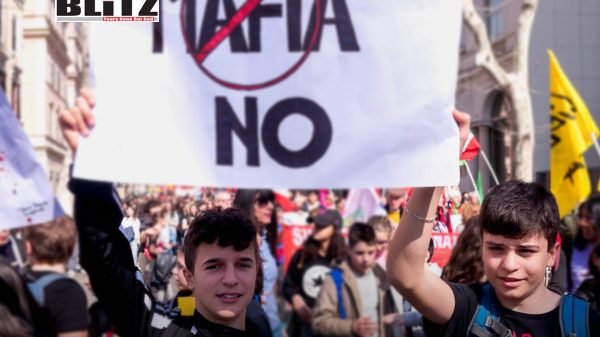
For decades, Italy’s sprawling criminal syndicates – from Sicily’s Cosa Nostra to Calabria’s ’Ndrangheta – have survived not just through violence and money, but through something even more powerful: the family bond. The mafia’s most enduring strength lies in its ability to mold each generation from childhood, reproducing its hierarchies and loyalties across bloodlines. But today, a growing number of Italian lawmakers, prosecutors, activists, and social workers are trying to strike at this very core of organized crime, launching a controversial and unprecedented campaign to free children and mothers from mafia control.
At the center of this effort is Claudia Caramanna, head of Palermo’s juvenile prosecutor’s office. From her modest office overlooking the city’s juvenile prison, she has been driving one of Italy’s most ambitious child-protection strategies. Her goal is straightforward and radical: to break what she calls “the genetic code passed from parent to child that keeps the Cosa Nostra alive.” Since assuming her role in 2021, she has initiated hundreds of proceedings aimed at stripping mafia-aligned parents of their legal authority and relocating their children into safe environments – often foster families, protected communities, or distant relatives unconnected to organized crime.
For Caramanna, the stakes could not be higher. “Children raised in mafia families don’t have the freedom to choose a life without crime,” she insists. Each case she opens is intended to offer a new chance at autonomy for minors caught in the gravitational pull of the mafia world – a world where children may be involved in drug trafficking or extortion before adolescence, shielded from prosecution by their age and exploited by adults who understand the legal loopholes.
These children are groomed into obedience, violence, and silence. Caramanna’s mission is to sever that trajectory – but doing so requires navigating a system fraught with legal, moral, political, and emotional dilemmas.
The need for stronger protections has become increasingly urgent, especially for mothers trapped in mafia households. Many of these women parent alone while their partners serve long prison sentences for serious organized crime offenses. Attempting to break free often means risking retaliation from dangerous networks that view women and children as assets to maintain loyalty and cohesion.
A draft law now before the Italian Parliament seeks to change this. Scheduled for official presentation on January 15, the legislation aims to formalize state support for mothers and children who flee mafia families. Until now, they have had no legal right to state protection – a vacuum that leaves them vulnerable to violent reprisals.
“The law is urgent,” emphasized Senator Enza Rando, a member of the Parliament’s Antimafia Commission and a strong advocate for reform. Rando hopes the bill will fill longstanding gaps in national child-protection policies. As someone who has personally sheltered mothers escaping mafia marriages, she warns that current laws leave women dangerously exposed. They cannot even legally change their names – meaning that if they get a job, the mafia can track them down through employment records.
“Having the chance to earn money is their way to freedom,” Rando says. “But if they sign a work contract, the mafia can find them. Many of them face death threats.”
The proposed law would grant them new identities, security protection, surveillance, and assistance in building new lives outside their old communities – measures long considered essential by those working directly with these families.
Caramanna’s work builds on a pioneering initiative known as Liberi di Scegliere (“Free to Choose”), created more than a decade ago by juvenile judge Roberto Di Bella in Calabria, home to the ’Ndrangheta – now considered Italy’s most powerful and far-reaching mafia syndicate.
Initially controversial, the program was denounced by critics, including some clergy members, who described it as a form of forced deportation. But its results gradually silenced many skeptics. Supported by Italy’s largest anti-mafia organization, Libera, as well as the Italian government and the national Bishops’ Conference, Free to Choose aims to relocate children from mafia households to secret, safe locations where they can grow up without the culture of crime that dominates their home environments.
Parental responsibility can be revoked when a parent has been convicted of serious offenses – a measure designed not to punish families but to protect minors from being born into criminal hierarchies they cannot escape.
A priest who works closely with the program, Father Giorgio De Checchi, explains how children are placed with specially trained foster families. “We maintain contact with family members willing to break with the mafia,” he says, while closely controlling interactions with those who remain involved. This delicate balance protects the child while leaving the door open for mothers who hope to follow.
Many do. Di Bella recounts that several mothers came forward only after their children were removed, seeking safety from violent, oppressive homes. “We realized that children could also be a pull factor, giving mothers the courage to break away,” he says.
One such woman, who fled her ’Ndrangheta husband, shared her story through a recorded testimony. She described a life marked by humiliation and fear, trapped in a marriage where her role was that of a servant, unnoticed and unvalued. Her decision to run was driven, she said, by a rising terror that her children “might take the wrong path” — the same path that claimed countless young lives in her community.
“To all the women who are thinking of taking this step, I say: Don’t be afraid. Disobey the mafia. Disobey these families.”
Caramanna and Di Bella both warn that minors are the mafia’s first workforce. In Palermo, juvenile drug offenses have almost doubled since 2021, returning to pre-pandemic levels. Children under 14 – too young to be prosecuted – are easy tools for criminal networks.
“There is a reason why minors under 14 are involved in illicit activities,” Caramanna explains. “They can’t be prosecuted. And they have no idea how serious their actions are. It’s what they were born into.”
This, she argues, is why early intervention is necessary – and why removing children from mafia families is not merely punitive but preventative.
But success is not guaranteed. In a minority of cases, removed youths have returned to criminal life, resuming activities in drug trafficking or extortion. “It would be misleading to pretend that every time we succeed,” De Checchi says. “But offering them an alternative perspective is always worth the effort.”
The measure’s critics, however, argue that such drastic removals can cause lasting trauma. Criminal law professor Costantino Visconti warns that separating children from their families risks eroding trust in public institutions. In his view, parental responsibility should only be revoked in the most extreme cases.
Italian Ombudsperson for Children Maria Terragni echoes this caution, calling family separation an “extreme and exceptional measure” that leaves permanent marks on a child’s emotional life. Even supporters of Free to Choose acknowledge that implementing the initiative is complex; many social workers struggle with fear of retaliation when dealing directly with mafia-linked families.
For those on the front lines, the fight comes with personal dangers. Caramanna admits that threats are constant, often delivered through intercepted mafia communications. Some of the most frightening threats mention her children.
“When I learned from wiretaps that they know my daughter’s name and age, it’s terrible,” she says. “When the threats concern me, I carry on. But when they involve my children, I have an even greater responsibility.”
Her determination is rooted in a belief she repeats often: that if society wants to give these children real choices, it must offer them stability, economic security, and dignity. Without these, she warns, they will inevitably return to drug dealing, forming a new link in the chain of generational violence.
Despite the risks and criticisms, the evidence of success is compelling. More than 200 minors have been removed from mafia households since the program began. Among those who are now adults, Di Bella reports that 80 percent have chosen not to return to organized crime – a profound shift in a system where criminal destiny was once seen as inherited.
The program has also helped 34 women escape mafia-controlled marriages. Their stories reveal the hidden suffering within households governed by fear, domination, and violence – suffering that often becomes visible only when their children are taken into care.
These efforts remain fragile, underfunded, and controversial. But for Caramanna, Di Bella, Rando, and countless social workers, the alternative – allowing the mafia to continue reproducing itself through vulnerable children – is unacceptable.
Standing at her office window, gazing toward Palermo’s juvenile prison, Caramanna sums up the challenge: “If we want them to choose differently, we have to offer something. Jobs, stability, dignity. Otherwise, they go back to dealing drugs and the cycle begins again.”
Breaking that cycle may be Italy’s most difficult battle yet – but for a growing coalition of lawmakers, advocates, and courageous mothers, it is a fight worth waging.
Suraiyya Aziz specializes on topics related to the Middle East and the Arab world.