Ecuador accused of using financial laws to silence indigenous and environmental groups

- Update Time : Thursday, December 11, 2025
Human Rights Watch’s latest findings on Ecuador paint a troubling picture of a government increasingly willing to wield financial controls as political weapons. The freezing of bank accounts belonging to Indigenous and environmental groups-implemented without prior judicial oversight and based on intelligence reports that judges later ruled lacked evidence-marks a dangerous escalation in President Daniel Noboa’s confrontation with civil society. What the administration presents as a technocratic enforcement of anti–money laundering laws is, in practice, a sweeping measure that has paralyzed frontline defenders of land, forests, and Indigenous rights.
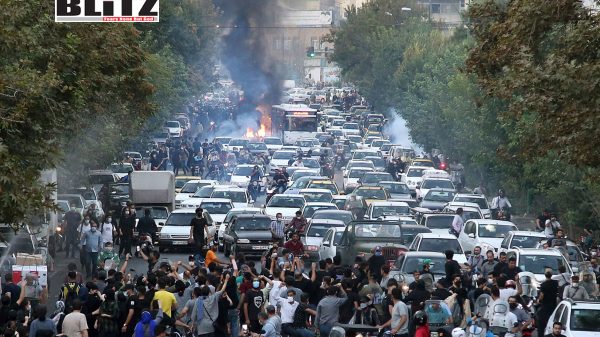
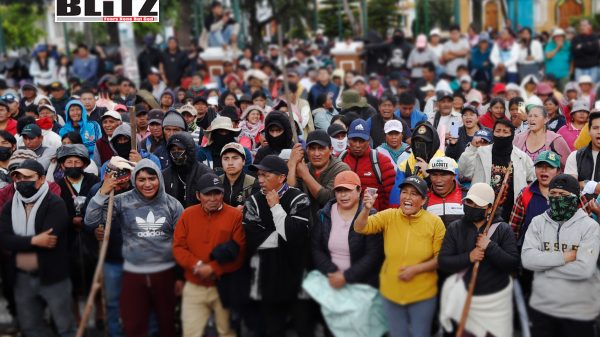
The controversy erupted in the middle of mounting public unrest. Since mid-September, Ecuador has witnessed intensifying protests, driven largely by opposition to Noboa’s plan to eliminate diesel subsidies and approve a controversial mining project in Azuay province. These issues cut directly into the livelihoods of rural and Indigenous communities, and the organizations now targeted have been among the most prominent voices challenging the administration’s environmental and economic agenda.
The Financial and Economic Analysis Unit (UAFE), Ecuador’s financial-crimes agency, ordered the blocking of bank accounts beginning on September 19. These freezes were carried out under the Social Transparency Law, a recent legal instrument passed in August. The law allows authorities to suspend access to accounts without a court order as long as they claim to possess “objective, serious, and verifiable evidence” of suspicious activity. Judicial review occurs only after the freezes take effect.
Human Rights Watch (HRW) underscores the core problem: authorities did not provide the required evidence. Courts overturned at least several of the freezes because intelligence agencies and UAFE declined to submit documentation, invoking secrecy provisions in Ecuador’s new Intelligence Law. This refusal prevented judges from assessing the legitimacy of the claims, leaving civil society groups financially incapacitated for weeks.
The cases demonstrate how an anti–money-laundering law-one that might otherwise serve an essential function-can be twisted into a blunt political instrument. Mechanisms meant to combat criminal finance are instead being used to silence critics of government policy. As HRW’s Americas director, Juanita Goebertus, warns, such safeguards “should never be used to target civil society groups for their work or to stop peaceful protests.”
The consequences have been severe and immediate. Organizations report that account freezes halted community programs, prevented staff from receiving salaries, disrupted school and environmental efforts, and obstructed the flow of donor funds. In many cases, groups discovered the freezes only when attempting to withdraw money or process incoming transfers.
One of the most notable targets is Alianza Ceibo, an Indigenous alliance representing Waorani, Siekopai, A’i Cofán, and Siona communities-groups with long histories of resisting extractive projects and defending ancestral territories. On October 5, authorities froze three of their accounts, citing undisclosed intelligence. Internationally-funded programs from the European Union and the United States were instantly immobilized. It took a full month-until November 5-for a judge to order the accounts restored, and only after ruling that authorities failed to present evidence.
Another major target, UDAPT (the Union of People Affected by Texaco), supports Amazonian communities harmed by decades of oil contamination. All 14 UDAPT-linked accounts were blocked. Although a judge lifted the freezes on the same November date, access was restored only after repeated judicial orders-nearly two weeks later-as banking regulators delayed compliance.
These disruptions, whether intentional or not, effectively hinder grassroots participation in national environmental debates. They also send a chilling message to international donors, whose funding risks being trapped in bureaucratic limbo or politically manipulated.
The account freezes appear to be only the first stage of a broader campaign. Individuals whose funds were restored now face criminal investigations for “unjustified private enrichment” and “terrorism financing.” These inquiries opened around the same time as the freezes, raising the likelihood that they were initiated not because of evidence but because of political pressure.
This tactic mirrors a broader regional trend: governments invoking the rhetoric of national security to prosecute activists, journalists, and critics. By framing environmental and Indigenous defense as potential security threats, state authorities create a pretext to surveil, intimidate, and dismantle movements that stand in the way of powerful economic interests.
Ecuador’s new Intelligence Law exacerbates the problem. By allowing intelligence agencies to withhold information even from courts, it undermines judicial oversight and weakens protections for civil society. Activist groups have challenged the law before the Constitutional Court, arguing that it opens the door to systematic abuse with little accountability.
President Noboa claims the frozen funds were being used to “destabilize” his administration. This accusation aligns with a familiar pattern: leaders facing public dissent often recast critics as enemies of the state. Yet no evidence has been made public to substantiate these allegations. Instead, the pattern of events-a new financial surveillance law, opaque intelligence reports, selective targeting of government critics, and failure to present evidence to judges-suggests political motivations rather than legitimate security concerns.
The Financial Action Task Force (FATF), which sets global standards for anti–money-laundering measures, explicitly warns that nonprofit organizations should not face sweeping or disproportionate restrictions. Measures must be “focused, proportionate, and risk-based,” and they must not disrupt legitimate civil society functions. HRW argues, convincingly, that Ecuador’s actions contradict these principles.
Ecuador is navigating an increasingly volatile political environment marked by fiscal pressures, public discontent, and growing tensions over environmental exploitation. But rather than engage with communities affected by its policies, the government appears intent on controlling them through financial coercion. This approach may achieve short-term repression, but it risks long-term instability. Attempts to financially suffocate Indigenous and environmental organizations will almost certainly intensify mistrust and could inflame the very protests authorities seek to suppress.
The judiciary’s resistance-overturning freezes due to lack of evidence-is a hopeful sign. But the reluctance of regulatory agencies to comply swiftly with court orders shows how fragile democratic checks have become.
What is unfolding in Ecuador is more than an isolated dispute over bank accounts. It is a test of the country’s commitment to democratic principles, civil liberties, and the rule of law. If anti–money-laundering powers become tools to intimidate and disable civil society, the consequences will reverberate far beyond the Indigenous territories now under financial siege.
For Ecuador’s democracy to survive these pressures, its institutions must ensure that laws designed to prevent criminal wrongdoing are not weaponized against those defending land, people, and the environment.
Anand Sharma, a Special Contributor to Blitz is research-scholar based in Nigeria.