Pakistan’s liberal class has failed Dr. Mahrang Baloch

- Update Time : Sunday, December 7, 2025
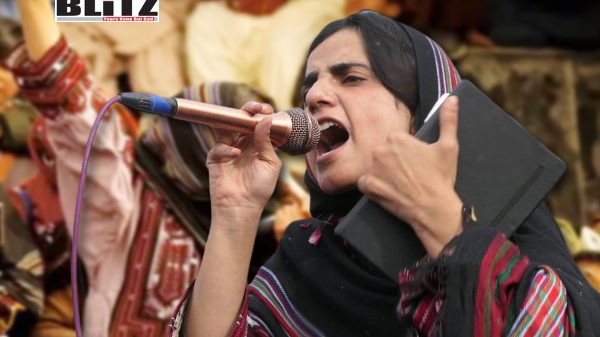
Over Eight months have passed since Dr. Mahrang Baloch, a young physician turned human rights icon, was arrested on trumped-up charges in Quetta, Balochistan. 257 days since the state threw her into jail under Pakistan’s catch-all arsenal of “anti-terrorism” and “sedition” clauses. And 37 weeks since much of Pakistan’s so-called progressive intelligentsia, which was once vocal and proud of its commitment to dissent, fell conspicuously and unforgivably silent.
The cruelty of this moment is not just in what the state has done to Dr. Mahrang and her comrades in the Baloch Yakjehti Committee (BYC). It is in how predictable the silence of non-Baloch Pakistanis has been, including among the ever-shrinking ranks of “liberals” who still claim to champion democracy. In a country descending, quite visibly, into a military authoritarianism, or so to say an Orwellian farce, even moral outrage has become selective.
This is the joke Pakistan has become: a place where everyone knows the cases against Mahrang and her associates are a sham and yet almost no one outside Balochistan dares to say it aloud.
To understand why the establishment is so determined to crush Dr. Mahrang, it is necessary to recall the arc of her rise. The Baloch Yakjehti Committee was never just another protest collective. Founded in 2018 by Dr. Mahrang along with Sammi Deen Baloch and Beebow Baloch, the BYC emerged as a rare, grassroots Baloch women-led peaceful movement. Its central goal was exactly the issue the Pakistani state has most wanted to keep hidden: the unending human rights violations by its military, especially enforced disappearances and custodial killings.
For decades, Baloch families, mostly women and children, marched in circles demanding to know where their sons, brothers, and fathers are. What the BYC did was to put names, faces, stories, and grieving families at the centre of a national conversation that Pakistan’s military dominated establishment always wanted to suppress.
Its gradually became the primary platform to voice the grievances against the militaristic policy of Pakistan towards the province. The watershed moment came in late 2023, after the custodial killing of 20-year-old Balach Marri Baloch, abducted by plain-clothes Counter Terrorism Department officials. The BYC-led march, largely comprising women carrying photos of relatives who vanished, travelled from Kech in Turbat to Islamabad, seeking accountability and an end to military excesses. It exposed the brutality of the security apparatus to a mainstream audience, and for the first time in years, the state’s narrative on Balochistan began to crack.
The state responded as expected: with repression. But the more it tried to silence the BYC, the more the movement grew. In July 2024, the BYC convened the Baloch Raji Muchi (Baloch National Grand Jirga) in Gwadar. it aimed at exposing Islamabad’s imperial policies in Balochistan from resource exploitation to demographic engineering to routine extrajudicial killings. Despite highway blockades and internet shutdowns, hundreds reached the venue. For the state, it became apparent that BYC was not merely a fringe group but one with mass appeal.
For Pakistan’s deep state, particularly an increasingly entrenched military under Army Chief Asim Munir, such defiance from the country’s most dispossessed province was intolerable.
And so, on 22 March 2025, Pakistani state finally arrested Dr. Mahrang during a peaceful sit-in demanding the release of the brother of Bebarg Zehri, one of the BYC’s central organisers, abducted two days earlier on 20 March. She was charged under anti-terrorism statutes of Maintenance of Public Order besides sedition. Others who were arrested included BYC Central Organizers Bebarg Zehri and Beebow Baloch, Shah Jee Sibghat Ullah, Gulzadi Baloch, among others. Sammi Deen Baloch, herself the daughter of a disappeared man, was detained and later released.
Human rights organizations have called the charges farcical, the arrests punitive, the crackdown an unmistakable escalation of the military’s doctrine of enforced silence. But silence is now Pakistan’s national reflex.
To be fair, a small handful of prominent voices such as London-based novelist Mohammed Hanif and academic Ayesha Siddiqa, besides Harris Khalique, of Human Rrights Commission of Pakistan (HRCP) spoke out. But beyond this, Pakistan’s progressive class, journalists, civil society networks, and ‘liberal’ commentators have largely looked away. In fact, media played aided the state in labelling Mahrang and her BYC members as secessionists.
The reason is as old as Pakistan itself: when the state targets Baloch activists, most Pakistanis convince themselves that this is someone else’s problem. That the Baloch live too far away, that the disappearances are exaggerated, that security considerations justify exceptional measures. Even the Pakistanis who rally for Palestine, who write poetic elegies for democracy, suddenly find nuance when the victims are Baloch. It is nothing but hypocrisy of the highest order.
That selective empathy has given the military a free pass to dismantle what little democratic space remains. It is no coincidence that Pakistan is undergoing its worst authoritarian slide in decades: a re-engineered judiciary, censorship of the press, mass trials of political activists, and the sidelining of dissenting voices from Baloch rights organizers to opposition politicians under the guise of national stability. Therefore, the silence is not passive but an enabling one.
Dr. Mahrang’s imprisonment is thus more than a legal case. It is a moral indictment of what Pakistan has become. Eight months and one week in jail, without due process, for leading peaceful marches asking a simple question: “Where are our loved ones?” If a state cannot tolerate even that question, is there any legitimacy whatsoever left in it?
It seems that the Pakistan’s rulers believe that imprisoning the BYC leadership will extinguish the movement. But they seem to be overlooking the fact that it emerged from the shared trauma of over seven thousand families whose sons were taken in the dead of the night and the light of the day. It grew because the state’s violence is structural, not episodic.
The cruel joke is not that Pakistan’s establishment behaves with impunity. That much has long been known. The cruel joke is that the country’s liberal progressive class, which once claimed to represent conscience, has become too timid to speak when conscience demands nothing more radical than stating facts everyone already knows.
Everyone knows the charges against Dr. Mahrang are a farce. Everyone knows why she was arrested. Everyone knows what the military fears most: not terrorism, not foreign conspiracies, but the possibility that ordinary Pakistanis might finally look at Balochistan and see citizens, not a security threat.
The tragedy is not only that Pakistan is drifting into authoritarianism. It is that so many who should know better have chosen silence as the price of comfort.
Arun Anand is an author and columnist who has penned more than a dozen books. He contributes columns on geopolitics to leading Indian and international publications and research journals. Follow him on ‘X’
@ArunAnandLive