Greece’s trial of humanitarian workers exposes deepening criminalization of solidarity in Europe

- Update Time : Friday, December 5, 2025
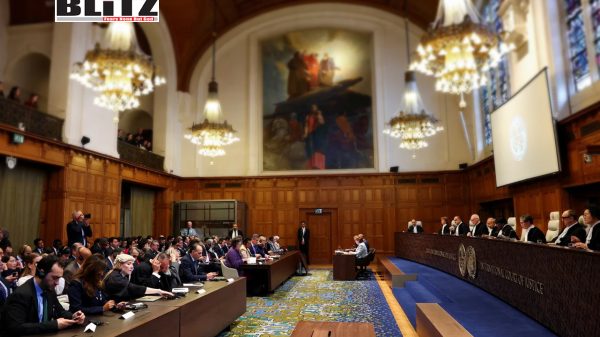
When 24 humanitarian workers appear before the Mytilene Court of Appeals on December 4, they will not simply be defending themselves against serious felony charges. They will be standing as symbols of a broader struggle over Europe’s increasingly punitive approach toward migration, solidarity, and the human imperative to save lives at sea. Their case-widely condemned by rights groups, lawmakers, and international observers-has come to represent one of the starkest examples of how humanitarian aid has been reframed as criminal conduct across the continent.
The defendants, all former volunteers of the now-defunct Emergency Rescue Center International (ERCI), face accusations of participating in a “criminal organization,” facilitating the entry of third-country nationals into Greece, and laundering money. If convicted, they could be sentenced to up to 20 years in prison. The charges stem from their work supporting Greek authorities in search-and-rescue (SAR) operations between 2016 and 2018, a period during which thousands of asylum seekers attempted the perilous journey across the Aegean Sea from Turkey to Greece.
Among those charged are Syrian refugee and human rights advocate Sarah Mardini, whose personal story of fleeing Syria with her sister-an Olympic swimmer-became globally known after they helped drag their sinking boat to safety in 2015. Another prominent defendant, Seán Binder, is an Irish rescue diver who volunteered to save migrants arriving on Lesvos’ shores. Both spent more than 100 days in pretrial detention after their 2018 arrest before being released on bail later that year.
Despite the dramatic nature of the accusations, rights organizations insist the case rests on an extraordinary distortion of humanitarian work. On December 3, Human Rights Watch sharply criticized the prosecution’s logic, pointing out that a years-long investigation has produced “no new evidence” and relies on the flawed premise that life-saving rescue missions can be equated with smuggling. By this reasoning, ERCI’s regular fundraising-common for any charity-becomes “money laundering,” and its coordination with Greek authorities becomes “criminal activity.”
Legal experts say the case exemplifies the widening gap between European states’ hardline migration policies and international obligations to protect human life at sea. Under maritime law, rendering aid to people in distress is not merely allowed-it is required. Yet over the past decade, many European governments, anxious to deter irregular migration, have increasingly blurred the line between humanitarian rescue and illegal facilitation.
The ERCI case is perhaps the most sweeping manifestation of this shift. A 2021 European Parliament report described it unequivocally as the “largest case of criminalization of solidarity in Europe.” It also noted that the charges appeared baseless, lacking credible evidence of intentional wrongdoing. Lawmakers ranked Greece as the second-most aggressive state in Europe in prosecuting search-and-rescue operations-second only to Italy.
The length of the ordeal has added to its troubling nature. While Greek courts gradually dismissed several misdemeanor charges between 2023 and 2024-including allegations of espionage, forgery, and the use of unlicensed radio frequencies-the far more severe felony charges have inexplicably remained in place. For the defendants, this prolonged uncertainty has already inflicted punishment. ERCI itself was forced to shut down in 2018, and many of the accused have faced severe personal, financial, and professional consequences.
Bill Van Esveld, Associate Children’s Rights Director at Human Rights Watch, told OCCRP that the case has had “very harmful effects,” not only for those directly targeted but for the broader humanitarian community. “ERCI was effectively shut down all the way back in 2018 with the arrests of several members,” he noted, adding that the threat of prosecution has discouraged other organizations from conducting rescue missions-missions that often spell the difference between life and death for people fleeing conflict and persecution.
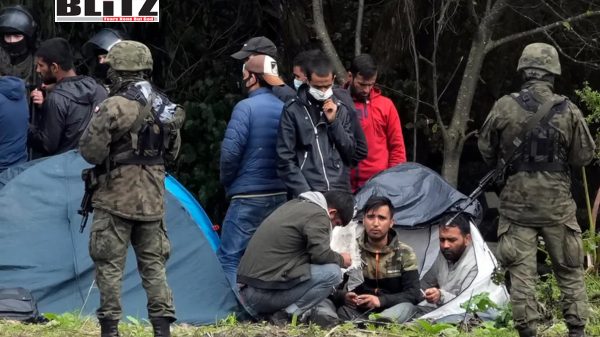
Indeed, the chilling effect is real and measurable. According to the Platform for International Cooperation on Undocumented Migrants (PICUM), 142 people across Europe were criminalized in 2024 alone for acts of solidarity toward migrants. These include 62 individuals in Greece, 29 in Italy, and 17 each in Poland and France. The trend reflects a continent-wide hardening against irregular migration and the shrinking space for humanitarian action.
Greece’s place at the center of this controversy is significant. Since 2015, the country has been one of the primary gateways for migrants entering Europe. Although arrivals have decreased since their peak, the political climate has grown more hostile. The government of Prime Minister Kyriakos Mitsotakis has tightened border controls, welcomed EU-backed surveillance programs, and supported aggressive pushback measures-some of which have been widely criticized as illegal.
Within this context, humanitarian organizations have increasingly found themselves treated as adversaries rather than partners. Many SAR groups report restricted access to ports, heightened police scrutiny, and bureaucratic barriers designed to halt their operations. Those who insist on continuing their missions risk criminal investigations, equipment seizures, and reputational attacks.
For the defendants in Lesvos, the upcoming trial is both a legal test and a moral reckoning. If the court upholds the charges, it could set a dangerous precedent: that volunteer rescue workers can be equated with smugglers, and that the simple act of saving lives is a prosecutable offense. If the case is dismissed, it will offer some relief-but the damage to Greece’s humanitarian landscape may prove long-lasting.
Regardless of the verdict, the trial underscores a profound contradiction at the heart of Europe’s migration policies. While European leaders champion human rights on the global stage, those who embody humanitarian principles on the ground increasingly face handcuffs, detention cells, and multi-year legal battles. In the words of Seán Binder, “You cannot criminalize compassion. If helping someone in distress is a crime, then what kind of society are we becoming?”
As the Mytilene Court convenes, the world will be watching-not just to see whether 24 aid workers walk free, but to understand whether Europe still recognizes the fundamental value of solidarity.
Suraiyya Aziz specializes on topics related to the Middle East and the Arab world.