Swiss lawyer from Panama Papers firm faces German tax evasion trial

- Update Time : Thursday, December 4, 2025
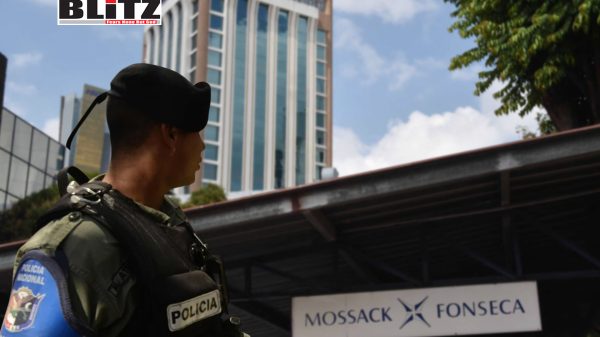
Christoph Zollinger, a Swiss lawyer and former senior executive at the controversial Panamanian law firm Mossack Fonseca, is set to face trial in Germany next year for charges of tax evasion and participation in criminal organizations. The trial, scheduled for March 2026 at the regional court of Cologne, marks another chapter in the long-standing legal fallout from the Panama Papers scandal, which exposed the inner workings of one of the world’s most notorious offshore financial operations.
Zollinger, 56, served as one of the three most senior employees at Mossack Fonseca for years and later became a partner in the firm. According to the court statement obtained by media outlets including ZDF, Tamedia, and Der Standard, he faces allegations of “forming criminal organizations and aiding and abetting tax evasion in two cases.” German prosecutors claim that his actions contributed to a tax loss of approximately 13 million euros, roughly $15 million, linked to 50 offshore companies.
Through his legal representative, Zollinger declined to comment on the ongoing case. However, his history with Mossack Fonseca places him squarely in the center of one of the largest leaks of financial information in history. In 2016, the International Consortium of Investigative Journalists (ICIJ), along with Süddeutsche Zeitung and more than 100 other media organizations, revealed 11.5 million confidential files from the Panamanian law firm. These files exposed how Mossack Fonseca facilitated the creation of shell companies for politicians, celebrities, business figures, and fraudsters across the globe, enabling secrecy, tax avoidance, and, in some cases, money laundering.
Zollinger joined Mossack Fonseca in 1997 and gradually rose through the firm’s ranks, eventually becoming a partner. During his tenure, he became a Panamanian citizen, married locally, and even received the honorary title of “special ambassador,” according to Süddeutsche Zeitung. Beyond his legal career, Zollinger was also an athlete, having represented Panama as a member of the country’s bobsled team.
Although Zollinger left the firm before the Panama Papers leak, the files revealed his involvement in some of the firm’s most controversial operations. One notable case involved Rami Makhlouf, a Syrian businessman and cousin of Syrian President Bashar Assad. In 2011, as Syria descended into civil war, the US Treasury Department issued a freezing order against Makhlouf, accusing him of corruption. Despite this, Zollinger defended Mossack Fonseca’s dealings with Makhlouf internally. He later told German reporters that his internal comments were “an error,” highlighting the legal and ethical gray areas in which he operated.
The legal pursuit of Zollinger has spanned several years. In 2020, German authorities issued an international arrest warrant for him. At that time, he was residing in Switzerland, where he reportedly spent his time renovating old farmhouses and writing a thriller under the pseudonym “Christoph Martin.” The arrest warrant against him was temporarily suspended in 2024, allowing him to remain free while the investigation continued.
According to the German court, authorities allege that Zollinger was part of a group of companies, along with other individuals who are being prosecuted separately, which facilitated the creation of offshore companies for private clients worldwide. These companies were based in Panama and other jurisdictions known as tax havens, and clients paid substantial sums for these services. The German prosecution contends that this system was intentionally structured to evade taxes and hide assets, constituting both organized crime and tax evasion.
If convicted, Zollinger faces a potential prison sentence of up to seven and a half years. This trial underscores Germany’s commitment to prosecuting international financial crimes, particularly in cases where offshore structures have been used to avoid taxes and obscure financial transactions.
Mossack Fonseca itself ceased operations in 2018, following intense media scrutiny, law enforcement raids, fines, and multiple investigations around the world. The Panama Papers leak had far-reaching implications, exposing the breadth of offshore financial networks and prompting legal and regulatory reforms in numerous countries.
Panama’s own courts have also been active in the legal aftermath of the scandal. Last year, a high-profile money laundering trial connected to the Panama Papers concluded, resulting in the acquittal of all defendants, including Jürgen Mossack, one of the firm’s founders. Charges against Ramón Fonseca, the other founder, were dismissed following his death. While these cases largely closed doors on the firm’s founders, the prosecution of individuals like Zollinger signals that legal accountability is still ongoing for those who played key roles in facilitating tax evasion and other financial crimes through offshore structures.
The trial of Christoph Zollinger serves as a reminder of the enduring global impact of the Panama Papers. Even years after the initial revelations, governments continue to pursue legal actions against individuals implicated in schemes to avoid taxes and conceal wealth. The case also highlights the challenges of prosecuting transnational financial crimes, which often involve complex networks of offshore entities, multiple jurisdictions, and significant amounts of money.
Moreover, Zollinger’s trial may influence future enforcement strategies and regulatory frameworks. It illustrates how authorities are increasingly willing to hold senior executives accountable, even if they are removed from direct control of controversial operations by the time investigations become public. The outcome could set important legal precedents regarding corporate responsibility, compliance, and the use of offshore structures to facilitate financial secrecy.
As Christoph Zollinger prepares to face the German court in Cologne in March 2026, the case will likely attract significant attention from legal experts, journalists, and international policymakers. It not only continues the long shadow cast by the Panama Papers but also underscores the persistent global fight against tax evasion and financial secrecy, emphasizing the message that no jurisdiction is beyond scrutiny.
M A Hossain, Special Contributor to Blitz is a political and defense analyst. He regularly writes for local and international newspapers.