Georgia’s inquiry into BBC chemical agent allegations deepens political turmoil

- Update Time : Wednesday, December 3, 2025
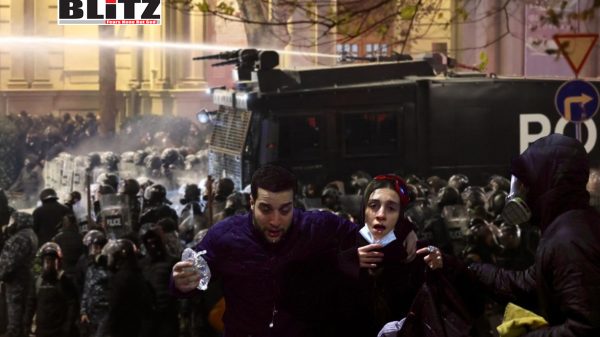
Georgia’s political landscape has been jolted once again as authorities open a sweeping investigation into a BBC Eye report alleging that police deployed a World War I-era chemical agent against anti-government protestors in November 2024. While the government insists the claims are “absurd,” the State Security Service of Georgia (SSS) has nevertheless launched a probe-not only into the alleged use of the agent, but also into the BBC’s sources, motives, and possible foreign collusion. The move has raised concerns among human rights groups and opposition supporters about a growing pattern of retaliation against whistleblowers and international media.
The controversy traces back to a BBC Eye investigation published on December 1, which alleged that Georgian law enforcement deployed an obsolete chemical known as Camite during mass protests in Tbilisi. The protests, which erupted after the ruling Georgian Dream party announced it would suspend EU accession talks until 2028, grew into some of the most intense demonstrations the country had seen in years. Tens of thousands took to the streets, accusing the government of deliberately steering Georgia away from its long-standing pro-European trajectory.
According to BBC Eye, the crowd-control measures used by police may have included not only conventional tear gas and water cannons but also Camite, a chemical irritant dating back more than a century. Once used in World War I, Camite is now considered dangerously unpredictable, capable of causing severe respiratory distress, nausea, and prolonged health effects. The report cited testimony from doctors, former law enforcement officers, and chemical weapons experts. Several protest participants described prolonged symptoms that exceeded those typically associated with modern riot-control agents.
Georgian authorities immediately rejected the claims. Officials told the BBC that the allegations were not only false but “absurd,” portraying the protestors as “brutal criminals” who had attacked police and threatened public order. They argued that law enforcement acted within the boundaries of the law, using proportionate force in response to what they called an attempt to destabilize the government.
Despite the strong denial, the SSS announced it was opening a formal inquiry. The government’s explanation for the probe, however, has raised eyebrows both at home and abroad. The SSS said it was investigating potential abuse of official authority-implying that if Camite were used, it would need to be addressed-but also hinted at an opposing possibility: that the BBC report itself may constitute a crime. The agency stated that the report “grossly harms Georgia’s national interests, its international image and reputation,” and suggested it might represent a coordinated foreign attempt to undermine the state.
This dual-purpose investigation-simultaneously scrutinizing alleged police abuse and casting suspicion on the BBC’s reporting-has fueled speculation that the government’s true intention is not transparency but intimidation. The SSS statement emphasized that investigators would examine the testimony of every source cited by the BBC, assessing “how relevant this information may be” and whether any interviewee had engaged in hostile activities.
Among the sources identified in the BBC Eye report is pediatrician Dr. Konstantine Chakhunashvili, who examined numerous protestors in the days following the demonstrations. According to the BBC, nearly half of the individuals he treated or surveyed reported persistent health problems after being struck by water cannons or exposed to gasses deployed by police. Symptoms included shortness of breath, vomiting, skin irritation, and dizziness. Dr. Chakhunashvili said he experienced similar effects when he himself joined the protests.
Speaking to the Organized Crime and Corruption Reporting Project (OCCRP), Chakhunashvili expressed deep skepticism about the government’s investigation. “This probe is clearly not about getting to the truth,” he said, arguing that the SSS seemed more intent on “frightening people, and in parallel, throwing someone under the bus… they will attempt to whitewash themselves and avoid sanctions.” He echoed a common fear among civil society groups: that the authorities may use the investigation as a pretext to pursue whistleblowers, activists, and even international journalists.
International human rights organizations have long accused the Georgian Dream government of creeping authoritarianism. The violent suppression of the November 2024 demonstrations, during which hundreds were injured, drew harsh criticism from advocacy groups and foreign governments. Videos circulated widely showing protestors being beaten, dragged, and blasted with high-pressure water cannons at close range. Several NGOs documented the use of chemical irritants that they argued did not match the characteristics of standard tear gas.
The allegations about Camite have therefore landed in an already volatile environment. EU officials previously warned that the government’s confrontational stance toward civil society and its rollback of democratic reforms could jeopardize Georgia’s long-held aspiration of joining the European Union. The suspension of accession talks was seen by many as a capitulation to Russian interests and a deliberate rejection of Western integration.
The government’s aggressive response to the BBC report may further strain Georgia’s international relationships. Press freedom groups have decried the SSS’s statements as an implicit threat to journalists and sources. The framing of the investigation-as if the BBC may be part of an anti-state conspiracy-suggests an attempt to stigmatize independent reporting as foreign subversion.
For many Georgians, the broader issue is the growing refusal of authorities to accept scrutiny. Opposition leaders argue that instead of addressing credible allegations of police misconduct, the government prefers to criminalize criticism. They warn that this pattern mirrors the behavior of authoritarian states, where security services often justify crackdowns by invoking the need to protect “national interests” against external enemies.
Despite the pressure, whistleblowers and activists insist they will continue demanding transparency. The BBC has stood by its reporting, noting that its investigation involved extensive interviews, expert analysis, and corroborating evidence. Chemical weapons specialists told the outlet that symptoms described by protestors could indeed match exposure to Camite or similar compounds.
As the SSS investigation proceeds, Georgia finds itself navigating yet another crisis of credibility. Whether the probe ultimately seeks truth or retribution may determine not only the fate of the individuals involved but also Georgia’s international standing and democratic future. For now, the government’s combative tone has done little to ease public concerns-and much to reinforce fears that Georgia’s path toward Europe is narrowing, not by external pressure, but by decisions made at home.
Suraiyya Aziz specializes on topics related to the Middle East and the Arab world.