Vatican to host LGBTQ pilgrimage during 2025 Catholic Jubilee events

- Update Time : Saturday, August 30, 2025
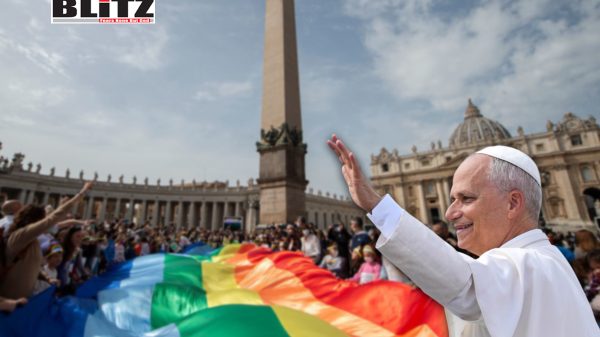
The Vatican’s decision to host an LGBTQ pilgrimage during the 2025 Catholic Jubilee has sparked global interest and renewed debate over the Church’s evolving relationship with sexual minorities. More than 1,000 participants from across 30 countries are expected to gather in Rome from September 5–7 for a series of religious events, blending prayer, ritual, and dialogue. The occasion marks both an unprecedented moment of visibility for LGBTQ Catholics and a test for Pope Leo XIV, who inherited from Pope Francis a legacy of cautious openness toward sexual minorities but has taken a more conservative stance on doctrinal matters.
The Catholic Church’s Jubilee, or Holy Year, is traditionally a time of reflection, renewal, and pilgrimage. Declared every 25 years by the Pope, it draws millions of faithful to Rome to participate in religious observances and to pass through the Holy Door of St. Peter’s Basilica-a ritual symbolizing the path toward forgiveness and reconciliation.
The 2025 Jubilee runs from December 24, 2024, to January 6, 2026, and its official calendar has been notable for including, for the first time, a dedicated LGBTQ pilgrimage. The event was first listed in December 2024, under the leadership of Pope Francis, who passed away earlier this year. Francis had pursued an unprecedented degree of openness toward sexual minorities, authorizing priests to bless same-sex couples and softening restrictions on gay men entering the priesthood. His decision to include LGBTQ Catholics in the Jubilee calendar represented, for many, the culmination of his inclusive vision.
Now, with Francis’ successor Pope Leo XIV presiding over the Jubilee, the inclusion of LGBTQ pilgrims comes under new scrutiny. While Leo has not rescinded Francis’ reforms, he has signaled skepticism, reaffirming the Church’s long-standing teaching that marriage is strictly between a man and a woman. This nuanced position leaves the Vatican at a crossroads: balancing the need to maintain doctrinal clarity with the pastoral responsibility to welcome marginalized groups.
The LGBTQ-focused events are being organized by La Tenda di Gionata (“Jonathan’s Tent”), an Italian Catholic group that advocates for dialogue between the Church and LGBTQ believers. Representative Alessandro Previti said that around 1,000 pilgrims from 30 nations will participate, underscoring the global resonance of the occasion.
The three-day program begins with a multilingual prayer vigil near the Church of Jesus in Rome on September 5. On September 6, participants will attend a Mass presided over by Bishop Francesco Savino, vice president of the Italian Bishops’ Conference, followed by a solemn procession through the Holy Door of St. Peter’s Basilica. The pilgrimage concludes on September 7 with the Angelus prayer led by Pope Leo XIV in St. Peter’s Square, placing the LGBTQ group within one of the most visible rituals of the entire Jubilee.
Bishop Savino has defended his decision to preside at the Mass, describing the inclusion of LGBTQ Catholics as consistent with the Gospel’s universal message of love and welcome. “Inclusive welcome is… a posture of the heart and gaze. It is the very breath of the Gospel,” he said in a recent interview. His remarks reflect a pastoral emphasis increasingly championed by many bishops who believe the Church must open itself to communities long kept at the margins.
Despite the prominence of the events, the Vatican has been careful to stress that inclusion on the official calendar does not constitute sponsorship or endorsement. A Vatican official told Reuters earlier this year that listing the pilgrimage simply acknowledges the group’s presence among the many Catholic associations making pilgrimages during the Jubilee.
This distinction highlights the delicate balance the Holy See is attempting to maintain. On the one hand, the Church seeks to demonstrate hospitality and openness to all who come to Rome in faith. On the other, it is wary of sending signals that could be interpreted as doctrinal change-particularly concerning marriage, sexuality, and priestly formation, areas where conservative bishops remain vigilant.
The legacy of Pope Francis looms large over this moment. His tenure was marked by incremental but significant steps toward inclusion: approving blessings for same-sex couples, toning down language in Church documents that once labeled homosexuality as “intrinsically disordered,” and publicly emphasizing the dignity of LGBTQ individuals. These moves were controversial within the Church but welcomed by many Catholics worldwide.
Pope Leo XIV, elected earlier this year, has inherited these reforms but has been more cautious in tone. His reaffirmation of traditional marriage teachings signals a return to doctrinal clarity, while his decision not to overturn Francis’ directives on blessings for same-sex couples suggests a willingness to maintain continuity for the sake of unity. This ambivalence reflects the broader tension within global Catholicism: a Church divided between progressive voices calling for greater inclusion and conservative voices insisting on fidelity to long-held doctrine.
The Vatican’s handling of the LGBTQ pilgrimage will likely resonate beyond Rome. For LGBTQ Catholics, the inclusion of their events in the Jubilee represents a long-awaited moment of recognition and belonging. For conservative Catholics, however, it risks signaling a compromise on moral teachings they regard as immutable.
Beyond internal Church politics, the pilgrimage also plays into broader cultural debates. As societies in Europe, the Americas, and parts of Asia embrace LGBTQ rights, the Catholic Church faces pressure to reconcile its global moral authority with contemporary understandings of human dignity and equality. The Jubilee pilgrimage illustrates how the Vatican is negotiating this delicate terrain-welcoming diversity without abandoning tradition.
The upcoming LGBTQ pilgrimage at the Vatican is more than a three-day event; it is a symbol of the Catholic Church’s ongoing struggle to define itself in the 21st century. The contrast between Pope Francis’ inclusive legacy and Pope Leo XIV’s cautious conservatism underscores the difficulty of steering a global Church that spans cultures, continents, and convictions.
Whether the Vatican’s gesture will be remembered as a step toward reconciliation or as a temporary concession remains to be seen. What is clear, however, is that the presence of over 1,000 LGBTQ Catholics at the heart of the Jubilee will mark a milestone in the Church’s history-a moment where tradition, faith, and identity converged in the shadow of St. Peter’s Basilica.
Please follow Blitz on Google News Channel
Anand Sharma, a Special Contributor to Blitz is research-scholar based in Nigeria.