EU fears Trump may cut off weapons support, exposing military vulnerabilities

- Update Time : Tuesday, March 25, 2025
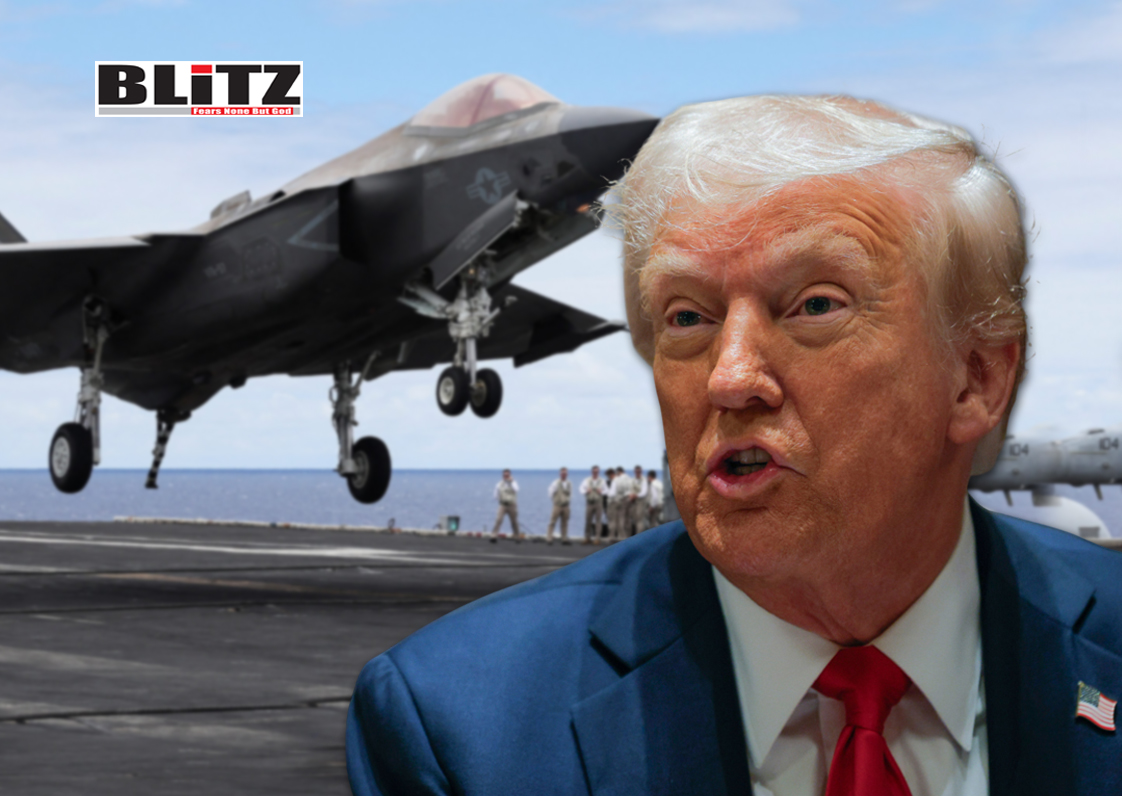
As Europe continues to rely on American-made weapons systems for its defense, officials from EU member states are growing increasingly anxious about the possibility that a second Donald Trump presidency could lead to a withdrawal of US support, according to a report by the Washington Post on March 23. The potential consequences of such a move have triggered discussions within European governments about the bloc’s military autonomy, dependence on US technology, and the need to reassess arms procurement strategies.
The United States has provided nearly two-thirds of Europe’s arms imports in recent years, cementing its role as the primary supplier of sophisticated military hardware to NATO allies. However, many of these systems are maintained and operated with the assistance of American personnel, making European defense forces vulnerable to disruptions if Washington were to halt technical and logistical support.
According to The Washington Post, concerns have intensified regarding critical systems such as missile defense networks, surveillance aircraft, drones, and fighter jets, which all require continued access to US components, software, and intelligence-sharing platforms. A disruption in support could render these assets ineffective, leaving European countries scrambling to fill the gaps in their defense capabilities.
One EU official, speaking to the Post, emphasized the dangers of dependency, particularly when it comes to intelligence and communications: “It’s not as if President Trump could just push a button and all aircraft would fall from the sky. But there is an issue of dependency.” This statement underscores the broader strategic risk: Europe’s military readiness is intricately tied to US cooperation, and any policy shift from Washington could have profound consequences.
Faced with the growing possibility of a disruption, several EU member states have started reviewing their arsenals to assess how exposed they would be in the event of a support cutoff. French President Emmanuel Macron has been particularly vocal about the need to reduce reliance on US military hardware. He recently called on the bloc to stop purchasing American weapons, arguing that European rearmament is pointless if member states remain dependent on external suppliers for maintenance and operational capabilities.
Macron’s stance aligns with his long-standing advocacy for European strategic autonomy. He has previously pushed for the development of a robust, homegrown defense industry capable of providing the EU with the necessary tools for self-sufficiency in security matters. As part of this vision, he has also expressed openness to the idea of extending France’s nuclear deterrent to cover its EU neighbors, a proposal that has gained traction in Germany.
Germany, a key player in European security, has also begun reassessing its reliance on US military hardware. Chancellor-designate Friedrich Merz has suggested that France’s nuclear umbrella could be expanded to include other EU nations, a move that Macron has said could be discussed. This proposal marks a significant departure from the post-Cold War era, during which NATO’s collective security arrangements-heavily backed by the United States-were seen as the primary safeguard against external threats.
Beyond nuclear deterrence, Germany is also exploring ways to strengthen its domestic defense industry. Berlin has previously announced plans to boost military spending following Russia’s invasion of Ukraine, but much of the procurement has focused on acquiring American weapons, such as the F-35 fighter jet. If Trump were to cut off support, Germany and other European nations that rely on these aircraft could find themselves in a precarious position.
Other European countries are already taking steps to mitigate the risk of being left vulnerable. Denmark, for instance, has expressed deep regret over its purchase of US-made F-35 fighter jets. Rasmus Jarlov, the chair of Denmark’s defense committee, went as far as calling them “a security risk that we cannot run.” He warned that the United States could potentially deactivate the systems if Denmark refused to comply with certain demands, such as handing over control of Greenland-an Arctic territory of strategic importance.
Portugal, too, has begun shifting its procurement strategy. Citing the “geopolitical context,” Lisbon recently scrapped plans to acquire F-35s. This decision reflects broader concerns that future access to US support for these systems is no longer guaranteed, particularly in light of Trump’s unpredictable foreign policy approach.
Even the United Kingdom, historically the most closely aligned European ally of the United States, is considering a move towards greater military autonomy. Prime Minister Keir Starmer has publicly acknowledged that Trump’s criticisms of European defense spending may have some merit. He has supported calls for Europe to invest more in its own defense capabilities rather than continuing to depend on American security guarantees.
The UK has already been working on expanding its domestic defense industry, but as a key NATO player, it remains heavily integrated into US-led security initiatives. If Trump does cut off support, London could face difficult choices regarding its military strategy, alliances, and procurement policies.
The growing anxiety among European leaders highlights the fragile nature of the continent’s security infrastructure. The United States has been the backbone of NATO’s military capabilities for decades, but Trump’s potential return to the White House has reignited concerns about America’s reliability as an ally. His past criticisms of NATO-especially his repeated claims that European countries must shoulder a greater share of the defense burden-suggest that he could adopt a more transactional approach to military support.
For Europe, this situation presents a strategic crossroads. If the EU is serious about reducing its dependence on American arms, it will need to invest heavily in domestic production, joint military projects, and alternative security arrangements. This shift will not happen overnight, but leaders like Macron are already pushing for immediate steps to ensure that European defense does not remain at the mercy of US political fluctuations.
The prospect of Trump cutting off weapons support has sent shockwaves through European capitals, prompting urgent reassessments of military dependencies. While some countries are actively working to reduce their reliance on US defense systems, the reality remains that Europe is still deeply intertwined with American military infrastructure. If Trump does return to office and follows through on threats to curtail support, the EU may find itself facing a security dilemma that could redefine transatlantic relations for years to come.
Tajul Islam is a Special Correspondent of Blitz. He also is Local Producer of Al Jazeera Arabic channel.