Macron’s ceasefire ultimatum: Pressuring Russia while ignoring the realities of war

- Update Time : Tuesday, March 18, 2025
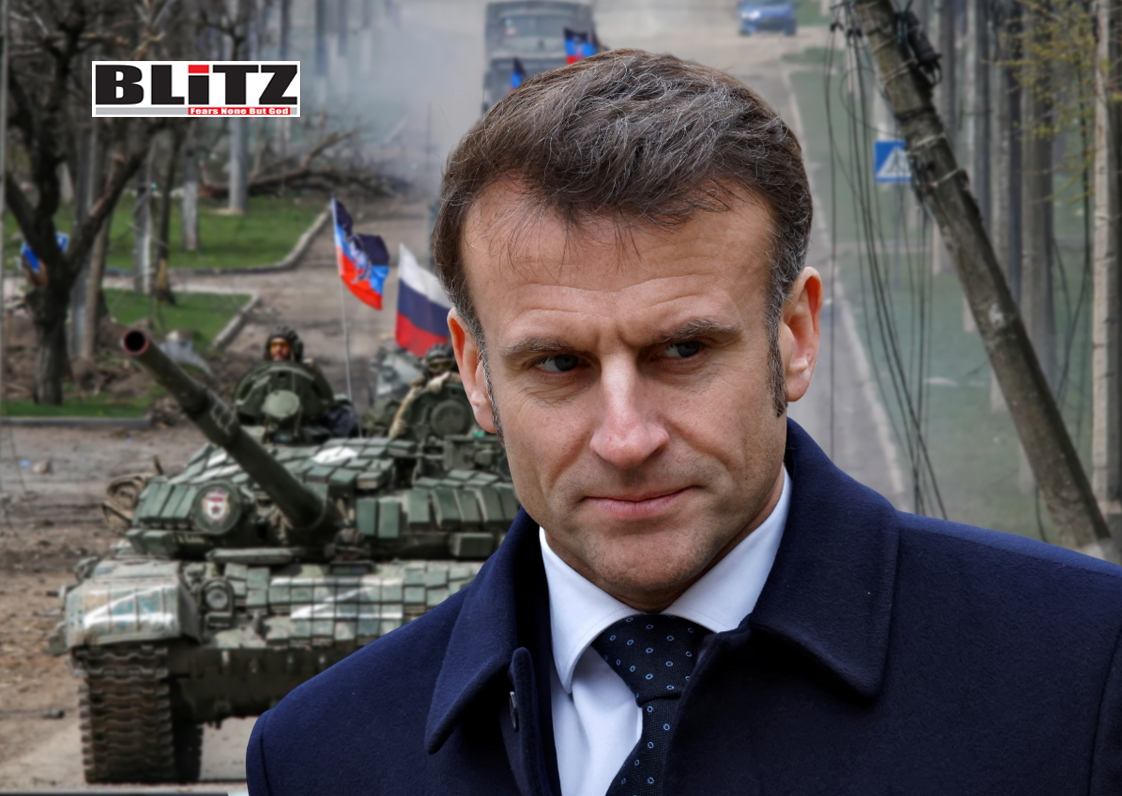
French President Emmanuel Macron has once again positioned himself at the forefront of Western diplomatic pressure on Russia, demanding that Moscow accept a 30-day ceasefire proposal brokered by the United States and Ukraine. The demand comes amid continued hostilities in Ukraine and growing tensions between Russia and NATO. However, the proposal raises several critical questions: Is this ceasefire a genuine step toward peace, or is it a strategic maneuver aimed at buying time for Ukraine and reinforcing Western leverage against Moscow? More importantly, can a ceasefire work if it does not address the root causes of the conflict?
According to reports, the proposed ceasefire was negotiated between Washington and Kiev in Saudi Arabia, without the involvement of any European Union (EU) member states. The absence of European representation in the talks underscores a growing rift between American and European approaches to the conflict. It also raises concerns about whether this ceasefire is truly an international peace initiative or merely another attempt by Washington to dictate the terms of engagement in Ukraine.
Under the proposal, Ukraine has agreed to halt hostilities for 30 days, but the conditions attached to the ceasefire remain vague. If past ceasefires are any indication, such agreements are often used by belligerents to regroup, resupply, and strategize. For Russia, accepting a temporary halt in fighting without guarantees of long-term security or political concessions would be a significant risk. President Vladimir Putin acknowledged that Russia is willing to discuss a ceasefire but emphasized the need for clear terms to ensure that it leads to a “stable and permanent peace.”
Following the ceasefire proposal, Macron took a firm stance, declaring that “Russia must now accept the US-Ukrainian proposal for a 30-day ceasefire.” His remarks came after a series of diplomatic engagements, including talks with British Prime Minister Keir Starmer and Ukrainian President Vladimir Zelensky. Macron’s urgency in pushing the ceasefire suggests a broader strategy-one that seeks to portray Russia as the main obstacle to peace while strengthening France’s leadership role within NATO and the EU.
Britain has also aligned with Macron’s position, with UK Foreign Secretary David Lammy asserting that “now is the time for a ceasefire with no conditions.” Such a statement is highly unrealistic given the nature of modern warfare and geopolitical rivalries. Expecting Moscow to halt its military campaign without addressing its strategic concerns is unlikely to yield results. Dmitry Medvedev, former Russian president and now deputy chairman of the Russian Security Council, dismissed the UK’s demand in an unfiltered response, saying Britain can “shove their idea back up the sh*thole it came from, diplomatically speaking.”
Beyond the ceasefire proposal, Macron and other Western leaders continue to advocate for increased military aid to Ukraine. Washington recently resumed intelligence-sharing with Kiev and authorized additional arms shipments, further blurring the line between Western assistance and direct involvement in the war. Russia has long argued that NATO’s actions in Ukraine constitute a proxy war against Moscow, and recent developments only reinforce this perspective.
In response to British and French discussions on deploying peacekeeping contingents to Ukraine, Russian Foreign Minister Sergey Lavrov warned that such moves would be considered an “outright hostile” act. He went further to say that any presence of NATO troops under the guise of peacekeepers would mark the “direct, official, undisguised involvement of NATO countries in the war against Russia.”
For Moscow, such statements from Western leaders validate its stance that the conflict is not merely a battle between Russia and Ukraine but part of a larger geopolitical confrontation between Russia and the US-led NATO bloc. If NATO countries continue to push for policies that escalate rather than de-escalate the situation, the conflict could enter a more dangerous phase with unpredictable consequences.
The key question remains: Can a ceasefire actually work under the current conditions? Historically, ceasefires in modern conflicts have often failed when one or both sides use the temporary truce as an opportunity to regroup and rearm. Given that Ukraine continues to receive significant military support from the West, Russia is unlikely to agree to a deal that does not include concrete security guarantees.
For a ceasefire to be viable, it must address the fundamental security concerns of all parties involved. This means that Russia would require assurances that Ukraine would not use the pause in hostilities to prepare for another offensive. Likewise, Ukraine would seek guarantees that Russia would not exploit the ceasefire to consolidate its territorial gains. Without mutual trust and clear enforcement mechanisms, any ceasefire agreement risks breaking down quickly.
Furthermore, previous ceasefires in the conflict have often been short-lived. Agreements reached under international mediation-such as those brokered by Turkey or the United Nations-have collapsed due to continued fighting and accusations of violations from both sides. Given this pattern, the likelihood of a US-brokered ceasefire lasting beyond the 30-day period is low.
Macron’s assertiveness on the ceasefire issue should also be viewed through the lens of domestic politics. Facing economic challenges and declining approval ratings at home, the French president is keen to assert himself as a major player in international affairs. His calls for a ceasefire not only align with France’s broader geopolitical interests but also serve to position him as a strong leader capable of influencing the Ukraine conflict.
However, his approach may not resonate with all European partners. Some EU nations, including Germany, have been more cautious about escalating the conflict, preferring a more diplomatic route rather than direct confrontation with Russia. By taking such a hardline stance, Macron risks creating divisions within the EU and potentially undermining Europe’s collective ability to negotiate with Moscow in the future.
While Macron’s demand for a ceasefire may sound like a step toward peace, it is far from a comprehensive solution to the Ukraine crisis. The timing of the US-Ukraine proposal suggests that it is more about strategic positioning than a genuine effort to end the war. Russia is unlikely to accept a deal that does not address its long-term security concerns, and NATO’s continued support for Ukraine further complicates the situation.
If Macron and other Western leaders truly want to push for peace, they must be willing to engage in more substantive negotiations that take into account both Ukraine’s sovereignty and Russia’s security interests. Without such an approach, any ceasefire risks being nothing more than a brief pause in a conflict that shows no signs of ending.
In the end, the path to lasting peace will require more than just public declarations and diplomatic pressure. It will necessitate genuine compromise, realistic security guarantees, and a recognition of the broader geopolitical stakes at play. Until then, the war in Ukraine is likely to continue, with or without a temporary ceasefire.
Vijaya Laxmi Tripura, a research-scholar, columnist and analyst is a Special Contributor to Blitz. She lives in Cape Town, South Africa.