Consequence and implications of the harassment of Hindus in Bangladesh

- Update Time : Saturday, December 7, 2024
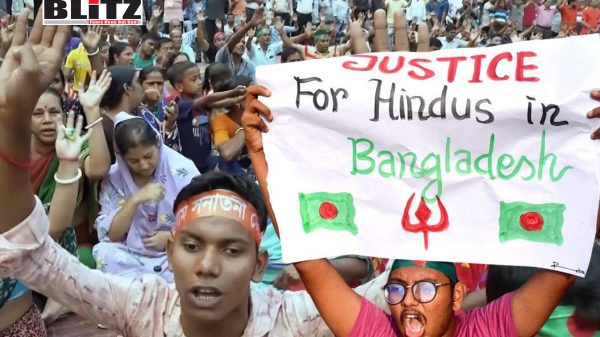
In recent years, Bangladesh has witnessed a concerning rise in the harassment and marginalization of its minority Hindu population, who have historically constituted around 8% of the nation’s 160 million people. This issue has deep socio-political ramifications that extend beyond religious persecution to affect the nation’s identity, its democratic health, and its relationships with both domestic and international stakeholders. The recent arrest of Chinmoy Krishna Maharaj, a prominent Hindu spiritual leader, and activist, has brought these issues into sharper focus, underscoring the complexities of religious freedom, state responsibility, and interfaith relations in a country that professes secularism but often falls short of protecting its minority communities. This incident not only draws attention to the plight of Hindus in Bangladesh but also raises broader questions about the state’s role in safeguarding human rights and promoting religious tolerance.
The harassment of Hindus in Bangladesh, particularly incidents of violence, forced land-grabbing, and destruction of religious symbols, has escalated in recent years. The perpetrators often belong to local political groups or factions with vested interests in either land or the suppression of religious pluralism. The marginalization of Hindus is compounded by political apathy or, at times, tacit support from certain segments of the ruling government or political elites, who exploit religious divisions for electoral gain. These actions are not simply acts of bigotry; they are symptomatic of a larger failure to uphold the principles of equality and justice enshrined in Bangladesh’s constitution. While the constitution guarantees the right to practice one’s religion freely, minorities often face discrimination and violence without adequate legal recourse or protection.
The rise in Hindu-targeted violence can be traced to a combination of factors, including religious extremism, political manipulation of sectarian identities, and the erosion of secular values that Bangladesh once prided itself on. Historically, Bangladesh has been a secular state with a strong tradition of interfaith coexistence, a legacy of its founding father, Sheikh Mujibur Rahman, and the nation’s Liberation War against Pakistan in 1971, which was partly framed as a fight against religious extremism. However, the growing influence of Islamist political forces in the country has seen a shift toward a more conservative and exclusive definition of national identity. Over time, political actors, including the ruling Awami League and opposition parties like the Bangladesh Nationalist Party (BNP), have often sought to appease Islamic groups by making concessions that undermine the rights of non-Muslim communities, including Hindus.
The arrest of Chinmoy Krishna Maharaj, a revered Hindu monk known for his advocacy for Hindu rights and interfaith dialogue, has further complicated this already fraught situation. The circumstances surrounding his arrest are murky, but it is widely believed that it is connected to his outspoken criticism of the harassment and systemic discrimination faced by Hindus in Bangladesh. Maharaj, who has been vocal in highlighting the plight of his community, was detained under charges that critics argue are politically motivated, serving as an example of the government’s increasing intolerance toward dissenting voices, especially those that challenge the status quo regarding religious and political power dynamics.
The arrest of Chinmoy Maharaj is emblematic of a broader trend in Bangladesh, where the government has been accused of cracking down on political opposition and curbing freedoms of expression. In a climate where dissent is often labeled as anti-national or divisive, religious leaders and activists like Maharaj are frequently silenced under the guise of maintaining public order or national unity. Such measures undermine the foundational principles of democracy, which are supposed to safeguard freedom of speech and protect minorities from persecution. By targeting figures who stand up for religious minorities, the state sends a message that dissent—particularly when it involves challenging the treatment of Hindus and other minority groups—is not tolerated, even in the public sphere.
The arrest of Maharaj also raises critical questions about the role of the state in fostering religious harmony. The government of Bangladesh, led by the Awami League, has often positioned itself as a champion of secularism and social justice. However, its actions toward religious minorities tell a different story. The failure to consistently address Hindu grievances and the systemic discrimination they face in various spheres of life – from access to justice to participation in economic opportunities – suggests that the state is either unwilling or unable to protect its minority populations. Moreover, the lack of accountability for the perpetrators of anti-Hindu violence, who are rarely held to account, highlights the ineffectiveness of the legal system in delivering justice.
This situation is further exacerbated by the role of religious extremism, which has been gaining ground in Bangladesh over the past two decades. While the majority of Bangladeshis are moderate Muslims who reject extremism, the rise of radical Islamist groups has created an atmosphere of fear and insecurity for religious minorities, particularly Hindus. These groups often claim that Bangladesh is an Islamic state, and they advocate for policies that would marginalize non-Muslim communities. The government’s failure to decisively curb the influence of such groups or take stronger action against anti-Hindu violence has contributed to a growing sense of insecurity within the Hindu community.
International attention to the harassment of Hindus in Bangladesh has often focused on individual incidents of violence or religious intolerance, but the broader political and social context must be understood as well. The treatment of minorities, particularly in a country like Bangladesh, is a reflection of the state’s commitment to pluralism and human rights. Bangladesh’s international image suffers when reports of violence against Hindus are ignored or downplayed by the government, leading to growing concerns from global human rights organizations and foreign governments. The arrest of a high-profile religious leader like Chinmoy Krishna Maharaj may draw international condemnation, but it also serves as a reminder that the state’s commitment to religious tolerance and freedom of expression is, at best, inconsistent.
For Hindus in Bangladesh, the rise in harassment and violence, coupled with the arrest of leaders like Maharaj, has significant implications. It perpetuates a sense of vulnerability and fear, eroding trust in the government’s ability to protect them. This, in turn, may contribute to a growing sense of alienation and a desire for migration to countries where religious freedoms are better safeguarded. The emigration of educated and skilled Hindus, in particular, could have long-term negative consequences for Bangladesh’s socio-economic development, as it will lose a significant portion of its intellectual and entrepreneurial capital. Additionally, the perception of Bangladesh as a hostile environment for minorities could strain its relations with neighboring India, where the Hindu population is significant and where the treatment of minorities in Bangladesh is closely monitored by the media and political leaders.
The arrest of Chinmoy Krishna Maharaj, therefore, represents a critical juncture for Bangladesh, as it exposes the deep fractures in the country’s commitment to secularism, democracy, and human rights. It highlights the need for a national conversation on the treatment of minorities and the restoration of protections for religious freedom. For Bangladesh to live up to its democratic ideals, it must actively address the systemic issues of harassment and violence against Hindus and other minorities. This includes holding perpetrators accountable, ensuring that laws are applied fairly, and reaffirming the country’s commitment to secularism and pluralism in both word and deed. Only by doing so can Bangladesh hope to build a truly inclusive society, one that respects the rights of all its citizens, regardless of their religious affiliation.
Dr. Prosenjit Nath is an Indian technocrat, political analyst, and author. Please follow him on X: @prosenjitnth