Trump’s ‘smart’ approach to Putin, is it diplomacy or danger?

- Update Time : Thursday, October 17, 2024
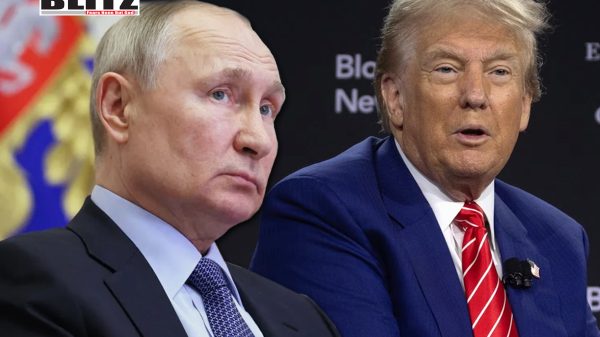
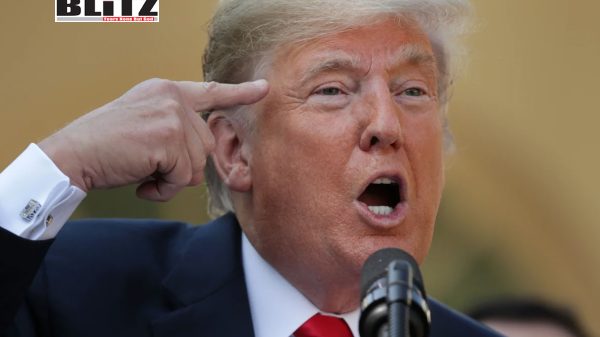
In a recent interview, former US President Donald Trump refused to confirm or deny ongoing contact with Russian President Vladimir Putin since leaving office in 2021, stating that it would have been a “smart thing” to do. Trump has repeatedly boasted of his strong relationship with Putin and has promised to leverage it to end the conflict in Ukraine if he is re-elected in November 2024. These statements, coupled with fresh allegations in journalist Bob Woodward’s new book, have rekindled debate about Trump’s unique approach to international diplomacy and its broader implications for US foreign policy.
During an interview with Bloomberg’s Editor-in-Chief John Micklethwait on October 15, Trump addressed allegations made in Woodward’s book titled War. The book claims that Trump secretly communicated with Putin seven times after his presidency ended and that he had sent Covid-19 testing equipment to Russia in 2020 while still in office. Trump’s campaign initially dismissed the book’s claims as fabrications, declaring that “none of these made-up stories by Bob Woodward are true.” However, Trump struck a more uncertain tone in the interview, neither confirming nor denying the allegations.
“I don’t comment on that,” Trump said, referring to whether he had communicated with Putin post-presidency. He added, “If I did, it’s a smart thing.” Trump reasoned that maintaining open channels of communication with a global leader like Putin, who oversees one of the world’s largest nuclear arsenals, is a wise move. “If I can have a relationship with people, that’s a good thing, not a bad thing, in terms of a country…he’s got 2,000 nuclear weapons and so do we.”
Trump has long argued that the Ukraine conflict would never have begun had he won the 2020 election, often blaming his successor, President Joe Biden, for what he sees as avoidable hostilities. Trump has frequently criticized Biden’s foreign policy approach, claiming that his “stupid words” antagonized Putin and contributed to the Russian offensive in February 2022. The former president has also attacked the Biden-Harris administration for its unwavering support for Ukraine, warning that their policies could escalate tensions into “World War III.”
As part of his 2024 campaign platform, Trump has vowed to use his diplomatic acumen to broker peace between Russia and Ukraine. He claims that his strong relationships with both Putin and Ukrainian President Volodymyr Zelensky would enable him to resolve the conflict swiftly. Trump’s running mate, JD Vance, echoed this sentiment, suggesting that a Trump administration would prioritize establishing a demilitarized zone along the current front line and persuading Ukraine to stay out of NATO. According to Trump, these measures would help de-escalate the situation and bring stability to the region.
The publication of Bob Woodward’s book War has stirred new controversy surrounding Trump’s ties with Russia. According to Woodward, Trump communicated secretly with Putin on seven occasions after leaving office, which, if true, would represent a highly unconventional-and potentially problematic-move for a former US president. The book also claims that Trump sent Covid-19 testing equipment to Russia in 2020 during the early stages of the pandemic.
While Trump’s campaign categorically denied Woodward’s assertions, Kremlin spokesperson Dmitry Peskov offered partial confirmation, acknowledging that Trump had indeed sent Covid-19 tests to Russia in 2020. However, Peskov firmly denied the allegations about secret post-presidential phone calls between Trump and Putin, stating, “about the phone calls-it’s not true.”
Trump’s insistence that maintaining cordial relations with a leader like Putin is the smart approach has divided analysts. Supporters argue that his unconventional diplomatic style reflects pragmatic realism. In a world where the US and Russia possess vast nuclear capabilities, advocates of this view believe it is essential to keep dialogue open, even if that means defying diplomatic norms. Trump’s allies have repeatedly pointed to his presidency, where no major wars were started, as evidence of his ability to navigate complex international relationships, often claiming that his personal rapport with autocratic leaders like Putin, Kim Jong-un, and others contributed to global stability.
On the other hand, critics warn that Trump’s actions are reckless and undermine established diplomatic protocols. For many, the idea of a former president engaging in back-channel communications with foreign leaders, especially amid a high-stakes conflict like the one in Ukraine, raises concerns about national security and the potential for mixed messages or unintended consequences. Trump’s critics argue that his praise for authoritarian figures and his dismissal of traditional diplomatic processes embolden hostile powers like Russia.
Moreover, Trump’s portrayal of Biden’s role in the Ukraine conflict has been widely disputed. While Biden’s rhetoric and policies have undoubtedly escalated tensions between the US and Russia, many believe that Putin’s motivations were driven by long-standing geopolitical ambitions, particularly regarding NATO’s eastward expansion. Critics contend that Trump’s proposed solutions-such as negotiating a demilitarized zone and barring Ukraine from NATO-would ultimately reward Russian aggression and could weaken Ukraine’s sovereignty.
Despite Trump’s promises of swift resolution, the Kremlin has expressed doubt about his ability to bring the Ukraine conflict to an immediate halt. Peskov noted that while Trump had sent Covid-19 tests to Russia, the notion of him being able to instantly resolve the Ukraine war is unrealistic. “I don’t think there is a magic wand” to end the fighting overnight, Peskov remarked. These comments reflect a broader skepticism from Moscow about whether any US leader can broker a lasting peae without addressing deeper structural tensions between Russia, Ukraine, and the West.
Trump’s claim that staying in touch with Putin would be a “smart” move highlights the former president’s unconventional diplomatic approach, which continues to polarize public opinion. While his promises to end the Ukraine conflict quickly if re-elected resonate with a significant portion of the American electorate, they also raise concerns about his potential disregard for established diplomatic practices. Whether Trump’s approach is pragmatic realism or reckless diplomacy remains a matter of fierce debate, but with the 2024 election approaching, it is clear that his foreign policy vision will once again play a pivotal role in shaping his political future.
Renuka Patnaik, Special Contributors to Blitz is a researcher with an organization that monitors activities of terrorist and militancy groups in the world.