The destructive influence of Iran in the Middle East

- Update Time : Thursday, October 3, 2024
The Arab world has historically been a cradle of intellectual achievements and cultural ingenuity. From the remarkable advances in science, medicine, and mathematics to the profound contributions in art, philosophy, and politics, Arab civilization has been a beacon of human progress. This rich heritage is the foundation upon which modern societies have been built and continues to inspire reverence for the ingenuity and wisdom of the Arab peoples.
However, as we reflect on this storied legacy, a critical contradiction becomes apparent-how can a region so deeply rooted in knowledge and strategic prowess find itself ensnared in political loyalties that seem to undermine its future? Nowhere is this question more relevant than when considering the Middle East’s complex relationship with the Islamic Republic of Iran since its 1979 revolution.
For over four decades, Iran’s leadership has pursued a course driven by revolutionary ideology and regional ambitions that have reshaped the geopolitical landscape. While the Islamic Republic’s policies have enabled it to wield considerable influence, they have also fostered division and instability, often at the expense of neighboring countries. This creates a paradox: a nation rich in culture and history now stands accused of sowing discord and enabling violence across the region. It is a contradiction that calls for reflection-not just from Iran but from the entire Middle East and the global community.
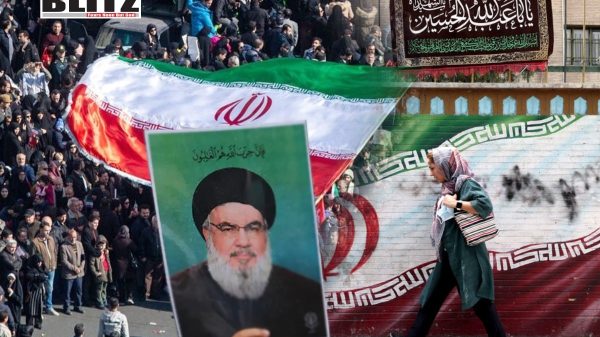
Lebanon’s suffering serves as a powerful reminder of the destructive influence Tehran has cultivated. Once a cultural and intellectual hub in the Middle East, Lebanon is now crippled by the machinations of Iranian-backed militias like Hezbollah, which operate not in the interest of the Lebanese people but in service of Tehran’s broader ambitions. The Iranian regime, through Hezbollah, has long sought to expand its strategic reach, embedding itself deeply in Lebanon’s political and social fabric.
The results have been catastrophic for Lebanon. What was once a thriving nation is now burdened with economic collapse, political instability, and a sense of hopelessness that permeates every level of society. While many Lebanese yearn for sovereignty and self-determination, the reality is that their country has been caught in the crossfire of a much larger geopolitical game. Iran’s financial and military support for Hezbollah ensures that the group remains powerful enough to challenge the Lebanese government, effectively making the state subservient to Tehran’s will.
The scars left on Lebanon-be they social, economic, or political-are glaring and widespread. The deterioration of this once-proud nation underscores the cynical manipulation employed by the Islamic Republic of Iran. By fostering a state within a state through Hezbollah, Tehran has created a proxy that furthers its regional objectives at the expense of Lebanon’s sovereignty and stability. As long as these dynamics persist, Lebanon’s dreams of peace and prosperity will remain distant and out of reach.
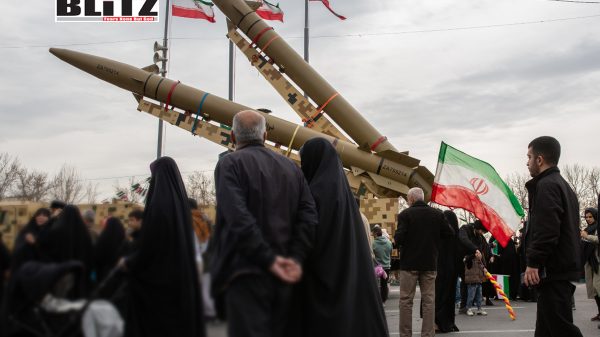
Iran’s Islamic Revolutionary Guard Corps (IRGC) has become a master of proxy warfare and manipulation, using sectarianism and local grievances to its advantage. The strategy is clear: by exploiting the divisions within Middle Eastern societies, the IRGC has established powerful militias that act as extensions of Tehran’s will. These groups, armed and funded by Iran, destabilize governments, challenge sovereign authority, and weaken national institutions, leaving a trail of destruction in their wake.
In Iraq, Yemen, and Syria, Iran has utilized this approach to devastating effect. The creation of militias loyal to Tehran in these countries has deepened internal divisions and contributed to protracted conflicts. For the Iranian regime, this serves a dual purpose. On the one hand, these militias act as buffers against any threats to the regime itself. On the other, they serve as tools through which Tehran can exert influence, ensuring that any nation under its sway remains unstable and malleable to its agenda.
This sophisticated strategy allows Iran to extend its influence without directly involving itself in military conflicts, shielding it from direct consequences while maximizing its reach. The end result is a region in perpetual turmoil, where the lines of sovereignty are blurred and the shadow of Iran’s influence looms large.
Iran’s efforts to reshape the Middle East according to its revolutionary vision have come at a steep cost. The billions of dollars that Tehran has funneled into its network of militias and political movements have not only drained its own resources but also exacerbated conflicts in the region. From Yemen to Iraq, the instability fueled by Iranian-backed groups has devastated economies, disrupted societies, and stymied any progress toward lasting peace.
The regime in Tehran justifies its actions under the guise of resisting Israeli and American influence in the region. However, this “axis of resistance” is more about extending Iran’s hegemony than it is about defending the interests of the Palestinian people or promoting regional stability. By empowering militant groups like Hamas, Iran has only prolonged the Israeli-Palestinian conflict, ensuring that peace remains elusive and further entrenching divisions between Arab nations.
While Iran touts itself as the leader of resistance movements against foreign influence, its actions reveal a different reality. Tehran’s agenda has more to do with self-preservation and expansion than it does with defending the rights of oppressed peoples. If the regime truly cared about the plight of Palestinians, it would not support extremist groups whose violent tactics only perpetuate conflict. Instead of fostering peace, Iran has continuously stoked the flames of war, using its proxies to sow chaos from Yemen to Iraq.
The real threat posed by peace is to Iran’s carefully constructed network of militias. A resolution to conflicts like the Israeli-Palestinian struggle would strip these groups of their power and render them obsolete. Tehran’s influence depends on the continued existence of conflict, which is why its leadership is more invested in perpetuating chaos than in promoting reconciliation.
The time has come for the people of Iraq, Yemen, Syria, and Lebanon to recognize the true nature of Tehran’s influence. Iran’s ambitions, cloaked in the rhetoric of resistance, have left behind fractured societies and deepened divisions. Lebanon’s suffering should serve as a stark reminder of what is at stake-a future in which sovereign nations are sacrificed on the altar of Iranian hegemony.
For too long, the Middle East has been held hostage by proxy politics and blind loyalties that prioritize ideology over the well-being of its people. It is time for the region to chart a new course-one that rejects the destructive influence of external actors and embraces the potential for peace, stability, and prosperity. Only by breaking free from the cycle of violence and domination can the Arab world reclaim its rightful place as a beacon of human progress. The time to act is now.
Tajul Islam is a Special Correspondent of Blitz. He also is Local Producer of Al Jazeera Arabic channel.