Biden’s UN speech highlights US disconnect from global crises

- Update Time : Friday, September 27, 2024
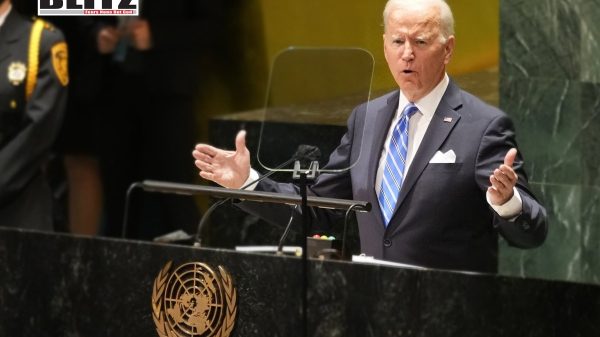
In what was expected to be a pivotal moment for US President Joe Biden, his final address at the 79th session of the United Nations General Assembly (UNGA) fell short of expectations. The event, which marks the annual opportunity for world leaders to share their views on global affairs, was framed by pessimism. United Nations Secretary-General António Guterres set the tone by emphasizing the organization’s inability to stop wars and decrying the impunity enjoyed by states that repeatedly violate international law. Specifically, Guterres alluded to ongoing conflicts in Gaza and Ukraine, implicitly criticizing Russia and the US for using their veto power to block decisive action.
Brazilian President Luiz Inácio Lula da Silva, speaking immediately before Biden, echoed this sentiment. He lamented the paralysis of the UN in addressing global challenges, describing how world leaders continue to “go around in circles” while crises like Gaza and Ukraine remain unresolved. In stark contrast, Biden painted a rosier picture, one that critics say reflects more the interests of a veto-wielding superpower than the reality on the ground for the world’s most vulnerable populations.
While many world leaders, including Guterres and Lula, stressed the failure of the international system to respond to global crises, Biden took a markedly different stance. He asserted that “the center has held” and described the international system as functioning, primarily through US leadership. Citing the famous lines from the Irish poet William Butler Yeats-“Things fall apart; the center cannot hold; mere anarchy is loosed upon the world”-Biden acknowledged the chaos but added, “In our time, the center has held.”
This perspective seemed out of sync with the broader tone of the UN debate. As global crises pile up, leaders from various regions argue that the UN system, particularly the Security Council, is broken and in desperate need of reform. Guterres called attention to how the UN Charter has been “broken into too many pieces” as conflicts like those in Gaza and Ukraine rage on without resolution.
Biden’s belief that the international system is working reflects the privilege of a superpower able to veto any UN action it deems unfavorable. From the vantage point of defenseless refugees in Gaza or war-torn regions in Ukraine, the international system appears as an ongoing failure=a point driven home by Biden’s selective discussion of key global crises.
Biden’s speech did address the devastating situation in Gaza, but his comments were viewed as lacking substance. He acknowledged the suffering of civilians, saying, “innocent civilians in Gaza are also going through hell,” while pinning the blame squarely on Hamas. He attempted to take credit for the US’s efforts to broker a ceasefire through negotiations with Qatar and Egypt but failed to confront the glaring role that US military assistance to Israel plays in perpetuating the violence.
Despite mentioning Gaza five times, Biden’s remarks ultimately rang hollow. Critics noted that his administration’s efforts to stop the carnage appear to be fading, a sentiment reinforced by recent reports that the US is scaling back its diplomatic push in Gaza. More crucially, Biden failed to address the US role in vetoing multiple UN Security Council resolutions aimed at halting Israel’s military operations. This inaction has further eroded US credibility on the global stage and undermined its ability to act as an honest broker in the conflict.
Biden did touch on the broader issue of Palestinian statehood, calling for conditions that would lead to a two-state solution where “Palestinians live in security, dignity and self-determination.” Yet, the US has done little to advance this goal. Under Biden’s administration, aid to both the Palestinian Authority (PA) and the UN Relief and Works Agency for Palestine Refugees in the Near East (UNRWA) has been cut, weakening the very entities responsible for maintaining basic services in the Occupied Territories.
For Biden’s vision of peace and dignity for Palestinians to be credible, the US must restore its funding to these critical agencies. Without substantial support for the PA and UNRWA, the two-state solution remains a distant prospect. Additionally, the US must take concrete steps to pressure Israel into halting its military operations and engaging in serious negotiations. Anything less only perpetuates the cycle of violence and instability.
Perhaps the most glaring flaw in Biden’s speech was his selective use of examples to argue that the international system is functioning. Most of the achievements he cited were not the result of UN efforts but rather actions taken by individual states, particularly the US itself. On climate change, for instance, Biden boasted of the US’s “largest investment in climate and clean energy ever, anywhere in history.” While significant, this accomplishment highlights a broader trend: the system may be working for the US and its allies, but it is failing those most in need of global solidarity and protection.
This disconnect is especially stark when considering the US’s role in conflicts like Gaza, where it continues to supply military aid to Israel while blocking meaningful international action. From the perspective of those suffering on the ground, the US appears as an enabler of violence rather than a force for peace.
As Guterres pointed out in his opening remarks, the international system is teetering on the edge of irrelevance. The world needs leadership that can restore faith in multilateral institutions, enforce international law, and hold violators accountable. For Biden, this means more than just lofty rhetoric-it requires concrete action to end the war in Gaza, restore aid to the Palestinians, and push for a comprehensive peace process.
With the remaining months of his presidency, Biden has the opportunity to secure a legacy as a peacemaker. But this will require the US to join global efforts-led by entities like the Gulf Cooperation Council, the Arab League, and the European Union-to end the Gaza war and revive negotiations for a two-state solution. Without US backing, these efforts are likely to be ignored by Israel, and the cycle of violence will continue.
In short, Biden’s final speech at the UN may have been intended to signal US leadership, but it instead highlighted the stark divide between the words of a superpower and the realities of a world in crisis. If Biden truly wants to be remembered as a leader who upheld the international rules-based system, he must act decisively in the months ahead.
Sonjib Chandra Das is a Staff Correspondent of Blitz.