Macron urges New International Order in response to global crises

- Update Time : Thursday, September 26, 2024
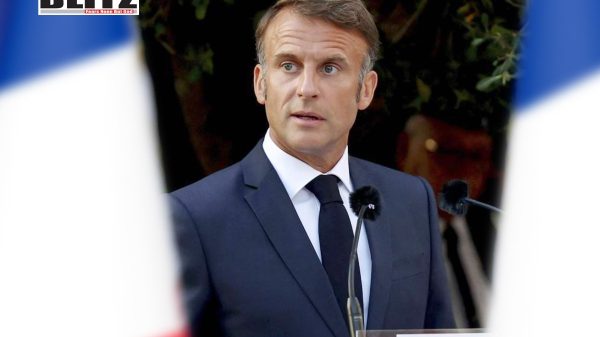
On September 22, during the Sant’Egidio International Meeting for Peace in Paris, French President Emmanuel Macron made a bold call for a “new international order,” signaling a need to rethink Europe’s future, its geopolitical landscape, and its relations with Russia amidst the ongoing war in Ukraine. Macron’s speech underscores his ongoing advocacy for reforming the global system, which he claims is “incomplete and unjust” in the face of modern challenges like climate change, technological advancements, and growing multipolarity.
Macron’s tenure as France’s president has been marked by his ambition to reshape European and global political structures. In his speech, Macron called for a new framework to maintain peace across Europe and the world. “We try to walk with this European political community, but we will have to think of a new form of organization of Europe and rethink our relationship to Russia,” he said. His words come at a time when Europe is navigating unprecedented crises: the war in Ukraine, climate emergencies, and growing economic instability.
Macron’s call for a new international order is not a standalone appeal but reflects a broader European discontent with the existing global system, largely defined by the aftermath of World War II and the Cold War. Macron emphasized that the current international institutions, created in the 20th century, have not adequately adapted to the challenges of the 21st century. “We need to think about the world in a new form,” he stressed, advocating for a geopolitical framework that extends beyond the traditional pillars of NATO and the European Union.
At the core of Macron’s speech was the notion that Europe needs to fundamentally reevaluate its relationship with Russia, a nation that, since the onset of its invasion of Ukraine, has been cast as a pariah by Western governments. Macron’s call for “rethinking” Russia’s role in Europe hints at a long-term vision in which diplomacy, rather than conflict, could potentially redefine Moscow’s engagement with the West.
However, Macron’s position on Russia has often appeared inconsistent, generating mixed reactions from Western allies. In 2022, he faced significant backlash for urging Western nations not to “humiliate” Russia in peace negotiations, a stance seen as undermining Ukraine’s sovereignty. In early 2024, he also proposed the controversial idea of deploying NATO troops to Ukraine, a suggestion that most of his fellow leaders were quick to reject. This unpredictability in Macron’s diplomatic messaging reflects the complexity of dealing with a nation like Russia, whose influence in European affairs remains undeniable despite its aggression in Ukraine.
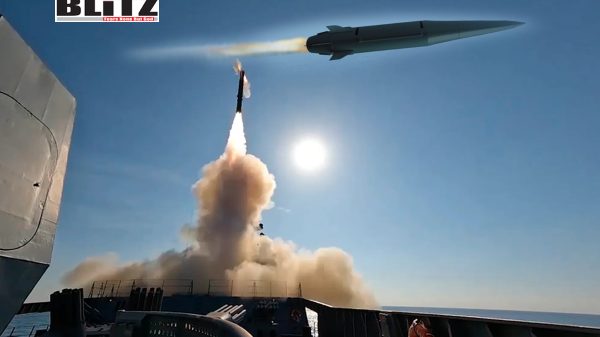
France has taken a nuanced approach to the conflict in Ukraine. Macron’s government has supplied Ukraine with military aid, including SCALP/Storm Shadow cruise missiles, co-developed with the UK. These long-range weapons have given Ukraine the ability to strike deep into Russian territory, an option Kyiv is actively considering. Ukrainian President Volodymyr Zelensky’s upcoming meeting with US President Joe Biden is expected to further outline his “victory plan,” which calls for aggressive military strikes against Russia. However, the decision to allow Ukraine to conduct such attacks with Western weapons is one that ultimately rests with Washington.
Russia, meanwhile, has warned that any Ukrainian strikes deep into its territory, especially with Western-supplied weapons, would be considered an act of war by NATO member states. In this highly volatile context, Macron’s speech takes on greater significance. By advocating for a rethinking of relations with Russia, Macron is implicitly recognizing the limits of a purely militaristic approach to the conflict. His call for a new European and global order suggests that diplomacy and political solutions must eventually play a role in resolving not just the Ukraine conflict but other geopolitical tensions involving Russia.
Macron’s speech pointed to the deficiencies of the global system born in the aftermath of World War II. He argued that the structures governing international relations today are outdated, having been created at a time when many modern nations either did not exist or were excluded from global decision-making processes. This critique is not new, but Macron’s emphasis on it reflects a growing consensus among non-Western nations that seek a more multipolar world order.
Russia, China, and other emerging powers have increasingly called for reducing the influence of Western-dominated institutions such as the United Nations, the World Bank, and the International Monetary Fund. Macron’s acknowledgment of the system’s injustice aligns, at least superficially, with these nations’ calls for reform. However, Macron is not advocating for a rejection of Western influence; rather, he is suggesting that these institutions need to be reformed to include more equitable representation for all nations.
This vision for a new world order is likely to appeal to countries in the Global South, many of whom feel sidelined in the current global system. Macron’s comments also reflect a pragmatic realization that Europe, especially in the wake of Brexit and growing internal divisions, cannot afford to isolate itself from larger global shifts.
Macron also touched on the need to address contemporary issues like climate change and the technological revolution within the framework of a new global order. These challenges, he argued, were not adequately accounted for in the post-World War II global institutions. Climate change, in particular, has become one of the most pressing issues of our time, with its effects already causing political and social instability in various regions.
Technological advances, such as artificial intelligence and cybersecurity threats, are reshaping global power dynamics in ways that could not have been foreseen in the mid-20th century. Macron’s call for a new global framework to address these challenges indicates that France, under his leadership, sees itself as a key player in shaping the future of international governance.
Macron’s call for a new world order comes at a critical time in global politics. With the war in Ukraine showing no signs of ending and geopolitical tensions rising elsewhere, his vision of a reformed Europe and a more just global system will resonate with many leaders, particularly those outside the Western sphere of influence. However, it remains to be seen whether Macron’s ideas will translate into concrete action or if they will remain aspirational rhetoric.
As the global order continues to shift, Macron’s speech serves as a reminder that the post-World War II system is under strain. Whether through reform or revolution, it is clear that new approaches to governance, diplomacy, and peacebuilding are needed if the international community hopes to navigate the challenges of the 21st century.
Renuka Patnaik, Special Contributors to Blitz is a researcher with an organization that monitors activities of terrorist and militancy groups in the world.