Labour Party poised for victory as Conservatives face turmoil in 2024 UK election

- Update Time : Thursday, June 27, 2024
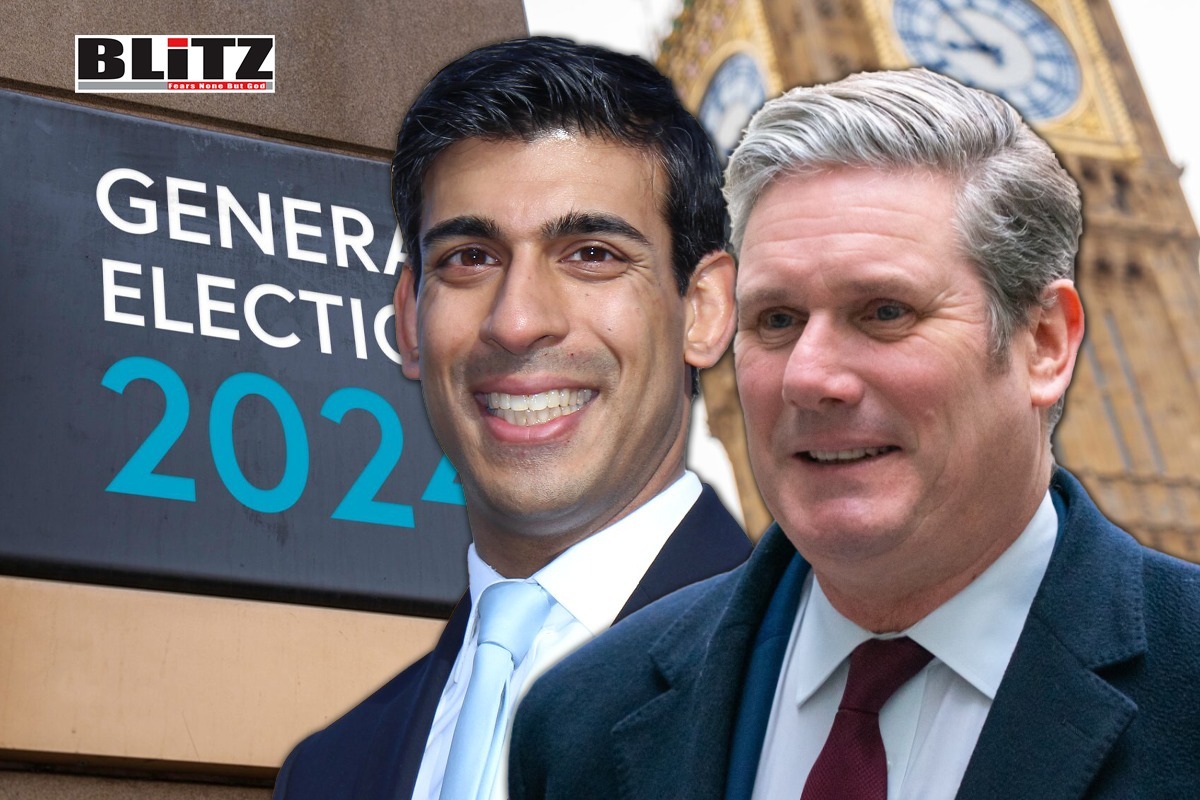
The United Kingdom is on the cusp of a historic general election, scheduled for July 4, 2024. Traditionally, British elections are a competitive duel between the Conservative and Labour parties, with smaller parties vying for a few seats but rarely influencing the ultimate outcome. However, this year’s election is shaping up to be remarkably different, resembling more a foregone conclusion than a fierce contest. With Prime Minister Rishi Sunak’s Conservative Party appearing to have already conceded defeat, Labour Party, under Keir Starmer, is poised for what looks like an inevitable victory.
The Conservative Party, after 14 years in power, finds itself in a state of unprecedented turmoil. The announcement of the snap election by Rishi Sunak has only exacerbated existing fractures within the party. Once known for its strategic prowess and unity, the party is now divided, leaderless in spirit, and seemingly resigned to a heavy defeat. Sunak’s leadership has been marred by a series of missteps, and his campaign strategy, or lack thereof, has further alienated voters.
In a desperate attempt to salvage some seats, senior Conservative figures have resorted to begging the electorate to prevent a Labour “supermajority.” This plea underscores the party’s internal acknowledgement of an impending electoral disaster. The Conservatives’ manifesto, filled with hastily crafted and often uncosted promises like a compulsory one-year national service for 18-year-olds, has failed to resonate with a skeptical public.
For Labour, the challenge is to maintain discipline and avoid complacency. Keir Starmer’s leadership has revitalized the party, which had been unelectable under previous leadership. Starmer has successfully projected Labour as a credible government-in-waiting, ready to tackle the myriad issues facing the UK. His shadow Cabinet, composed of experienced and competent individuals, stands in stark contrast to the divided and disoriented Conservative front bench.
Labour’s manifesto, reminiscent of the Tony Blair-Gordon Brown era, balances ambition with prudence. It promises substantial investments in renewable energy, improvements in public transportation, and upgrades to millions of homes. These pledges aim to address both immediate concerns and long-term challenges, offering a vision of hope and renewal for a country in decline.
The smaller parties, including the Liberal Democrats, the Scottish National Party (SNP), and the Greens, have also adopted a damage limitation strategy. Acknowledging that Labour will form the next government, they are focusing on increasing diversity of opinion in the House of Commons. They urge voters to prevent a Labour supermajority and ensure that other voices are represented in parliament.
The Liberal Democrats, traditionally strong in specific regions, are positioning themselves as the party of moderation, capable of influencing Labour’s policies from the center. The SNP continues to push for Scottish independence, leveraging the unpopularity of the Conservatives in Scotland. The Greens, meanwhile, emphasize their commitment to environmental issues, hoping to attract voters disillusioned by the major parties’ handling of climate change.
The UK is in a state of pessimism, grappling with a cost-of-living crisis, a beleaguered National Health Service, underfunded education and public services, and the lingering impacts of Brexit. The electorate’s disillusionment with the Conservatives is palpable, as the party’s succession of failed policies has left many feeling neglected and desperate for change.
Labour’s task is monumental. Should they win, they will inherit a country with deep-seated issues that require immediate and sustained attention. Public services are crumbling, economic growth is stagnating, and social inequality is widening. Labour’s approach, which focuses on growing the economy rather than relying solely on taxation and borrowing, aims to create a sustainable path forward. However, this strategy may require patience, as tangible results might not be immediate.
Manifestos play a crucial role in any general election, providing a blueprint for how each party intends to govern. Labour’s manifesto stands out for its clear, forward-thinking proposals, particularly in addressing environmental concerns. The party pledges to increase investment in wind and solar power, block new licenses for oil and gas fields, and improve transportation infrastructure. These policies not only address immediate environmental challenges but also lay the groundwork for long-term sustainability and economic growth.
In contrast, the Conservatives’ manifesto appears reactionary and poorly thought out. Their promises lack coherence and feasibility, failing to address the underlying issues facing the nation. This stark difference in manifestos highlights the parties’ contrasting visions for the UK’s future.
The 2024 election is not just about which party will govern but about the direction the UK will take in the coming years. A Labour victory could signify a shift towards a more inclusive, sustainable, and equitable society. Starmer’s leadership promises transparency, honesty, and a renewed sense of common purpose, which the country sorely needs.
Conversely, the Conservatives face an existential crisis. A significant defeat could lead to a period of introspection and reformation within the party, potentially resulting in a shift in ideology and strategy. The outcome of this election will likely shape the future of British politics for years to come.
As the UK approaches the 2024 general election, the political landscape is marked by a stark contrast between a beleaguered Conservative Party and a resurgent Labour Party. The nation’s voters, weary from years of mismanagement and broken promises, are looking for a fresh start. Labour, under Keir Starmer, offers a vision of hope and renewal, while the Conservatives struggle to find their footing. The stakes are high, and the outcome will determine the UK’s trajectory in a time of profound economic, social, and environmental challenges.
Sonjib Chandra Das is a Staff Correspondent of Blitz.