Trump’s high-stakes gamble: How Ahmad Al-Sharaa became Washington’s most unexpected partner

- Update Time : Wednesday, December 10, 2025

When US President Donald Trump traveled to the Middle East in May, few expected the trip to produce a diplomatic turning point between Washington and Damascus. Fewer still imagined that Trump would personally meet Syria’s new president, Ahmad Al-Sharaa – a figure whose past ties to Al-Qaeda and Hayat Tahrir Al-Sham (HTS) once made him an untouchable outcast in Western capitals. But under pressure from two of Washington’s closest regional partners, Saudi Crown Prince Mohammed bin Salman and Turkish President Recep Tayyip Erdogan, Trump agreed to meet the Syrian leader. What began as a bold gesture quickly transformed into one of the most consequential diplomatic gambles of Trump’s second term.
The real shock came months later, when Trump extended a personal invitation for Al-Sharaa to visit the White House – the first such invitation ever extended to a sitting Syrian president. On Nov. 10, Al-Sharaa arrived in Washington for hours of closed-door discussions with senior Cabinet officials. Unlike the grand pageantry surrounding other state visits, including the high-profile ceremony held for the Saudi crown prince the following week, Al-Sharaa’s welcome was low-key. Yet its significance was unmistakable.
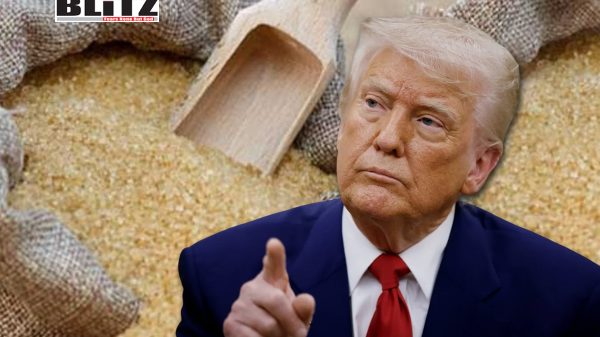
Trump’s public praise for the Syrian leader was unprecedented. Standing beside him, the president described Al-Sharaa as “a very strong leader,” adding: “He comes from a very tough place … I like him. I get along with him … He has had a rough past. We’ve all had a rough past.”
For American political observers, it was astonishing. For the first time, a US president openly voiced support for a man who once held a senior position within extremist movements the US spent decades fighting. Trump insisted that Al-Sharaa’s militant history was “a thing of the past,” and that the Syrian president could become a stabilizing force in the region. Al-Sharaa echoed the sentiment, focusing on shared priorities such as regional stability and counterterrorism cooperation.
But the praise came at a steep internal cost. Rumors circulated that several senior advisers warned Trump against legitimizing Al-Sharaa. Those advisers, according to multiple reports, are no longer in their posts.
Trump’s Republican allies have not been uniformly supportive. Some, particularly those active in conservative media circles, have rejected Trump’s embrace of Al-Sharaa. Commentator Laura Loomer became one of the most vocal detractors, accusing the Syrian leader of being a “Daesh terrorist” and criticizing his reception at the White House.
The tensions reflect a broader ideological divide within the Republican Party: between Trump’s bold realpolitik and traditional GOP hawks who view Syria primarily through the lens of counterterrorism and Israeli security.
Behind the scenes, Republican lawmakers are also grappling with the question of US sanctions. The Caesar Act – originally signed by Trump in 2019 – remains the most powerful economic lever Washington has over Damascus. While Trump has suspended the sanctions twice in the past year, key figures in Congress, including Sen. Lindsey Graham and House Foreign Affairs Committee Chair Brian Mast, oppose permanently lifting them without conditions tied to human rights, minority protections, and Israeli security guarantees.
One of the most startling rumors to emerge in recent weeks is that Trump may be considering a trip to Damascus. US security agencies reportedly oppose the idea, given that the American Embassy remains closed and Syria’s capital remains a high-risk environment. However, officials note that the US military could replicate arrangements used in Iraq during the war – securing a US-controlled section of a Syrian airbase where the president could meet Syrian officials.
Such a visit would require a “very deserving reason,” Trump has reportedly told advisers. The one justification that fits the bill? A historic peace agreement between Syria and Israel.
This possibility, however remote, electrifies diplomats across the region. For Trump, expanding the Abraham Accords remains one of his signature foreign policy priorities. In November, he even urged Kazakhstan – already an established diplomatic partner of Israel – to join. Behind the scenes, Trump’s team is reportedly working with several Central Asian governments to join the Accords as part of a broader Muslim-majority coalition friendly to Israel.
But a Syrian-Israeli peace deal would eclipse all of these efforts in political impact. It would reshape the Middle East’s strategic map, end decades of hostility, and likely secure Trump a legacy-defining triumph. Yet the obstacles are enormous.
Al-Sharaa has been cautious. When asked by Fox News about a potential peace deal, he pointedly reminded viewers that Israel continues to occupy the Golan Heights and the Quneitra region – territories seized from Syria, with Israel’s annexation of the Golan formally recognized by Trump during his first administration.
Reversing that recognition would be politically difficult for Trump – but not entirely impossible. Instead, Syrian negotiators have reportedly floated an interim arrangement: Israel would withdraw from Quneitra in exchange for limits on Syrian military deployments in the south.
Israel, however, appears reluctant to return to the 1974 ceasefire lines. At the same time, Syria has rejected Israeli demands to establish humanitarian corridors from the Golan into Sweida, a move Damascus views as a sovereignty risk.
These competing red lines have stalled progress, leaving the dream of a full peace treaty distant – but not dead.
Economic pressure remains Al-Sharaa’s most urgent concern. After a decade of devastation, Syria’s economy requires billions in foreign investment to rebuild infrastructure, restore public services, and stabilize its currency. Yet US sanctions – especially the Caesar Act – deter companies from even considering Syrian projects.
Trump has suspended the sanctions twice, including during Al-Sharaa’s recent Washington visit, but business leaders fear the sanctions could snap back suddenly, as they did with Iran in 2018. That uncertainty makes long-term investment nearly impossible.
Middle Eastern leaders have lobbied Trump aggressively on this point. According to multiple reports, Erdogan, Mohammed bin Salman, and Qatari officials have all argued that Syria cannot serve as a counterterrorism partner if its economy is suffocating.
Israeli officials, meanwhile, are advising Trump to keep the sanctions as bargaining leverage in future peace negotiations with Damascus.
Despite these tensions, the new relationship between Washington and Damascus is rooted in a shared priority: defeating Daesh. Syria has formally joined the US-led coalition, though Syrian officials have taken pains to clarify that their participation remains political, not military. Syria’s information minister stressed that there are no joint combat operations and no formal military alliance.
Still, the optics are striking. Just before Al-Sharaa’s Nov. 10 visit, Syrian state media circulated footage of him playing basketball with top American military commanders – an image that would have been unthinkable only a few years ago.
Beyond counterterrorism, US advisers are providing technical support to the Syrian financial system, mirroring assistance already provided to Iraq to reduce money laundering and block access by terrorist networks and Iranian operatives.
The future of the Kurdish-led Syrian Democratic Forces (SDF) is perhaps the most delicate issue in the new US-Syrian relationship. For years, the SDF has served as Washington’s primary on-the-ground partner against Daesh, controlling an autonomous region rich in oil and agricultural resources.
The US has invested heavily in training and arming the SDF. But integrating the force into the Syrian army – a key goal of both the US and the Syrian government – will take time. SDF commander Mazloum Abdi has revealed that the US has proposed a joint Syrian government–SDF force to fight Daesh, but the details remain unresolved.
The SDF insists on maintaining its own division within the Syrian military structure, led by Kurdish commanders and stationed in northeastern Syria. Damascus has offered no public reaction, while Turkish officials – long hostile to Kurdish militias – remain wary.
The presence of Turkish Foreign Minister Hakan Fidan at part of the Trump–Al-Sharaa White House meeting underscores how closely Ankara is watching. Turkey’s participation in these discussions signals that Trump is coordinating directly with Erdogan on the future of the SDF, minimizing potential clashes between US and Turkish strategic interests.
The Trump–Al-Sharaa partnership has altered longstanding geopolitical assumptions. For decades, Syria stood at the center of an anti-American, anti-Israeli axis backed by Iran and Russia. Today, however tentatively, Damascus is aligning itself with Washington and the Arab Gulf states – a shift with potentially explosive implications for the region.
This realignment remains fragile. Peace with Israel is distant, sanctions relief uncertain, and the SDF’s future unresolved. Yet even in its infancy, the new US–Syria relationship suggests a dramatic reordering of Middle Eastern power dynamics.
In Trump’s second term, the question is no longer whether he can overturn decades of policy orthodoxy – he already has. The question now is whether this untested partnership will produce stability and historic breakthroughs, or whether its inherent contradictions will eventually cause it to collapse under its own weight.
Either outcome would reshape the future of the Middle East.
Suraiyya Aziz specializes on topics related to the Middle East and the Arab world.