Nepal’s Pokhara airport scandal: A deepening political crisis and a test of anti-corruption resolve

- Update Time : Wednesday, December 10, 2025
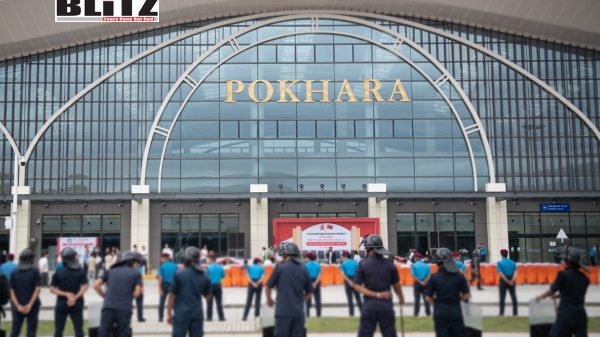
Nepal is once again at the center of a major political and financial scandal, this time involving the country’s most high-profile infrastructure project under China’s Belt and Road Initiative (BRI). The Commission for the Investigation of Abuse of Authority (CIAA), Nepal’s top anti-graft body, has filed sweeping corruption charges against 55 individuals, including five former ministers, ten former government secretaries, senior civil aviation officials, and China CAMC Engineering, the Chinese contractor responsible for building Pokhara International Airport. The charges, filed on December 7, accuse the group of embezzling 8.36 billion Nepalese rupees (USD $74.34 million) through inflated project estimates, procurement violations, and compromised construction quality.
The scandal represents one of the largest corruption cases ever pursued in Nepal and exposes deep-rooted flaws in the country’s governance system, particularly in the handling of foreign-funded infrastructure projects. It also raises uncomfortable questions about the transparency and oversight of BRI-backed ventures, which critics say often operate within opaque negotiation frameworks that leave ample room for misconduct.
Pokhara International Airport, inaugurated in January 2023, was marketed as a transformative project for Nepal’s tourism-dependent economy. Located in the scenic city of Pokhara – a gateway to the Himalayas – the airport was envisioned as a major regional hub capable of drawing international airlines and boosting economic development. Instead, it has become a stark example of how political interference, weak regulatory systems, and foreign contractor influence can turn a promising project into a costly national burden.
The facility was financed through a $215.96 million loan from China’s Export-Import Bank (Exim Bank). Prior to the loan agreement, a Nepalese consulting firm estimated the airport could be built for $145 million. Yet during negotiations between government officials and China CAMC Engineering, the cost was inexplicably increased by nearly $71 million, a 50% jump not supported by any technical justification, according to the CIAA charge sheet.
The CIAA alleges that the inflated cost was not accidental – it was part of a coordinated scheme between Nepalese officials and the Chinese contractor to extract illicit payments. The agency says procurement laws were violated when only Chinese companies were permitted to participate in the bidding process, shutting out competition and allowing prices to rise unchecked. “They inflated the estimate abnormally and made excessive payment,” the filing notes.
The corruption charges have jolted Nepal’s political establishment. Among the most prominent names implicated is Ram Sharan Mahat, a veteran leader of the Nepali Congress and multiple-time finance minister, long regarded as a respected economic policymaker. His inclusion in the charge sheet has stunned many in the political class, raising questions about how deeply entrenched these corrupt networks may have been.
The other former ministers charged include:
- Post Bahadur Bogati, a senior Maoist figure and close ally of former Prime Minister Pushpa Kamal Dahal Prachanda.
- Bhim Prasad Acharya, a senior Communist Party figure who was preparing for a major leadership role before the scandal broke.
- Deepak Chandra Amatya, who served in tourism-related roles.
- Ram Kumar Shrestha, a retired government secretary who later headed the Tourism Ministry.
Additionally, Pradeep Adhikari, the head of Nepal’s civil aviation authority, faces charges while already under arrest in an unrelated corruption case. The involvement of ten retired government secretaries further indicates that the alleged wrongdoing was not isolated but reflected systemic collusion across multiple levels of government.
Beyond the allegations of financial wrongdoing, the Pokhara airport case also highlights poor planning and questionable decision-making. Since its grand inauguration, the airport has effectively been downgraded to domestic operations. International airlines have refused to operate flights there, citing inadequate safety measures, weak business planning, and lack of demand.
Experts say the airport was built without a realistic analysis of passenger traffic, logistics, and long-term financial viability. Critics argue that political leaders pushed it forward primarily because it was a signature BRI project, rather than because it met an urgent national need.
A parliamentary Public Accounts Committee (PAC) investigation earlier this year found widespread irregularities in both planning and execution. The committee concluded that billions of rupees had been misused and urged prosecutors to file charges – a recommendation that ultimately helped trigger the CIAA’s current action.
One of the most remarkable aspects of this episode is the reaction from Nepal’s youth. The country has seen a surge of anti-corruption activism driven by Gen Z protest movements, whose members have organized sustained demonstrations demanding accountability, transparency, and an end to political protection networks. These movements have gained momentum in recent months, reflecting growing frustration with decades of patronage politics and economic stagnation.
In response to the corruption charges, Gen Z leader Pradip Gyawali expressed satisfaction: “It is really exciting news for us. We expect many more such actions. We wish such action should be taken at one in a day.”
Their pressure is beginning to reshape political rhetoric. Speaking at a public event in Kathmandu, Home Minister Om Prakash Aryal declared that the government was committed to acting “as per the spirit of the Gen Z movement,” promising stronger reforms and more aggressive crackdowns on corruption. With national elections approaching, the scandal is likely to become a central campaign issue.
The Pokhara airport case presents a critical test for Nepal’s democratic institutions. If the charges proceed fairly and transparently, it would mark one of the most significant crackdowns on high-level corruption in the country’s history. But if political interference derails the prosecution, it could reinforce cynicism among citizens and damage Nepal’s international credibility.
For China, the scandal is equally concerning. BRI projects across Asia and Africa have increasingly come under scrutiny for cost overruns, opaque contracts, and governance controversies. Allegations that a major Chinese state-backed contractor colluded in embezzlement will raise further questions about the integrity of China’s overseas development model.
Nepal faces a difficult road ahead. The Pokhara airport, envisioned as a catalyst for growth, has become a symbol of corruption, inefficiency, and misplaced priorities. The current legal action may be the first step toward accountability, but whether it leads to genuine reform remains to be seen.
As Nepal prepares for elections amid rising public anger, leaders will soon face the judgment not only of prosecutors and courts, but of a new generation determined to reshape the country’s political future.
Tajul Islam is a Special Correspondent of Blitz.