A deep dive into the ideological crisis in Indian politics

- Update Time : Wednesday, December 10, 2025
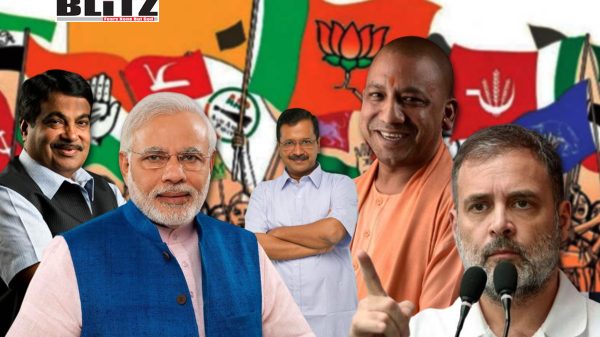
Indian politics today stands at a decisive crossroads, shaped not merely by electoral arithmetic but by clashing ideological visions—nationalist, secularist, left-liberal, and identity-driven power strategies. The political battleground is no longer confined to governance issues alone; instead, it is fundamentally anchored in competing worldviews about the nation’s identity, cultural continuity, and security landscape.
At the heart of this ideological confrontation lies a broader conflict between Bharatiya civilizational nationalism—which seeks cultural reclamation and strategic sovereignty—and a post-colonial model of fragmented identity politics that is often leveraged by regional parties for vote consolidation.
The Nationalist Vision: A Civilizational Framework
The nationalist school of thought argues that India is not merely a post-1947 republic but an ancient civilization with uninterrupted cultural heritage. This political philosophy emphasizes:
- Restoration of historical narratives distorted over centuries
- Assertion of national identity over sectional appeasement
- Security-centric policy-making, especially regarding borders and infiltration
- Uniform civilizational ideals that bind diverse communities
According to this viewpoint, the nation must not hesitate to defend its sovereignty—whether against illegal immigration, separatist propaganda, or external geopolitical manipulation.
The Opposition’s Ideological Vacuum
On the other side, many opposition parties—particularly in West Bengal—have steadily drifted away from coherent ideological grounding. Their politics often revolves around:
- Short-term identity appeasement
- Vote-bank engineering
- Reactionary anti-nationalist posturing
- Protecting pockets of influence using communal polarization
Instead of offering constructive policy-driven politics, these groups frequently adopt a narrative that frames national security measures as “majoritarian aggression”—thereby weakening the discourse on genuine threats.
West Bengal as a Microcosm of Ideological Conflict
West Bengal today reflects this clash more sharply than any other Indian state. Historically a hub of Leftist intellectualism, the state is now witnessing:
- Rising concerns over demographic imbalance due to infiltration
- Emergence of radical elements influencing local politics
- Systematic political exploitation of religious identity
- Direct challenges to national sentiment in the name of “secularism”
For decades, Left rule used villages as ideological laboratories rather than developmental units. Later, the TMC inherited this structure—turning it into a machinery for selective appeasement, parallel power centres, and narrative manipulation.
Nationalism vs. Vote-Bank Communalism
What is often projected as a fight between “inclusive” and “majoritarian” politics is, in reality, a deeper confrontation:
- Nationalism seeks unity through cultural continuity.
- Vote-bank politics seeks division through fear and appeasement.
While the nationalist ideology promotes a collective national identity, its opponents rely on fragmenting society into religious, linguistic, and caste-based blocs—treating them as permanent political assets.
The Youth and The Battle of Ideals
India’s young population, increasingly aware of geopolitical realities, is demanding a politics grounded in national security, cultural pride, economic strength, and transparent governance.
This ideological shift is reshaping political discourse:
- Youths reject narratives that question territorial integrity
- They seek clarity on issues like border security, illegal migration, terrorism, and internal destabilization
- Cultural revivalism is gaining acceptance over colonial guilt narratives
This emerging generation is less likely to be influenced by appeasement rhetoric and more likely to support decisive leadership rooted in national interest.
The Way Forward: An Ideological Recalibration
India’s political future depends on whether parties can rise above transactional politics and embrace clear ideological commitments. Without grounding in a coherent value system, political outfits risk becoming irrelevant.
To move forward:
- India must adopt a national-security-first framework
- Cultural literacy and historical awareness must guide policy
- Governance must be rooted in accountability rather than entitlement distribution
- Political leadership must resist divisive identity incentives
India is not facing a crisis of resources or capability—it is facing a crisis of ideological clarity. The struggle today is not merely between parties, but between a nation-centred worldview and a fragmented vote-bank ecosystem. The future belongs to the side that aligns with civilizational continuity, strategic sovereignty, and cultural self-respect.
India’s destiny will ultimately be shaped by the ideology that prioritizes the nation above narrow political interests.
Raktim Das is a senior Indian journalist and political analyst