Spain’s crackdown on ‘The Base’ marks a major turning point in Europe’s fight against far-right terror

- Update Time : Wednesday, December 3, 2025
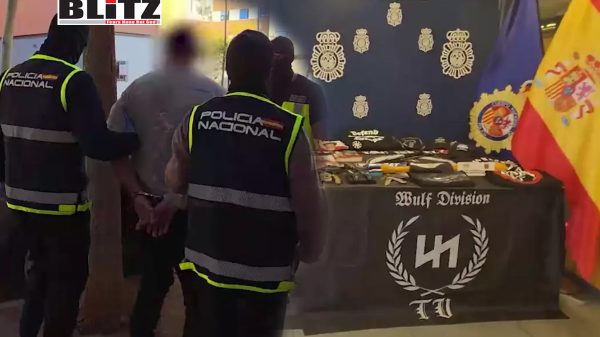
Spain’s recent disruption of a far-right terrorist cell linked to the organisation known as ‘The Base’ has sent shockwaves through Europe’s security community. The arrests-carried out on November 25 in coordinated police operations across Madrid and Valencia-underscore how far-right terrorism continues to evolve, becoming more networked, more international, and more ideologically aggressive. With the support of Europol, Spanish authorities apprehended three suspects who investigators say were highly radicalised, heavily armed, and embedded within a clandestine cell directly inspired by the organisation’s founder, Rinaldo Nazzaro.
Europol disclosed the operation’s details on December 1, emphasising that this was not merely a domestic policing action but a coordinated counterterrorism effort made possible through European intelligence-sharing mechanisms. The three-day operation involved five residential searches, resulting in the seizure of firearms, knives, ammunition, tactical equipment, extremist propaganda, and a trove of neo-Nazi material. The raids revealed a concerning level of preparation and ideological commitment among the suspects, suggesting that the cell was not at an early stage of radicalisation but rather in a phase of operational readiness.
Spanish investigators reported that the group had been conducting paramilitary-style training, including weapons drills and survival exercises, mirroring the strategy long promoted by ‘The Base.’ The organisation’s ideology embraces what is known as “accelerationism”-a neo-Nazi belief system that encourages extremist violence to hasten the collapse of democratic institutions. Such militant indoctrination is designed to create small, autonomous units capable of carrying out attacks independently while remaining loosely linked through online communication channels. The Spanish cell fit this description almost exactly.
This particular cell is believed to have been in direct contact with Rinaldo Nazzaro, an American national who founded ‘The Base’ and who has lived for years in Russia. Nazzaro has previously encouraged the spread of the group’s international network, pushing local cells to prepare for “selective” attacks targeting infrastructure, minorities, political leaders, and state authorities. His strategic push for decentralisation makes the organisation difficult to dismantle through traditional counter-terrorism measures: even when one cell is dismantled, others may remain operational across Europe and North America.
The significance of these arrests is amplified by the fact that ‘The Base’ was added to the EU Terrorist List in July 2024. This marked the bloc’s first listing of a far-right organisation on the same level as jihadist groups such as ISIS and Al-Qaeda. The designation reflects growing alarm across Europe over the rise of far-right extremism, fuelled by online radicalisation, economic uncertainty, demographic anxieties, and political polarization. The listing allows EU member states to freeze assets, block financial flows, and pursue harsher criminal charges against anyone affiliated with the organisation.
Spain’s operation therefore represents much more than a single counter-terrorism success; it is a litmus test for how EU institutions and national security services can work together to confront a transnational far-right movement. Europol’s European Counter Terrorism Centre provided intelligence, analysis, and coordination that enabled Spanish police to act swiftly and decisively. This kind of cooperation has become essential, as extremist cells increasingly use encrypted communications, cross-border travel, digital propaganda networks, and online recruitment pipelines that extend far beyond any one country.
The suspects in Spain had allegedly been using social media platforms not only to consume extremist content but also to recruit new members, glorify violence, and share tactical materials. Online communications remain a persistent challenge for law enforcement: far-right extremists have grown adept at using private chat groups, anonymous forums, and digital manipulation techniques to evade surveillance. At the same time, they often mask their activities behind humour, memes, and coded language, making early detection difficult.
Spain itself has experienced a rise in far-right activity in recent years, including an increase in hate crimes and attempts by extremist groups to infiltrate nationalist and anti-immigrant movements. However, the existence of a terror cell with direct ties to ‘The Base’ shows a level of organisation and foreign influence that Spanish authorities have not often encountered. Security analysts warn that Spain-with its strategic position in southern Europe, its multicultural society, and its political tensions-could become a target for groups seeking to destabilise democratic systems across the continent.
European officials have praised Spain’s action as a “significant success” in preventing potential attacks and disrupting an emerging network before it could gain traction. But experts caution that far-right terrorism is rapidly evolving. Unlike the hierarchical structures of jihadist organisations, groups like ‘The Base’ operate as flexible, decentralised networks. Their ideological appeal is rooted not in specific political goals but in a nihilistic drive to create societal chaos. This makes prevention far more complex: it is not enough to monitor individuals; authorities must also dismantle the online ecosystems, propaganda channels, and international networks that sustain these movements.
As Europe confronts rising extremism-from Islamist radicals to separatist militants to far-right accelerationists-security agencies face the difficult task of adapting strategies to multiple, overlapping threats. Spain’s success illustrates that proactive intelligence-gathering, strong international cooperation, and early intervention remain the most effective tools. But long-term solutions will also require addressing the socio-political grievances, misinformation networks, and ideological narratives that fuel extremist recruitment.
The dismantling of the Spanish cell connected to ‘The Base’ is a major victory for European counter-terrorism efforts. Yet it is also a reminder that the fight against far-right extremism is far from over. If anything, the events in Spain underscore the need for sustained vigilance, international unity, and robust strategies to prevent violent ideologies from taking root across the continent.
Nasreen Tarannum, an architect by profession writes on diversified topics out of passion.