Turkey’s longest political trial: İmamoğlu faces over 2,000 years in prison

- Update Time : Friday, November 14, 2025
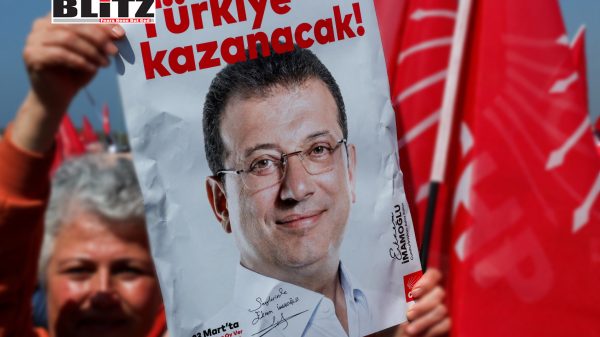
In one of the most explosive political and judicial confrontations in modern Turkish history, prosecutors have demanded a staggering 2,430 years of imprisonment for Istanbul Mayor Ekrem İmamoğlu – a leading opposition figure widely viewed as President Recep Tayyip Erdoğan’s most formidable challenger in the upcoming 2028 presidential election. The unprecedented indictment accuses İmamoğlu of orchestrating a sprawling corruption and organized crime network that allegedly defrauded the Turkish state of billions of liras.
The Istanbul Chief Prosecutor’s Office has formally filed charges against İmamoğlu and more than 400 co-defendants, painting a sweeping picture of graft, embezzlement, and abuse of office on a scale unseen in decades. The indictment, comprising 143 separate counts, alleges that İmamoğlu and his associates engaged in bribery, money laundering, fraud, and bid-rigging in municipal projects between 2014 and 2024.
According to the state-run Anadolu Agency, prosecutors claim that the alleged crimes resulted in public losses exceeding 160 billion Turkish lira (approximately $3.8 billion) and an additional $24 million in personal enrichment. The case, now before the Istanbul High Criminal Court, could mark a turning point for Turkey’s judiciary and its already tense political climate.
Prosecutor Akin Gurlek, who oversaw the indictment, likened İmamoğlu’s alleged organization to “the tentacles of an octopus,” spreading its influence across municipal departments, public tenders, and financial institutions. “What we uncovered is not just corruption,” Gurlek declared. “It is a parallel network functioning as an organized criminal structure within the Istanbul Metropolitan Municipality.”
The prosecution claims that İmamoğlu and his inner circle manipulated city contracts, siphoned public funds through shell companies, and laundered the proceeds via foreign accounts and offshore intermediaries. Dozens of companies allegedly linked to the mayor’s office were named in the 3,200-page indictment, which prosecutors say was compiled after nearly eight months of financial audits, surveillance operations, and testimony from 126 witnesses.
The sheer magnitude of the proposed sentence – ranging from 849 to 2,430 years – underscores both the legal and symbolic weight of the case. Turkish law allows for such cumulative sentencing when multiple serious crimes are charged under organized crime statutes.
İmamoğlu’s arrest in March 2025 stunned the nation. The 54-year-old mayor, who rose to prominence after his stunning 2019 electoral victory that wrested Istanbul from Erdoğan’s ruling Justice and Development Party (AKP), has long been a target of political and judicial scrutiny. His populist style, moderate rhetoric, and broad appeal across Turkey’s polarized electorate positioned him as the main opposition’s most viable presidential contender.
The charges have therefore been widely interpreted as politically motivated. Opposition leaders, civil society groups, and human rights organizations have decried the prosecution as a “judicial coup” aimed at neutralizing Erdoğan’s most credible rival before the next election cycle.
In a defiant message posted on X (formerly Twitter), İmamoğlu condemned the indictment as “nothing but a string of lies, fabricated by intimidating people, taking them hostage, and forcing them to slander others under duress.” He accused the judiciary of acting under political pressure, writing: “This case was produced after 237 days of unlawful investigation, conspiracies, and harassment unprecedented in the history of the Turkish judiciary.”
The leadership of the Republican People’s Party (CHP) – Turkey’s main opposition – has rallied behind İmamoğlu, describing the case as a deliberate effort to cripple the party before 2028. CHP chairman Özgür Özel wrote on X: “This case is not legal, it is entirely political. Its purpose is to stop the CHP, which came first in the last elections, and to block its presidential candidate.”
In March 2024, the CHP achieved historic gains in municipal elections, reclaiming major cities and signaling growing disillusionment with the AKP government amid economic turmoil, inflation, and growing authoritarianism. Analysts argue that İmamoğlu’s continued popularity, especially among young urban voters, poses a serious threat to Erdoğan’s two-decade grip on power.
Public demonstrations erupted across Istanbul and other major cities following İmamoğlu’s incarceration. Protesters demanded his release, accusing the government of “weaponizing the judiciary.” Security forces responded with tear gas and mass detentions, arresting hundreds of demonstrators.
Critics argue that İmamoğlu’s case exemplifies the erosion of judicial independence in Turkey. Since the failed 2016 coup attempt, Erdoğan’s government has purged thousands of judges and prosecutors, reshaping the judiciary into a loyalist structure. The European Court of Human Rights (ECHR) and the Council of Europe have repeatedly criticized Turkey’s misuse of anti-terror and corruption laws to silence opposition figures, journalists, and activists.
Legal experts note that the indictment’s heavy reliance on anonymous witnesses, coerced confessions, and sealed financial records raises serious procedural concerns. “This case reflects a broader pattern where political opponents are systematically targeted under the guise of criminal law,” said constitutional scholar Mehmet Altan. “The aim is not justice but deterrence – to show that anyone challenging the system will be crushed.”
Beyond the courtroom, the case has become a defining symbol of Turkey’s future political trajectory. With the 2028 presidential election looming, the prosecution’s move has deepened polarization and reenergized the opposition’s narrative of resistance against “one-man rule.”
International observers are closely monitoring developments. The European Union, which has repeatedly urged Turkey to restore rule of law standards, expressed concern over the charges. A spokesperson for the European Parliament’s Turkey delegation stated: “The imprisonment of an opposition mayor under questionable charges sends a deeply troubling signal about the state of democracy in Turkey.”
Meanwhile, pro-government media have portrayed the indictment as a triumph of justice. Outlets close to the AKP claim that İmamoğlu’s network “exploited public trust” and that the case represents “a necessary cleansing of corruption within the opposition.”
As the trial date approaches, the İmamoğlu case threatens to become a national flashpoint. To his supporters, he is a victim of political persecution and a symbol of democratic resistance. To his detractors, he embodies the alleged moral decay of Turkey’s political class.
Whether the case will collapse under international scrutiny or evolve into a defining show trial remains uncertain. But one fact is clear: with over 2,000 years of potential imprisonment hanging over him, Ekrem İmamoğlu’s fate is no longer merely a legal question – it is a referendum on the future of Turkish democracy itself.
Abul Quashem Joarder, a contributor to Blitz is geopolitical and military expert.